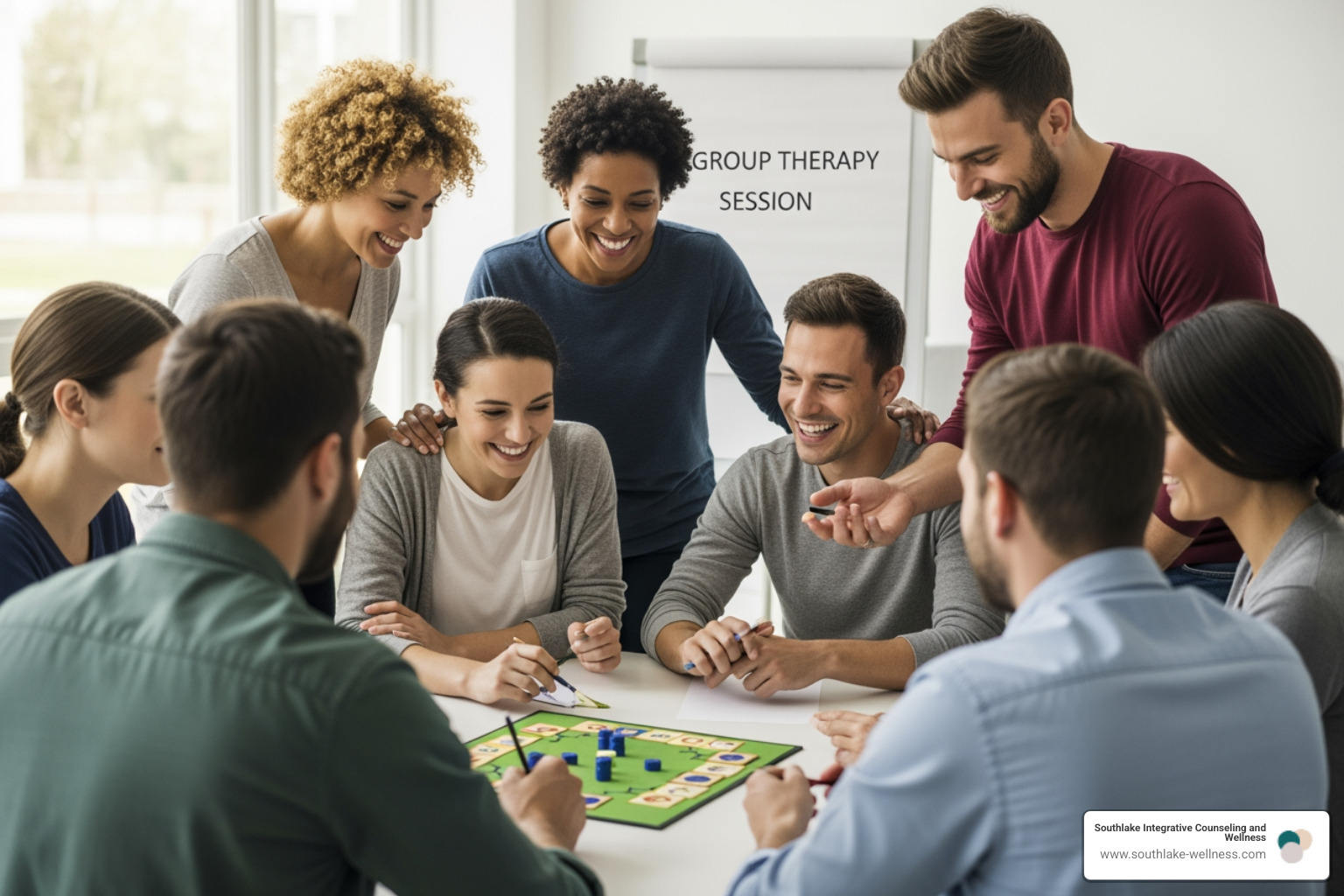
Defining Group Activity Therapy and Its Core Goals
At its heart, group activity therapy is about more than just "keeping busy." It is a intentional therapeutic process where the activity serves as a bridge between a participant’s inner world and their social environment. Whether we are painting, practicing a guided meditation, or working through a collaborative problem-solving task, the activity provides a structured way to explore emotions and practice new behaviors.
Historically, this approach gained traction through the work of Joseph Pratt in 1905. He noticed that his tuberculosis patients weren't just suffering physically; they were suffering from the isolation of their disease. By bringing them together, he tapped into a fundamental human truth: we heal better together. In modern adult support, we use these same principles to address the "diseases" of our time—isolation, chronic stress, and a lack of community.
One of the fundamental goals of group activity therapy is to restore emotional balance. According to recent national health reports, roughly one-third of US adults struggle with symptoms of anxiety and depression. For these individuals, the goal is often to find a "safe container" where they can express difficult feelings without judgment while learning practical skills to manage their symptoms.
The Role of Group Activity Therapy in Modern Mental Health
In our , digital world, we often lose touch with the physical and social aspects of our well-being. Modern group activity therapy serves as a holistic intervention, emphasizing the mind-body connection. We don't just treat a diagnosis; we treat a person. By integrating physical movement or creative expression, we help participants develop Coping Mechanisms for Adults that are grounded in real-world action.
The "therapeutic alliance" in a group setting is unique. It isn't just between the therapist and the client; it’s a web of alliances between all members. This collective bond creates a powerful environment for change that individual therapy sometimes cannot replicate.
Core Objectives for Adult Participants
For the adults we serve in Southlake, TX, the objectives of group sessions usually fall into three categories:
- Personal Growth: Discovering new strengths and facets of one’s identity through creative challenges.
- Symptom Management: Using Workshops for Mental Health to learn how to "lower the volume" on anxiety or lift the "heavy fog" of depression.
- Resilience Building: Learning that even when an activity is difficult or a social interaction is awkward, we can survive it and grow from it.
Psychological and Social Benefits of Group Engagement
The benefits of engaging in group activity therapy are both psychological (what happens inside your head) and social (what happens between you and others). One of the most immediate benefits is "normalization"—the profound relief of realizing, "I am not the only one who feels this way."
Peer interaction provides a mirror for our own behavior. In a group, we see our own struggles reflected in others, which often makes us more compassionate toward ourselves. This social learning is a cornerstone of the Advantage of Group Counselling Sessions. Furthermore, scientific research on interpersonal neurobiology suggests that our brains are actually "sculpted" by our social interactions. Positive, supportive group experiences can help re-wire neural pathways associated with fear and isolation, replacing them with pathways of safety and connection.
Building Self-Efficacy Through Group Activity Therapy
Self-efficacy is the belief in one's own ability to succeed in specific situations. In our groups, we use Albert Bandura’s theories to help participants Develop Coping Skills through:
- Mastery: Completing a difficult art project or a complex group task gives a tangible "win."
- Vicarious Experience: Seeing a peer successfully navigate a panic attack or share a vulnerable story gives us the courage to do the same.
- Verbal Persuasion: Receiving a genuine compliment from a group member often carries more weight than hearing it from a professional.
Social Support and Peer Feedback
Groups are a "social microcosm." The way you interact in the group is usually the way you interact in the world. This makes the group a perfect laboratory for building healthy relationships and practicing conflict resolution. Using tools like an effective communication worksheet, members can practice asserting their needs or offering empathy in real-time. This immediate feedback helps bridge the gap between "knowing" what to do and actually "doing" it.
Diverse Types of Therapeutic Activities

We utilize a wide variety of activities to keep sessions engaging and effective. No two groups are exactly alike, as we tailor the "doing" part of therapy to the specific needs of the members.
- Narrative Therapy: We might use "Lifelines" to map out high and low points in life, helping participants rewrite their personal stories from a perspective of survival rather than victimhood.
- Expressive Arts: Activities like mandala-making or "Inside-Outside Boxes" (where the outside represents what the world sees and the inside represents the hidden self) are excellent Art Therapy Activities for Emotional Regulation.
- Mindfulness: From mindful eating to progressive muscle relaxation, Mindfulness-Based Group Therapy helps participants stay grounded in the present moment.
Tailoring Activities for Anxiety and Depression
When addressing anxiety and depression, we often lean on Cognitive Behavioral Therapy (CBT) techniques translated into group activities. For example, a positive thought replacement worksheet can be turned into a "Thought Exchange" game where members help each other find more balanced perspectives.
Specific Group Therapy Exercises for Depression might include "Behavioral Activation" tasks, where the group sets small, achievable goals for the week and checks in on progress. For anxiety, "Grounding Grab Bags" filled with different textures can help participants practice staying in their bodies when their minds want to race.
Group Activity Therapy for Personal Growth
For those focused on self-improvement, we use activities that challenge the "inner critic." A radical acceptance worksheet helps members let go of the "shoulds" in their lives. Other Activities for Groups of Adults might include vision boarding or "Strength Spotting," where members identify and name the strengths they see in one another.
Facilitation Techniques for a Supportive Environment
Creating a safe space doesn't happen by accident. It requires careful planning and skilled facilitation. Before a group even begins, we conduct a needs assessment to ensure the group members are a good fit for one another and the specific goals of the program.
We often follow Cole’s Seven Steps of Group Facilitation:
- Introduction: Setting the tone and expectations.
- Activity: The "doing" phase.
- Sharing: Members show or talk about what they did.
- Processing: Discussing how the activity felt.
- Generalizing: Looking for common themes among members.
- Application: How does this apply to life outside the group?
- Summary: Reinforcing the key takeaways.
One major decision in facilitation is whether the group is "Open" or "Closed."
| Feature | Open Groups | Closed Groups |
|---|---|---|
| Membership | New members can join at any time. | The same members stay together for the duration. |
| Cohesion | Takes longer to build as dynamics shift. | Builds quickly and deeply. |
| Flexibility | High; good for short-term support. | Lower; requires a specific commitment. |
| Focus | Often psychoeducational or support-based. | Often interpersonal process or skill-building. |
Practical Considerations for Group Leaders
The first few minutes of a session are critical. We use icebreakers to lower the "social temperature." Simple games like "Two Truths and a Lie" or a round of Empathy Bingo can break the ice and build rapport. Facilitating a Group Counselling Session effectively means balancing the needs of the "quiet" members with those who tend to dominate the conversation, ensuring everyone has a voice.
Closing and Termination Strategies
How a group ends is just as important as how it begins. We use specific "termination" activities to help members process the end of their time together. Our Closing Activities Group Therapy Guide suggests using affirmations or "Future Letters" to self. We might even play a song like Gloria Gaynor's "I Will Survive" while completing an I Will Survive worksheet to celebrate the resilience members have built.
Evidence-Based Impact on Well-Being and Coping
The effectiveness of group activity therapy isn't just anecdotal—it’s backed by significant data. Evidence-Based Group Therapy shows that the combination of social support and active skill practice leads to better retention and more significant symptom reduction than talk therapy alone in many cases.
For instance, research on mindfulness group therapy has shown that it is just as effective as individual CBT for treating depression and anxiety in primary care settings. Participants often report that the group format makes the mindfulness practices feel more "real" and less like a chore.
Statistical Success of Activity-Based Groups
The numbers tell a compelling story about empowerment. According to a scientific study on activity-based group therapy:
- Participants reported a mean Coping Self-Efficacy score of 6.92/10 after their very first session.
- Post-group Happiness scores averaged 7.42/10.
- Post-group Anxiety scores dropped to an average of 3.79/10.
These statistics highlight that the "doing" aspect of the group helps people feel more capable of handling their lives immediately.
Long-Term Benefits for Mental Health
The real magic happens at discharge. The coping self-efficacy developed in the group becomes a predictor for overall mental health confidence. This confidence then predicts high scores in "Positive Domains of Well-being," such as life satisfaction and a sense that one’s life is worthwhile. By teaching Holistic Coping Strategies, we aren't just giving people a fish; we are teaching them how to fish in a community of other fishers.
Frequently Asked Questions about Group Activity Therapy
What are the primary goals of group activity therapy for adults?
The primary goals are to reduce isolation, improve specific coping skills (like emotional regulation or communication), and increase "self-efficacy"—the belief that you can successfully manage your mental health challenges. It also aims to provide a safe space for personal growth and social connection.
How does peer interaction contribute to the healing process?
Peer interaction provides "universality"—the realization that you aren't alone. It also allows for "vicarious learning," where you learn by watching others succeed. Peers offer unique feedback and support that a therapist cannot, creating a sense of belonging that is essential for long-term recovery.
Which types of activities are most effective for managing anxiety?
Activities that focus on "grounding" and the present moment are highly effective. This includes mindfulness exercises, progressive muscle relaxation, and expressive arts that require focus and tactile engagement. CBT-based activities that challenge anxious thoughts through group feedback are also very helpful.
Conclusion
At Southlake Integrative Counseling and Wellness, we believe that the path to resilience is paved with shared experiences. Our approach to group activity therapy in Southlake, Texas, is designed to be as unique as the individuals who walk through our doors. By combining the latest science-based interventions with the timeless power of human connection, we help our clients find the emotional balance they need to thrive.
Whether you are struggling with the weight of depression or the constant hum of anxiety, you don't have to carry it alone. Our groups provide a place to practice, a place to play, and most importantly, a place to belong.
If you're ready to take the next step in your wellness journey, we invite you to learn more about Group Therapy Southlake and how our community can support your healing.