
Understanding Your Options for Whole-Person Healing
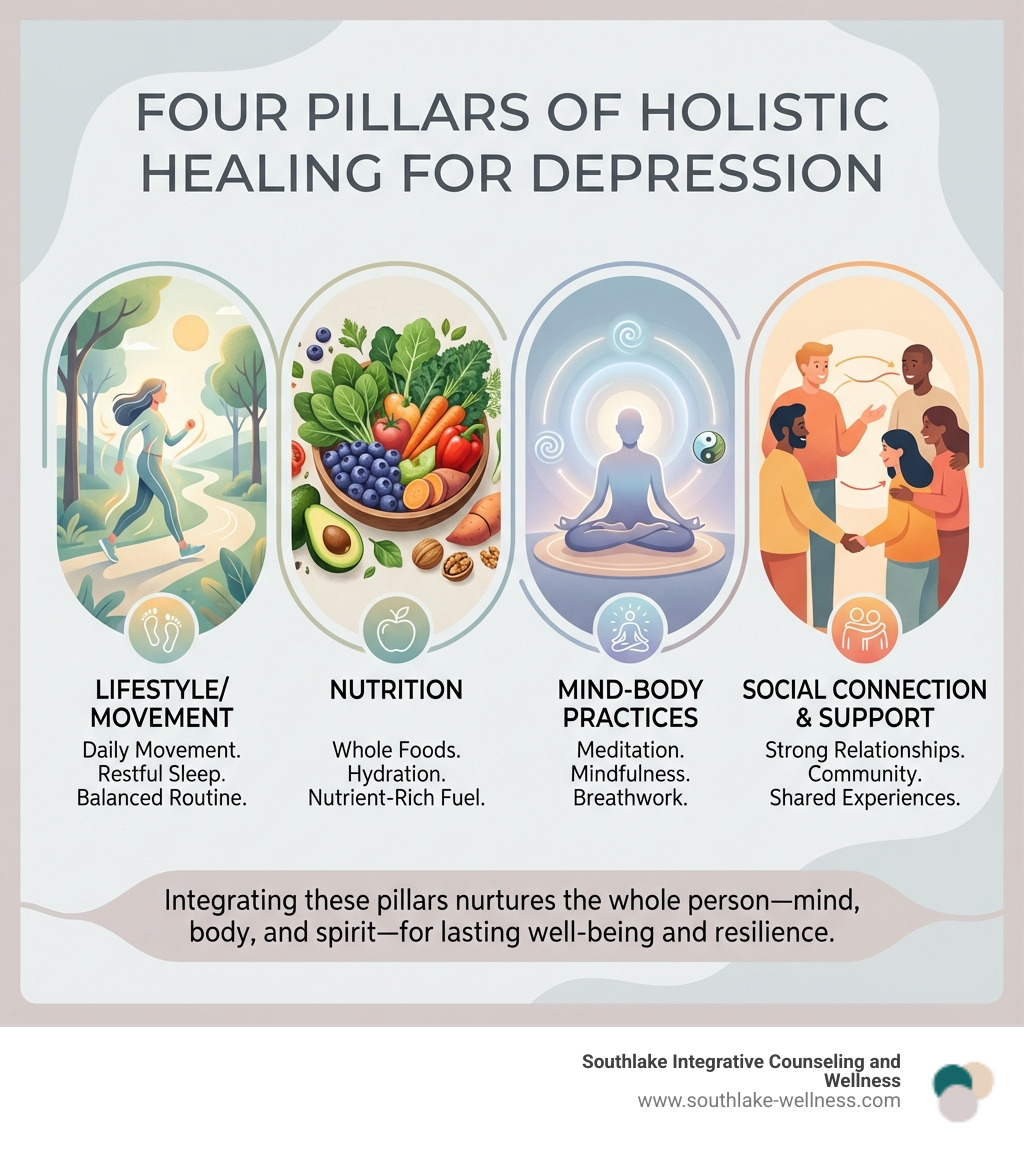
Holistic healing for depression treats the whole person—mind, body, and spirit—rather than just symptoms. It combines lifestyle changes, nutrition, mind-body practices, and natural therapies with conventional treatment to address the root causes of depression.
Quick Overview: Key Components of Holistic Healing for Depression
- Movement & Exercise - Walking, yoga, or strength training 20-40 minutes, 3x per week
- Anti-Inflammatory Diet - Mediterranean or Japanese-style eating with omega-3s
- Mind-Body Practices - Meditation, mindfulness, or tai chi to reduce rumination
- Natural Supplements - Omega-3s, vitamin D, B vitamins, magnesium (with medical guidance)
- Connection & Nature - Social support, time outdoors, and animal therapy
- Complementary Therapies - Acupuncture, massage, music therapy, and aromatherapy
Depression affects millions worldwide and can feel like living in a cave—dark, isolated, and overwhelming. But here's the truth: you don't have to rely on medication alone. Research shows that addressing depression through multiple pathways—from what you eat to how you move to how you connect with others—can be as effective as conventional treatments for many people.
The holistic approach recognizes that depression isn't just a brain chemistry problem. It's a whole-body condition influenced by inflammation, stress hormones, gut health, sleep patterns, and social connection. Studies consistently show that people with depression often have higher levels of inflammatory compounds in their blood, and that lifestyle factors can either fuel or fight this inflammation.
This doesn't mean abandoning proven treatments like therapy or medication. Instead, it means building a comprehensive toolkit that addresses all aspects of your well-being. When you combine evidence-based therapies with holistic practices, you're not just managing symptoms—you're creating lasting change.
I'm Holly Gedwed, a Licensed Professional Counselor-Associate with 14 years of experience helping people overcome trauma, anxiety, and depression through customized therapeutic approaches. Throughout my career, I've witnessed how holistic healing for depression empowers individuals to break unhealthy patterns and achieve sustainable mental wellness by addressing both internal beliefs and external behaviors. This guide will walk you through practical, science-backed strategies you can start using today.
Understanding Depression Through a Holistic Lens
When we talk about depression, we often think of it purely as a mental health condition, but the reality is far more complex. Depression is a systemic issue, affecting not just our minds but our entire being. It's a holistic disorder, impacting everything from our cognitive functions to our physical health. We know that individuals differ in their capacity to handle distressing experiences, and for some, these experiences can overwhelm their resources, leading to the system-wide shutdown we recognize as depression.
This is where the power of integrative medicine comes in. Integrative medicine, or IntM, is a growing medical trend that combines conventional approaches with evidence-based complementary therapies to promote overall well-being. It's about looking at the full picture of your health. By addressing depression through a multifaceted lens, we can help people achieve better, more lasting outcomes. You can learn more about this comprehensive approach in articles like Mind-Body Medicine in the Treatment of Depression.
If you or someone you know is struggling with severe depression or thoughts of self-harm, immediate help is available. Please Call or text 988 for immediate support.
The Role of Inflammation
One of the most exciting areas of research in understanding depression is the link to inflammation. Many studies show that depressed patients often have higher levels of inflammatory compounds circulating in their blood. This isn't just a coincidence; inflammation is a significant factor in both initiating and perpetuating depression.
How does this happen? Our lifestyle choices play a huge role. Chronic stress, for instance, is known to increase inflammatory compounds in the body. When our bodies are constantly in a state of "fight or flight," it can lead to persistent, low-grade inflammation that impacts brain function and mood. Furthermore, the intricate connection between our gut and brain, known as the gut-brain axis, suggests that gut health can also influence inflammation and, consequently, our mental well-being. Addressing gut health through dietary changes and probiotics can be a key part of reducing this inflammation.
Why Conventional Treatments Aren't Always Enough
While conventional treatments like medication and psychotherapy are incredibly valuable and often life-saving, they sometimes fall short for everyone. We see cases of "treatment-resistant depression," where individuals don't respond adequately to standard interventions. For others, the unwanted side effects of antidepressant medications can be a significant barrier to consistent treatment. For example, some natural alternatives like St. John's wort have been noted to have better tolerability compared to some SSRIs in certain studies.
There's also a growing desire for empowerment in healing. Many people want to understand and address the root causes of their depression, not just mask the symptoms. This desire, coupled with a global "treatment gap" where many still lack access to adequate mental health care, highlights the need for broader, more personalized approaches. By integrating holistic healing for depression into treatment plans, we can offer more pathways to recovery and greater overall well-being.
Foundational Lifestyle Pillars for Mental Resilience
We often underestimate the power of our daily habits, but they are truly the cornerstone of mental health. Just as a sturdy house needs a strong foundation, our mental well-being thrives when we build a supportive daily structure. This means making conscious choices about how we move, what we eat, and how we interact with the world around us.

The Power of Movement: Exercise as a Natural Antidepressant
Think of exercise not just as a way to stay physically fit, but as a potent natural antidepressant. We've seen compelling evidence that physical activity can significantly alleviate many symptoms of depression. For instance, moderate-intensity aerobic exercise, like walking for 20 to 40 minutes three times per week for six weeks, has been shown to improve self-concept and is especially effective at relieving somatic symptoms, including sleep disturbance.
But it's not just aerobic exercise. Strength training, yoga, cycling, and dance are all beneficial. Exercise works by stimulating the release of nerve growth factors, which leads to the creation of new nerve cells and connections in the brain. It can also raise our core body temperature, promoting relaxation and tension relief, and releasing endorphins that naturally boost mood. The sense of accomplishment and self-efficacy gained from consistent movement is also incredibly empowering. To dive deeper into the research, check out this systematic review on exercise for depression.
Nourishing Your Brain: The Anti-Depression Diet
What we put into our bodies directly impacts our minds. An anti-inflammatory diet is a powerful intervention for depressive disorders. Studies show that diets rich in fruits, vegetables, and fish are linked to a lower risk of depression. Traditional Mediterranean-type and Japanese-style diets, packed with whole grains, nuts, and seeds, are prime examples of eating patterns associated with improved mental health.
A key player in this is omega-3 fatty acids, especially eicosapentaenoic acid (EPA). EPA is particularly effective in relieving depression symptoms because of its significant anti-inflammatory activity. These healthy fats are crucial for nerve cell membranes and efficient signal relay in the brain.
On the flip side, certain foods can fuel inflammation and worsen depressive symptoms. We advise limiting red and processed meats, as well as sugars and refined grains, which can negatively affect metabolism and increase inflammation. And don't forget your gut! A healthy gut contributes to a healthy brain. Incorporating probiotics through fermented foods or supplements can help support your gut microbiome, which in turn can positively impact your mood.
The Importance of Social Connection and Nature
Humans are inherently social creatures, and social connection is a natural buffer against depression. It fosters a sense of belonging and safety, mitigating distress and promoting well-being by curbing stress hormones. Feeling connected to others, whether in a walking group or through family and friends, boosts recovery and provides a much-needed dose of satisfaction and encouragement.
Beyond human connection, connecting with nature also offers profound benefits. Being in nature can reduce anxiety and depression, increase pleasant feelings, and even lower blood pressure, heart rate, and muscle tension. Anecdotally, people describe feeling calm, happy, and alive when immersed in natural beauty. For those struggling with isolation, even just setting foot in a different location can stimulate neural circuitry that leads to positive affect.
And for those who love animals, pets can play a major role as a therapeutic intervention for both anxiety and depression. Even specialized therapies like equine-assisted therapy have proven very helpful for our clients in Texas struggling with these challenges.
Mind-Body Practices for Holistic Healing for Depression
Mind-body practices are not just about relaxation; they are about actively training our minds to respond differently to stress and negative emotions. These techniques help calm the nervous system and build resilience, offering powerful tools for holistic healing for depression.

Mindfulness and Meditation: Training Your Awareness
Mindfulness, often combined with Cognitive Behavioral Therapy (CBT), teaches us to focus on the rhythm of our breathing, observing our thoughts and feelings without judgment. This practice can be challenging at first—learning to observe your mind, thoughts, and emotions without judging yourself takes patience. However, it's incredibly effective at reducing rumination, that endless loop of worries and fears that fuels depression.
Research strongly supports the benefits of meditation. Volunteers who took an eight-week meditation course experienced a 10% to 20% improvement in depression symptoms and a 5% to 10% improvement in anxiety symptoms. In fact, meditation appeared to provide as much relief from some depression symptoms as other studies have found with antidepressants. Mindfulness-based programs have been shown to reduce depression to roughly the same degree as active control groups in large reviews. This practice helps us pause the churning thoughts, allowing us to detach from negative patterns and choose where to focus our attention. For more insights, the National Center for Complementary and Integrative Health offers valuable information on Mind and Body Practices for Health.
Meditative Movement: Yoga and Tai Chi
Beyond static meditation, movement-based mind-body practices like yoga and Tai Chi offer unique benefits for depression. Yoga, with its focus on breath, posture, and meditation, has been shown to improve mood and reduce depressive symptoms. Studies suggest it can even increase thalamic Gamma Aminobutyric Acid (GABA) levels, a neurotransmitter that helps calm the nervous system.
Tai Chi, a gentle Chinese martial art, is another powerful tool. It's been found to reduce stress and improve mental health, particularly for middle-aged and older adults experiencing depressive symptoms. These practices improve the mind-body connection, helping us feel more grounded and present.
Sensory Therapies: Music, Art, and Aromatherapy
Our senses are powerful gateways to emotion and healing. Sensory therapies leverage this connection to support mental well-being.
- Music Therapy: Actively listening to or performing music can be a profound way to regulate mood. Music therapy has been shown to provide short-term benefits for people with depression, helping to process emotions and promote healing.
- Art Therapy: While not explicitly covered in the provided research, art therapy is widely recognized for its ability to provide a non-verbal outlet for self-expression, allowing individuals to explore complex emotions and experiences in a safe and creative space.
- Aromatherapy: The use of essential oils can also be a gentle yet effective approach. We know that essential oils of lavender, chamomile, basil, and frankincense generally have a calming effect, which can be wonderful for anxiety that often co-occurs with depression. For those experiencing low mood, stimulating oils like bergamot and peppermint can be invigorating and helpful.
Natural Supplements and Complementary Therapies
While we champion a holistic view, we understand that sometimes, our bodies need a little extra support. Natural supplements and complementary therapies can play a significant role in holistic healing for depression, working alongside lifestyle changes and professional guidance.
Important Disclaimer: Always consult a healthcare professional before starting new supplements.
Key Vitamins, Herbs, and Supplements for Mood Support
Many natural compounds have shown promise in supporting mental health:
- Omega-3 Fatty Acids (EPA): As mentioned earlier, omega-3s, particularly those with at least 60% EPA, are especially effective. They're vital for brain health, nerve cell function, and their significant anti-inflammatory activity.
- Vitamin D & Sunlight: Sunlight exposure is a fantastic natural way to reset our body clock, promote healthy blood flow in the brain, and trigger Vitamin D production. Studies show Vitamin D plays crucial roles in brain health, nerve cell growth, and sustaining mood.
- B Vitamins: The B vitamins—including L-methylfolate, thiamine, and B12—are essential for nervous system function and the production of neurotransmitters that influence mood.
- Magnesium: This vital mineral helps reduce inflammation and stabilizes neurotransmitters, contributing to better mood regulation.
- Probiotics: By supporting a healthy gut microbiome, probiotics can positively influence the gut-brain axis, potentially easing depressive symptoms.
- Saffron: Saffron extract has shown significant efficacy in treating mild to moderate anxiety and depression, sometimes comparable to conventional antidepressants.
- SAMe (S-Adenosyl-L-Methionine): Another nutritional supplement considered a natural antidepressant, SAMe has been explored for its mood-boosting properties.
Understanding the Benefits and Risks of a holistic healing for depression approach
The benefits of incorporating natural supplements and complementary therapies into your plan for holistic healing for depression are numerous. They can often lead to fewer side effects compared to some conventional medications, address some of the underlying root causes of depression, and promote overall wellness. For many, they offer a sense of empowerment, putting more control over their healing journey into their own hands.
However, it's crucial to be aware of the risks. Most supplements are not approved by the U.S. Food and Drug Administration (FDA), meaning they aren't held to the same strict regulations as prescription medications. This can lead to inconsistencies in product quality and purity. More importantly, many natural remedies can interact with your current medications or pose risks if you have certain health conditions. This is why we emphasize, with humor and seriousness, the need to always talk to your healthcare provider before starting anything new.
Body-Based Therapies: Acupuncture and Massage
Beyond what we ingest, physical therapies can also be profoundly beneficial:
- Acupuncture: This ancient practice involves stimulating specific points on the body. There's evidence that many acupuncture points, particularly on the external ear, tap into branches of the autonomic nervous system (ANS), including the vagus nerve. Manipulating these points can stimulate the ANS, which plays a key role in regulating our stress response and can contribute to reducing depression symptoms.
- Massage Therapy: A good massage isn't just about relaxation; it can significantly impact our mood. Massage has been shown to reduce stress hormones like cortisol and promote overall relaxation, which can be a wonderful tool for managing the physical tension and emotional burden of depression.
Creating Your Integrated Path to Wellness
We believe that true holistic healing for depression is a deeply personal journey. There's no one-size-fits-all solution, and that's perfectly okay. Personalization is key, and starting small can lead to significant progress. The most important step is seeking professional guidance. These holistic practices are not meant to replace professional psychotherapy, but rather to support and improve it. For example, mindfulness, often combined with Cognitive Behavioral Therapy (CBT), can deepen your self-awareness and improve the effectiveness of your therapeutic work.
How to Integrate Holistic Practices with Conventional Treatment
Integrating holistic approaches into an existing treatment plan requires collaboration and open communication. We encourage you to:
- Collaborate with Your Doctor and Therapist: Always discuss any new holistic practices or supplements with your medical doctor and therapist in Southlake, Texas. They can help ensure safety and compatibility with your current treatments.
- Track Symptoms and Progress: Keep a journal of your mood, energy levels, and any changes you notice. This data can be invaluable for your healthcare team to adjust your personalized plan.
- Use Holistic Methods to Improve Therapy Outcomes: Think of these practices as powerful allies. For example, improved sleep from lifestyle changes can make you more receptive to insights gained in therapy. Reduced inflammation can improve your overall cognitive function, making CBT even more effective.
- Build a Support Team: This includes your medical doctor, therapist, and potentially a nutritionist or other holistic practitioners. Having a dedicated team working together ensures you receive comprehensive, integrated care.
Creating a Personalized Plan for holistic healing for depression
Developing your unique plan involves self-assessment and setting realistic goals. We can help you assess your current lifestyle and identify areas where small, manageable changes can make a big difference.
Here's a quick overview of some approaches:
PracticeTime Commitment (e.g., Daily/Weekly)Key BenefitExercise20-40 min, 3x/weekImproved mood, reduced somatic symptoms, increased self-efficacyMindfulness/Meditation10-20 min dailyReduced rumination, improved emotional regulation, stress reductionAnti-inflammatory DietDaily meal planningSupports brain health, reduces systemic inflammation, stabilizes moodSocial ConnectionDaily/WeeklyFosters belonging, reduces stress hormones, combats isolationNature Exposure15-30 min dailyReduces anxiety, lowers blood pressure, boosts moodYoga/Tai Chi30-60 min, 2-3x/weekCalms nervous system, increases GABA, improves mind-body connectionAromatherapyAs neededMood improvement, relaxation, stimulation (depending on oil)AcupunctureWeekly/Bi-weekly (series)Stimulates ANS, regulates stress response, pain reliefMassage TherapyAs needed/MonthlyReduces stress hormones, promotes relaxation, alleviates physical tensionSupplementsDaily (as directed by provider)Addresses nutritional deficiencies, supports neurotransmitter function, reduces inflammation
For more in-depth information and to explore how these strategies can be custom to your unique needs, please visit our page on More info about our integrative counseling services.
Conclusion: Embracing Your Journey to Wholeness
We've explored how holistic healing for depression is about embracing a comprehensive approach that nurtures your entire being. It's about understanding that your mind, body, and spirit are interconnected, and true healing comes from addressing them all. From the calming power of meditation to the invigorating benefits of exercise, from nourishing your body with anti-inflammatory foods to connecting with loved ones and nature, each step contributes to your mental resilience.
This journey is about empowerment through self-care—taking an active role in your well-being. It's not always easy, but healing is a continuous process, full of small victories and ongoing growth. At Southlake Integrative Counseling and Wellness, we specialize in creating personalized treatment plans that combine evidence-based therapies with holistic modalities to support your journey to emotional balance. We're here to walk alongside you, offering guidance and support custom to your unique path.
Ready to take the next step towards a brighter, healthier future? Contact us to schedule a consultation and begin your path to healing.