
Why Learning How to Manage Stress is Essential for Your Well-Being
How to manage stress effectively is one of the most important skills you can develop in today's world. Here's what you need to know:
Quick Stress Management Essentials:
- Identify your triggers - Keep a stress journal to track patterns
- Use the 4 A's - Avoid, Alter, Adapt, or Accept stressful situations
- Stay physically active - Aim for 150 minutes of moderate exercise weekly
- Practice deep breathing - Take slow, deep breaths to activate relaxation
- Get quality sleep - Adults need 7+ hours per night for stress resilience
- Build social connections - Reach out to friends, family, or support groups
- Try mindfulness - Focus on the present moment to reduce anxiety
- Seek help when needed - Professional support can provide personalized strategies
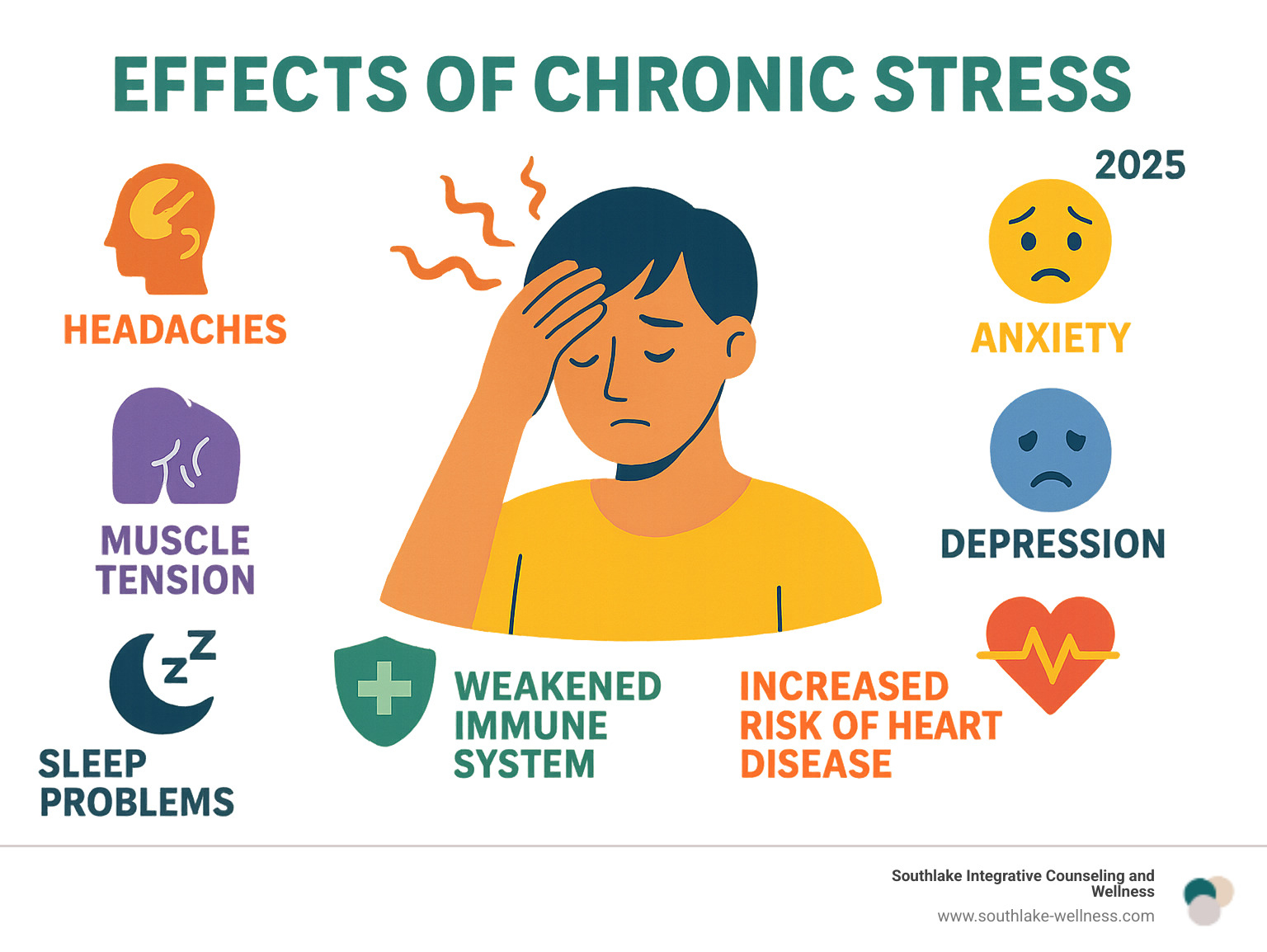
Stress is your body's natural response to challenging situations, but when it becomes chronic, it can wreak havoc on both your physical and mental health. Research shows that chronic stress can damage your immune system, increase your risk of heart disease, and contribute to anxiety and depression.
Everyone experiences stress differently. What overwhelms one person might energize another. The key is understanding your unique stress patterns and developing a toolkit of healthy coping strategies that work for your lifestyle.
The good news? Stress management is a learnable skill. With the right techniques and consistent practice, you can transform how you respond to life's pressures and build lasting resilience.
I'm Holly Gedwed, a Licensed Professional Counselor Associate with 14 years of clinical experience helping people learn how to manage stress through evidence-based approaches like Cognitive Behavioral Therapy and mindfulness techniques. My practice focuses on breaking unhealthy patterns and building the confidence and skills needed for lasting change.
Key how to manage stress vocabulary:
Identify Your Stress: Pinpointing Triggers and Coping Styles
Learning how to manage stress starts with becoming a detective in your own life. Think about it – how can you solve a problem if you don't really understand what's causing it in the first place?
Stress is sneaky. It can come from big life changes like starting a new job or moving to a different city. But just as often, it's the little things that pile up – getting stuck in traffic, dealing with a difficult coworker, or even just running late for an appointment. What's fascinating is that something that completely overwhelms you might not even register as stressful for your best friend.
Journaling is one of the most powerful tools you can use to identify your stress patterns. It doesn't have to be fancy – just jot down what happened, how you felt, and how you responded. After a few weeks, you'll start seeing patterns emerge. Maybe you always feel anxious on Sunday nights, or perhaps certain people consistently leave you feeling drained.
This kind of self-reflection puts you back in the driver's seat. Instead of feeling like stress just "happens" to you, you begin to see how your own habits, thoughts, and reactions might be contributing to the problem. That's actually great news because it means you have more control than you might think.
Once you've identified your triggers, the next step is taking an honest look at how you're currently coping. Are your strategies actually helping, or are they just making things worse in the long run? The I'm So Stressed Out! Fact Sheet (NIMH) offers valuable insights into recognizing these patterns.
Healthy vs. Unhealthy Coping
Here's the thing about stress – when we're feeling overwhelmed, our brains often reach for whatever provides the fastest relief. Unfortunately, the quickest fix isn't always the best fix.
Unhealthy coping mechanisms might include reaching for that extra glass of wine, stress eating, endless scrolling on social media, or just avoiding the problem altogether. These strategies can feel good in the moment, but they're like putting a band-aid on a broken pipe – they don't address the real issue and often create new problems.
Healthy coping strategies, on the other hand, actually build your resilience over time. Things like going for a walk, talking to a trusted friend, practicing deep breathing, or actively problem-solving might require more effort upfront, but they leave you stronger and better equipped to handle future challenges.
Unhealthy Coping StrategiesHealthy Coping StrategiesExcessive alcohol or drug useRegular physical activitySmoking or vapingDeep breathing and relaxation techniquesOvereating or stress eatingTalking to trusted friends or familySocial withdrawal and isolationSeeking professional help (therapy, counseling)Procrastination and avoidancePracticing mindfulness and meditationExcessive screen time or unhealthy distractionsEngaging in hobbies and creative activitiesSuppressing emotionsJournaling thoughts and feelingsNegative self-talk and ruminationPracticing gratitude and positive reframing
The key is emotional awareness – really tuning into how different coping strategies make you feel, both immediately and hours later. At Southlake Integrative Counseling and Wellness, we believe in addressing the whole person, not just the symptoms. You can learn more about our holistic approaches to find strategies that work for your unique situation.
The 4 A's of Stress Management
Once you understand your stress triggers and current coping patterns, you can start making strategic changes using what's called the "4 A's of Stress Management." Think of this as your stress management toolkit – four different approaches you can try depending on the situation.
Avoid unnecessary stress by learning to say no when your plate is already full. This isn't about avoiding all challenges – it's about recognizing which stressors you can eliminate. Maybe that means setting boundaries with people who drain your energy, or turning off the news when it makes you anxious. If you're a perfectionist, this might mean accepting that "good enough" really is good enough sometimes.
Alter the situation when you can't avoid it entirely. This is where good time management and communication skills come in handy. Can you have an honest conversation with your boss about your workload? Can you break that overwhelming project into smaller, manageable chunks? Sometimes a small change in how you approach a situation can make a huge difference in your stress level.
Adapt to the stressor by changing your perspective when you can't change the circumstances. This is where positive reframing becomes incredibly powerful. Instead of seeing that traffic jam as a complete waste of time, maybe it's an opportunity to listen to your favorite podcast or practice some deep breathing. It's not about pretending everything is fine – it's about finding ways to work with the situation instead of against it.
Accept things you can't change – and this might be the hardest one of all. Some stressors are simply beyond our control, like natural disasters, other people's behavior, or economic uncertainty. Acceptance doesn't mean giving up; it means channeling your energy toward what you actually can influence rather than fighting battles you can't win.
The beauty of the 4 A's is that they give you options. When you're feeling stressed, you can pause and ask yourself: "Can I avoid this? Change this? Adapt to this? Or do I need to accept this?" Having a framework makes you feel less helpless and more empowered to take action.
Actionable Lifestyle Strategies for Building Resilience
Think of your body and mind as teammates working together to help you thrive. When you learn how to manage stress effectively, you're essentially strengthening this partnership. The beautiful truth about building resilience is that small, consistent changes in your daily routine can create profound shifts in how you handle life's challenges.
Your physical health directly impacts your mental well-being, and vice versa. When you're physically run down, everything feels harder to manage. But when you prioritize taking care of your body, you're giving your mind the solid foundation it needs to stay calm and focused, even during tough times.
The key here isn't perfection—it's consistency. You don't need to overhaul your entire life overnight. Instead, focus on building sustainable habits that you can maintain long-term.

Prioritize Physical Activity and Healthy Nutrition
Here's something wonderful: your body has its own built-in stress relief system. When you move your body, it releases endorphins—nature's mood boosters that can literally make you feel happier and more relaxed. These natural chemicals help wash away the day's tensions and give you a fresh perspective on whatever's been weighing you down.
You don't need to become a marathon runner or spend hours at the gym. The goal is simply to get your body moving for 150 minutes of moderate activity each week. That breaks down to just over 20 minutes a day—totally doable! Brisk walking counts, and so does dancing in your living room, gardening, or playing with your kids at the park.
Yoga deserves special mention here because it combines physical movement with mindfulness, making it a double win for stress management. The gentle stretching and deep breathing help release physical tension while calming your mind. Even 10-15 minutes of yoga can shift your entire day.
What you eat matters just as much as how you move. Think of food as fuel for both your body and your brain. A balanced diet rich in fruits, vegetables, lean proteins, and whole grains gives you steady energy and helps your body cope with stress more effectively.
On the flip side, limiting caffeine and sugar can make a huge difference in how jittery or anxious you feel. That afternoon coffee might seem like a good idea, but it could be ramping up your stress levels without you realizing it. Try swapping some of those caffeinated drinks for herbal tea or water with lemon.
The fascinating thing is that physical activity can actually cancel out some of stress's negative effects on your immune system. Research shows that working adults who engage in moderate physical activity experience about half the perceived stress of those who don't exercise. You can learn more about this connection in The impact of stress on body function and our article on Can Stress Make You Sick?
The Critical Role of Sleep and Relaxation
Let's be honest—when you're tired, everything feels harder. That project at work seems impossible, your kids' questions feel overwhelming, and your partner's innocent comment might set you off. This isn't a character flaw; it's just how your brain works when it's running on empty.
Most adults need 7 or more hours of sleep each night for their bodies and minds to properly recharge. During sleep, your brain literally cleans house, processing the day's experiences and preparing you to handle tomorrow's challenges with a clear head.
Creating good sleep hygiene doesn't have to be complicated. Start with the basics: try to go to bed and wake up around the same time each day, even on weekends. Your body loves routine, and this consistency helps regulate your natural sleep-wake cycle.
Your winding down routine is where you can get creative and find what works for you. Maybe it's reading a few pages of a book, taking a warm bath, or listening to calming music. The key is to signal to your body that it's time to shift into rest mode.
Here's a game-changer: put your phone away at least 30 minutes before bedtime. The blue light from screens interferes with melatonin production—the hormone that helps you feel sleepy. Try charging your phone in another room to avoid the temptation to scroll through social media when you should be winding down.
Beyond sleep, making time for hobbies and activities you enjoy isn't selfish—it's essential for learning how to manage stress. When life gets overwhelming, we often cut out fun activities first, thinking we don't have time. But this actually makes stress worse because we lose our outlets for joy and relaxation.
Whether it's reading, gardening, crafting, or playing music, these activities give your mind a break from worrying and problem-solving. They remind you that life has beauty and pleasure, not just responsibilities and deadlines.
And don't underestimate the power of laughter! It might sound too simple to be true, but laughing actually creates positive physical changes in your body. It fires up your stress response initially, then cools it down, leaving you feeling more relaxed. So go ahead—watch that funny movie, call that friend who always makes you laugh, or spend time with pets who make you smile.

Rewire Your Brain: How to Manage Stress with Mental Techniques
Here's something amazing about your brain: it's constantly changing and adapting throughout your life. This incredible ability, called neuroplasticity, means you can literally rewire your neural pathways and transform how you respond to stress. Instead of feeling like your anxious thoughts are in the driver's seat, you can learn to take back control.
Think of it like building a muscle. The more you practice healthy thinking patterns, the stronger those neural pathways become. And the best part? You don't need any special equipment or expensive gadgets – just your willingness to try new approaches.

At Southlake Integrative Counseling and Wellness, we've seen countless clients find their own power to change their stress response using Evidence-Based Therapy Techniques. The change is often surprising – and deeply empowering.
Using Mindfulness and Meditation
Mindfulness might sound like a trendy buzzword, but it's actually a simple, powerful practice that's been around for thousands of years. At its core, mindfulness is about present moment awareness – paying attention to what's happening right now instead of getting caught up in yesterday's regrets or tomorrow's worries.
When stress hits, our minds often go into overdrive, jumping from one anxious thought to another like a pinball machine. Mindfulness helps quiet that mental chatter and brings us back to a place of calm awareness.
Deep breathing exercises are one of the easiest ways to start. When stress kicks in, your breathing often becomes quick and shallow, which actually signals your body to stay in "panic mode." But when you deliberately slow your breath – inhaling deeply through your nose, letting your belly expand, then exhaling slowly through your mouth – you're sending a clear message to your nervous system: "It's safe to relax now."
Guided imagery is another gentle technique where you mentally transport yourself to a peaceful place. Maybe it's a quiet beach, a cozy cabin, or your grandmother's garden. The key is engaging all your senses – what do you see, hear, smell, or feel in this safe space?
Body scan meditation helps you tune into physical tension you might not even realize you're carrying. Starting from your toes and working up to your head, you simply notice what each part of your body feels like, without trying to change anything. It's amazing how much stress we hold in our shoulders, jaw, or stomach without realizing it.
Research consistently shows that even short-term mindfulness practice can significantly reduce psychological stress and anxiety. You don't need to meditate for hours – even five minutes can make a difference in how to manage stress effectively.
For those who prefer learning in a supportive group setting, our Mindfulness-Based Group Therapy provides structured guidance alongside others on similar journeys. The American Psychological Association also offers valuable insights on Mindfulness meditation: A research-proven way to reduce stress.
How to Manage Stress by Reframing Your Thoughts
Here's a game-changing insight from Cognitive Behavioral Therapy (CBT): your thoughts directly influence how you feel, which then affects how you behave. This means that by changing your thinking patterns, you can actually change your entire stress response.
Let's say you're facing a big presentation at work. Your initial thought might be, "I'm going to completely mess this up and everyone will think I'm incompetent." That thought naturally creates anxiety, which might lead you to avoid preparing or lose sleep worrying.
But what if you challenged that negative thought? You might ask yourself: "What evidence do I actually have that I'll mess up? How have I handled presentations before? Even if I make a small mistake, will people really judge my entire competence based on one moment?"
Then you can reframe the thought: "I've prepared well for this presentation, and I have valuable insights to share. Even if it's not perfect, I'm learning and growing, and that's what matters."
This isn't about forcing fake positivity – it's about finding a more balanced, realistic perspective that serves you better.
Gratitude practice is another powerful reframing tool. When stress has you focused on everything going wrong, deliberately shifting attention to what's going right can literally rewire your brain toward positivity. You might keep a gratitude journal or simply take a moment each day to mentally acknowledge three specific things you appreciate.
One of the biggest stress culprits we see is perfectionism – that relentless inner critic that demands everything be flawless. Learning to accept "good enough" in many areas of life frees up enormous mental energy. Perfectionism isn't about high standards; it's often about fear of judgment or failure.
Developing a positive outlook doesn't mean pretending problems don't exist. It means choosing to focus your mental energy on solutions and possibilities rather than getting stuck in worst-case scenarios.
Our Cognitive Behavioral Therapy approach can help you master these powerful mental techniques, giving you practical tools to transform your relationship with stress from the inside out.
Building Your Support System and Knowing When to Get Help
We are social beings, and connection is a fundamental human need. In the journey of learning how to manage stress, building a robust support system is incredibly powerful. When we feel isolated, stress can feel overwhelming and impossible. But when we have people in our corner, everything becomes more manageable.

The Power of Social Connection
There's something magical that happens when we connect with others face-to-face. Our bodies actually release hormones that counteract the stress response, creating a natural calming effect. It's like having a built-in stress relief system that activates when we feel truly seen and supported.
Reaching out to friends and family might feel vulnerable, especially when we're struggling, but it's often exactly what we need. You don't always need someone to solve your problems – sometimes just having someone listen with genuine care can lift an enormous weight off your shoulders. There's profound comfort in knowing you're not alone in your struggles.
Volunteering offers a unique way to build resilience while helping others. Even small acts of kindness, like bringing coffee to a coworker or helping an elderly neighbor with groceries, can boost your own sense of well-being. When we focus on supporting others, it shifts our perspective away from our own stress and reminds us of our capacity to make a positive difference.
Joining groups or clubs can expand your social circle in meaningful ways. Whether it's a hiking group, book club, cooking class, or community organization, shared interests naturally create bonds. These connections often develop into friendships that provide ongoing support during stressful times.
Building these relationships requires good listening skills too. When we practice being fully present for others – really hearing what they're saying without immediately jumping to advice-giving – we strengthen our bonds and create the kind of mutual support that benefits everyone involved.
The American Psychological Association emphasizes this connection in their resource Manage stress: Strengthen your support network, showing how strong social support significantly improves our ability to bounce back from stress.
Seeking Professional Support for Stress
While building your support network and practicing self-care strategies are incredibly valuable, there are times when stress becomes too overwhelming to handle alone. Recognizing when you need professional help is actually a sign of wisdom, not weakness. It's an important part of truly understanding how to manage stress in all its forms.
You should consider reaching out for professional support when you feel persistently overwhelmed despite your best efforts. If you find yourself worrying constantly, to the point where it's interfering with your work, relationships, or daily activities, that's a clear signal that additional help could be beneficial.
Physical symptoms can also be telling indicators. When stress manifests as persistent headaches, digestive issues, muscle tension, or significant changes in your sleep patterns or appetite, your body is sending important messages that shouldn't be ignored.
Changes in your coping methods are another red flag. If you notice yourself turning to alcohol, drugs, or other unhealthy behaviors to manage stress, or if you're feeling persistently sad, irritable, or guilty, professional guidance can help you develop healthier strategies.
A therapist or counselor brings specialized training and an objective perspective to help you identify the deeper sources of your stress. They can provide personalized strategies custom to your specific situation and teach you coping tools that you might not find on your own. Most importantly, they offer a safe, confidential space where you can process your feelings without judgment.
At Southlake Integrative Counseling and Wellness, we understand that stress affects everyone differently. That's why we offer specialized support, including Anxiety Therapy Southlake and Trauma Therapy Southlake, to help you steer these challenges with personalized, compassionate care.
Conclusion
Learning how to manage stress is truly a journey of self-findy and growth, not a destination you arrive at once and never revisit. Throughout this guide, we've walked together through understanding your unique stress patterns, embracing healthy lifestyle changes, rewiring limiting thought patterns, and building meaningful connections that sustain you through life's ups and downs.
We've covered a lot of ground—from identifying your stress triggers and applying the practical "4 A's" framework to prioritizing the fundamentals like regular physical activity, nourishing nutrition, and quality sleep. We've explored the transformative power of mindfulness and cognitive reframing, and highlighted how crucial social support is for building true resilience.
The goal isn't to live a stress-free life (that would be pretty boring, wouldn't it?). Some stress actually serves us well—it can motivate us to meet deadlines, push us to grow, and help us rise to challenges. The real victory is developing the resilience to steer stress with grace, wisdom, and inner strength.
By consistently practicing these evidence-based strategies, you can break free from feeling constantly overwhelmed and move toward a life filled with greater balance, peace, and genuine well-being. Small, consistent steps create lasting change, and every effort you make toward better stress management is an investment in your long-term happiness and health.
You absolutely have the power within you to transform your relationship with stress and reclaim your peace of mind. The tools are in your hands now—the question is simply when you'll take that empowering first step.
At Southlake Integrative Counseling and Wellness, we're here to support you on this journey with our holistic, personalized approach to mental health. Take control of your well-being with individual therapy in Southlake, TX and find how our integrated approach can help you build the resilience and peace you deserve.