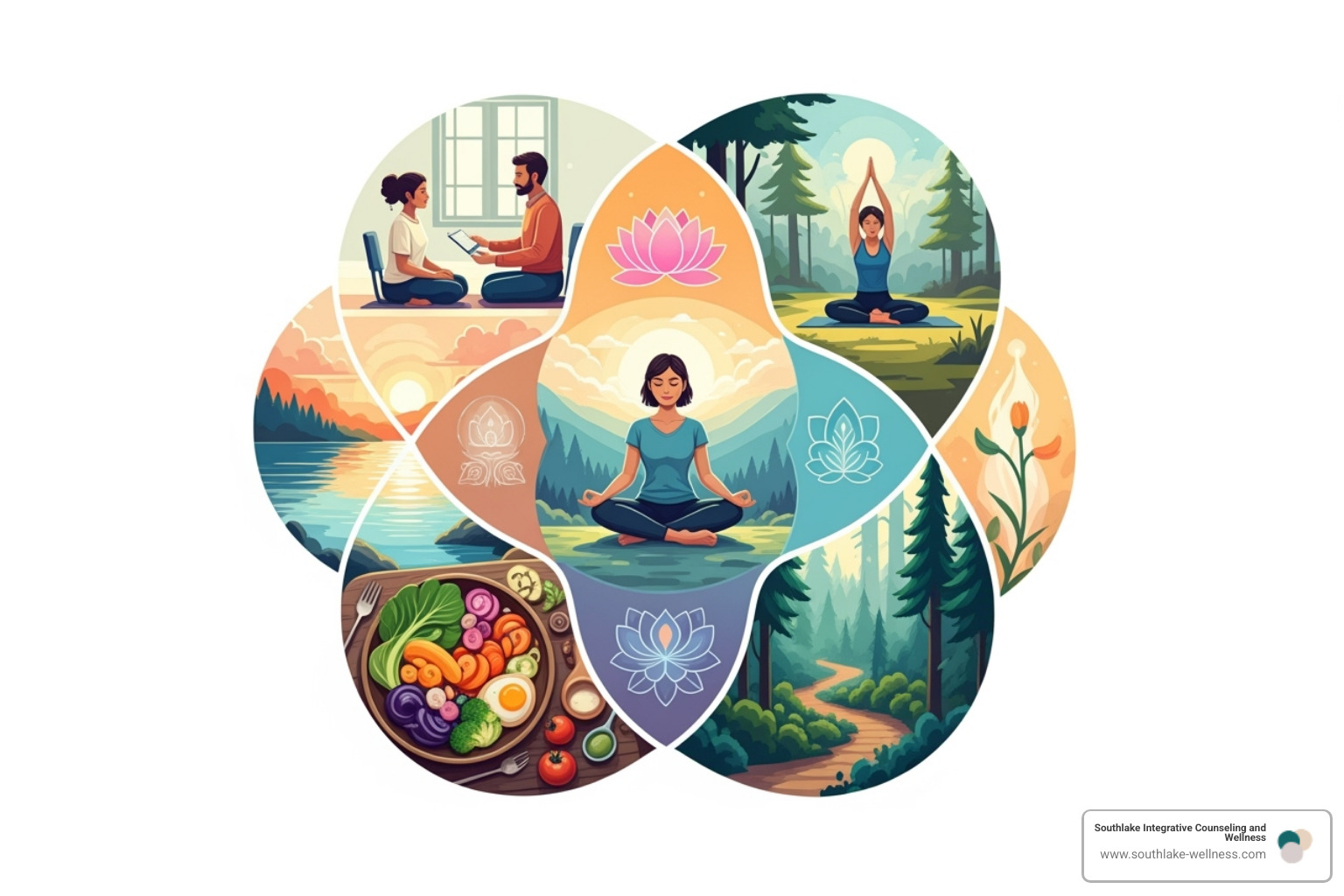
Why Integrative Mental Health is Revolutionizing Treatment
Integrative mental health is a comprehensive approach to mental wellness combining conventional therapies with complementary treatments to address the whole person—mind, body, and spirit.
Key Features of Integrative Mental Health:
- Combines traditional therapy and medication with alternative modalities
- Focuses on root causes, not just symptoms
- Treats the whole person: biological, psychological, social, and spiritual aspects
- Emphasizes prevention and wellness promotion
- Creates personalized, collaborative treatment plans
- Uses evidence-based conventional and complementary therapies
The mental health landscape is changing. With one in five U.S. adults facing a mental health disorder and demand for counselors growing, there's a clear shift toward more holistic care.
Traditional mental healthcare often focuses on managing symptoms. While medication and therapy are vital, many people seek approaches that address the interconnectedness of mental, physical, and spiritual well-being. Integrative mental health bridges this gap by treating the root causes of conditions, not just symptoms.
This whole-person approach considers factors like nutrition, sleep, stress, trauma, and social connections. By addressing these elements together, integrative care promotes lasting wellness and empowers individuals in their healing journey.
With 14 years of clinical experience in trauma and addiction, I've seen how integrative mental health transforms lives by addressing unique needs. My practice helps individuals break unhealthy patterns using evidence-based therapies like CBT and DBT, combined with holistic wellness strategies.

What is Integrative Mental Health and How Does It Differ?
Instead of only treating anxiety symptoms with medication, what if your care team also examined your sleep, nutrition, and stress levels? That's the heart of integrative mental health—seeing you as a complete person, not just a collection of symptoms.
This approach is built on powerful guiding principles. Patient-centered care puts you in the driver's seat; your experiences, preferences, and goals shape every decision we make together.
Holistic care moves beyond a "fix what's broken" mindset. We explore what happened to you and what you need to thrive, addressing root causes instead of just symptoms.
With personalized medicine, no two treatment plans are alike. What works for one person may not work for another, so we use holistic mental wellness approaches that honor your unique story.
The Core Philosophy of Integrative Mental Health
At Southlake Integrative Counseling and Wellness, our philosophy centers on a genuine partnership between patient and provider. We act as your guides and collaborators, exploring options and supporting you in making choices that feel right for your life.
Patient-centered care means we start by listening to your story. Your experiences, cultural background, and personal goals matter deeply. We avoid one-size-fits-all solutions because every person is unique and complex.
We accept the use of all appropriate therapies, combining evidence-based conventional treatments with complementary approaches to support your overall well-being.
Our focus on wellness and prevention means we help you build resilience for the long haul through lifestyle changes, stress management, and healthy coping strategies.
We always consider the whole person: mind, body, spirit, and community. Your physical health, spiritual practices, and relationships are all interconnected and vital for support, so we address all these dimensions.
Traditional vs. Integrative Approaches
Understanding integrative mental health is clearer when compared to traditional approaches. The conventional biomedical model typically focuses on symptoms and chemical imbalances, which has its place in care.
Traditional approaches often center on medication and standardized therapy protocols. These are valuable tools but can sometimes miss the bigger picture.
Integrative mental health, however, bridges conventional and complementary methods. We might combine CBT with mindfulness or pair medication with nutritional support.
AspectTraditional ApproachIntegrative ApproachFocusSymptoms and chemical imbalancesWhole person: mind, body, spirit, environmentTreatmentPrimarily medication and talk therapyBlends conventional and complementary modalitiesPatient RoleReceives treatment recommendationsActive collaborator in treatment decisionsGoalSymptom reductionWellness, resilience, and quality of life
The traditional model asks, "What's wrong with you?" while integrative mental health asks, "What happened to you?" and "What do you need to flourish?" This shift opens possibilities for personalized mental health care that fits your life.
Rather than rejecting conventional treatments, we see them as important tools in a larger toolkit. We explore all factors contributing to your well-being to create a comprehensive approach that honors both the science and art of healing.
Core Components and Techniques in Integrative Care
Integrative mental health creates a rich mix of healing approaches that work together. We weave evidence-based therapies with complementary practices into a blended model of care, recognizing that everyone's path to wellness is unique. This allows us to customize your treatment plan with a diverse set of tools. You can explore how these methods work together in our Integrative Therapy Guide.

Foundational Conventional Therapies
In integrative mental health, the foundation is built on proven conventional therapies. These time-tested approaches provide a reliable starting point for addressing your mental health challenges.
Talk therapy serves as our anchor and is often the heart of treatment. It provides a safe space to explore thoughts and feelings without judgment, build a trusting relationship, and develop practical coping strategies.
Cognitive Behavioral Therapy (CBT) is a powerful tool for lasting change. It helps you identify and challenge negative thought patterns that lead to anxiety or depression, replacing them with balanced perspectives. You'll learn practical skills for problem-solving and managing difficult emotions.
Psychodynamic therapy explores how past experiences and unconscious patterns influence your current mental health. By uncovering these hidden dynamics, we can work toward healing old wounds and creating lasting change.
For trauma, specialized approaches like EMDR (Eye Movement Desensitization and Reprocessing) can be highly effective. This therapy helps process difficult memories, reducing their emotional impact so you can move forward without being triggered by the past.
These conventional methods in psychiatry form the backbone of our approach. Psychiatric medications can also be an important part of integrative mental health when used thoughtfully as one tool among many.
Mind-Body Practices
Integrative mental health honors the deep mind-body connection. Your mental state affects your physical health and vice versa. Mind-body practices help you tap into this powerful connection for healing.
Mindfulness-based therapy teaches you to pay attention to the present moment without judgment. By learning to observe your thoughts and feelings without reacting, you create space for more thoughtful responses. Originally for depression, mindfulness-based therapy also helps with anxiety and stress.
Yoga and Tai Chi combine movement, breath, and mindfulness. These ancient practices are about inhabiting your body with awareness and kindness, not just physical fitness. Research on movement-based practices shows they contribute to holistic wellness and create community connection.
Meditation and breathing exercises are simple yet effective tools for calming an overactive nervous system. We teach techniques you can use anytime to manage anxiety or find peace.
These practices help you develop body wisdom—the ability to tune into your body's signals and respond skillfully. This awareness is a foundation for Mind-Body Physical Therapy and Wellness.
Nutritional and Lifestyle Approaches
Your daily choices about food, sleep, and movement profoundly impact your mental health. It's not about perfection, but understanding how these fundamentals support or undermine your emotional well-being.
Nutritional psychiatry explores the connection between what you eat and how you feel. The gut-brain axis is crucial for mood regulation. Through nutritional counseling for mental health, we help you understand how foods can boost mood or contribute to anxiety, without restrictive diets.
Simple changes, like increasing foods rich in folic acid and B vitamins, can help regulate mood. Our Functional Nutrition Counseling Southlake TX services help you make these connections sustainably.
Sleep hygiene is a cornerstone of mental wellness. Quality sleep is essential for emotional regulation and clear thinking. We help you identify sleep disruptors and create realistic strategies for better rest.
Exercise is a natural antidepressant, releasing endorphins and reducing stress. You don't need to be a marathon runner; we help you find enjoyable ways to move that fit your life.
Other Complementary Modalities
Integrative mental health uses a wide range of complementary healing approaches alongside conventional therapies, offering unique pathways to wellness.
Acupuncture uses fine needles at specific points to promote natural healing and restore balance. Research shows acupuncture for anxiety has promising results, and many clients find it deeply relaxing and helpful for stress.
Expressive arts therapy uses creative mediums like painting, music, or writing to explore emotions that are hard to articulate. Expressive arts therapy can be powerful for those who feel stuck or have experienced trauma.
Nature-based interventions tap into the healing power of the outdoors. Research shows that time in nature reduces stress and improves mood, so we often incorporate these recommendations.
Biofield therapies like Healing Touch work with the body's energy systems to promote relaxation and emotional release. Many clients find these approaches calming and helpful for processing difficult emotions.
By integrating these diverse approaches, we create a personalized treatment plan that addresses your whole self. Our Holistic Approach to Depression shows how these modalities work together to support lasting wellness.
Benefits and Professional Considerations
Choosing integrative mental health care offers benefits beyond immediate relief. This comprehensive approach creates lasting change, leading to sustained recovery, empowerment, and an improved quality of life.
Many clients describe a profound shift, becoming active partners in their healing journey instead of passive recipients. This empowerment is often a transformative part of their experience.
Integrative mental health addresses underlying patterns and root causes, not just symptoms. By strengthening the mind-body connection, improving nutrition, and developing coping skills, we create positive changes that last.

We've seen remarkable improvements, including reduced depression and anxiety, better sleep, increased energy, and stronger relationships. We are most excited to see clients find their inner wisdom and confidence. Learn more about our commitment on our About Us page.
Who Can Benefit from This Approach?
Integrative mental health is flexible and adaptable, meeting you where you are. Whether you face ongoing challenges or want to optimize your well-being, this approach is valuable.
Individuals with chronic conditions like persistent anxiety or depression often find relief with integrative care. Our holistic approach can uncover overlooked factors by examining sleep, nutrition, stress, and social connections.
If conventional treatments haven't provided the success you hoped for, you're not alone. An integrative approach opens new possibilities by exploring different modalities and addressing root causes.
Many people seek to prevent mental health issues before they become serious. This proactive approach builds resilience, teaches coping strategies, and creates supportive lifestyle habits for long-term well-being.
Anyone wanting a comprehensive approach to wellness can benefit. You don't need a diagnosis to value the interconnectedness of your mental, emotional, and physical health.
We commonly work with people experiencing anxiety disorders, depression, PTSD, ADHD, chronic stress, burnout, insomnia, digestive issues linked to mental health, chronic pain, substance use disorders, and eating disorders. If you want to feel better and live more fully, this approach can help.
The Role of Collaboration and Ethics in Care
Integrative mental health is effective because we value collaboration—with you and with other healthcare providers on your care team.
Interprofessional collaboration means we work closely with other professionals like your primary care doctor, a psychiatrist, or a nutritionist. When everyone communicates and works toward the same goals, you get better results.
Our coordinated care teams approach ensures your providers communicate (with your permission). This prevents you from repeating your story or receiving conflicting advice, keeping everyone on the same page.
We measure effectiveness using objective tools and your personal experience. Standardized assessments like the PHQ-9 for depression and GAD-7 for anxiety provide concrete data. We also track your quality of life, relationships, and personal growth, as you are the expert on your experience.
Ethical considerations guide everything we do. We always seek informed consent, explaining recommendations, benefits, and potential risks so you can make informed decisions about your care.
We are also aware of equity barriers in healthcare. Factors like transportation, work schedules, and cultural differences matter. While we can't solve systemic problems, we strive to be flexible and creative in our care delivery, prioritizing safety and evidence-based practice.
Frequently Asked Questions about Integrative Mental Health
When people first learn about integrative mental health, they often have questions. Here are answers to the most common ones.
What is the difference between "integrative" and "integrated" mental health?
While the terms sound similar, they describe different approaches.
"Integrated" care focuses on logistics and coordination, such as having therapists Southlake and psychiatrists in the same clinic for easier referrals and communication. It's about improving how traditional services work together.
"Integrative" care is a philosophy of healing that combines the best of conventional treatments (like therapy and medication) with complementary approaches like nutritional counseling, mindfulness, and movement therapies. It addresses the mind, body, and spirit together.
In short, integrated care organizes conventional services, while integrative mental health expands the toolkit to help a person heal more completely.
Does integrative mental health reject the use of medication?
Not at all. This is a common misconception. We view psychiatric medications as valuable tools for healing and do not reject their use.
Our approach is to see medication as one piece of a larger puzzle, not the only solution. We believe in using all appropriate therapies. While we may start with the least intrusive methods first—like changes in nutrition, sleep, and stress management—we integrate medication thoughtfully into your overall plan if it is helpful.
The goal is to create a personalized, effective approach using every tool that makes sense for your situation, not to avoid medication.
How is the effectiveness of integrative treatments measured?
As we are committed to evidence-informed practice, measuring effectiveness is crucial.
We use standard clinical tools like the GAD-7 for anxiety and the PHQ-9 for depression to track symptom changes with concrete data.
Beyond symptom reduction, we also focus on your personal experience of well-being. We track improvements in your overall quality of life, personal growth, and daily functioning—such as sleep quality, relationships, and confidence in handling stress.
In some cases, we may also look at biomarkers with other healthcare providers to see how interventions affect your physical health.
Combining these measures gives us a complete picture of your progress toward lasting positive change.
Conclusion
Your journey toward better mental health doesn't have to be one-size-fits-all. Integrative mental health is a comprehensive way of healing that honors every part of who you are, moving beyond symptom management to understand the deep connections between your mind, body, and life experiences.

This holistic approach is the future of mental healthcare. By combining conventional therapies with complementary modalities, you're not just treating a diagnosis; you're nurturing your whole self back to wellness.
The beauty of integrative mental health is its personalized nature. Your treatment plan is unique to your needs and circumstances. Whether you're dealing with anxiety, depression, or trauma, or simply want to build resilience, this evidence-informed approach offers real solutions.
At Southlake Integrative Counseling and Wellness, we've witnessed countless changes when people accept this comprehensive path to healing. We understand that taking the first step can feel overwhelming - that's completely normal. But you don't have to figure it out alone.
We're here to walk alongside you, creating a warm and supportive environment where your story matters and your healing journey is honored. Our team believes in the power of collaboration, working with you to build the skills, insights, and lifestyle changes that support lasting emotional balance.
If you're ready to explore what integrative mental health can offer you, we'd love to connect. Every journey toward wellness begins with a single step, and we're here to help you take that step with confidence. Explore our comprehensive services and find how this holistic approach can help you reclaim not just your mental health, but your sense of wholeness and joy in life.
Your path to deeper healing and comprehensive well-being starts here. Let's take that journey together.