
Why Men's Mental Health Matters Now More Than Ever
Men's mental health is a critical public health issue that affects millions, yet remains widely undertreated. Here's what you need to know:
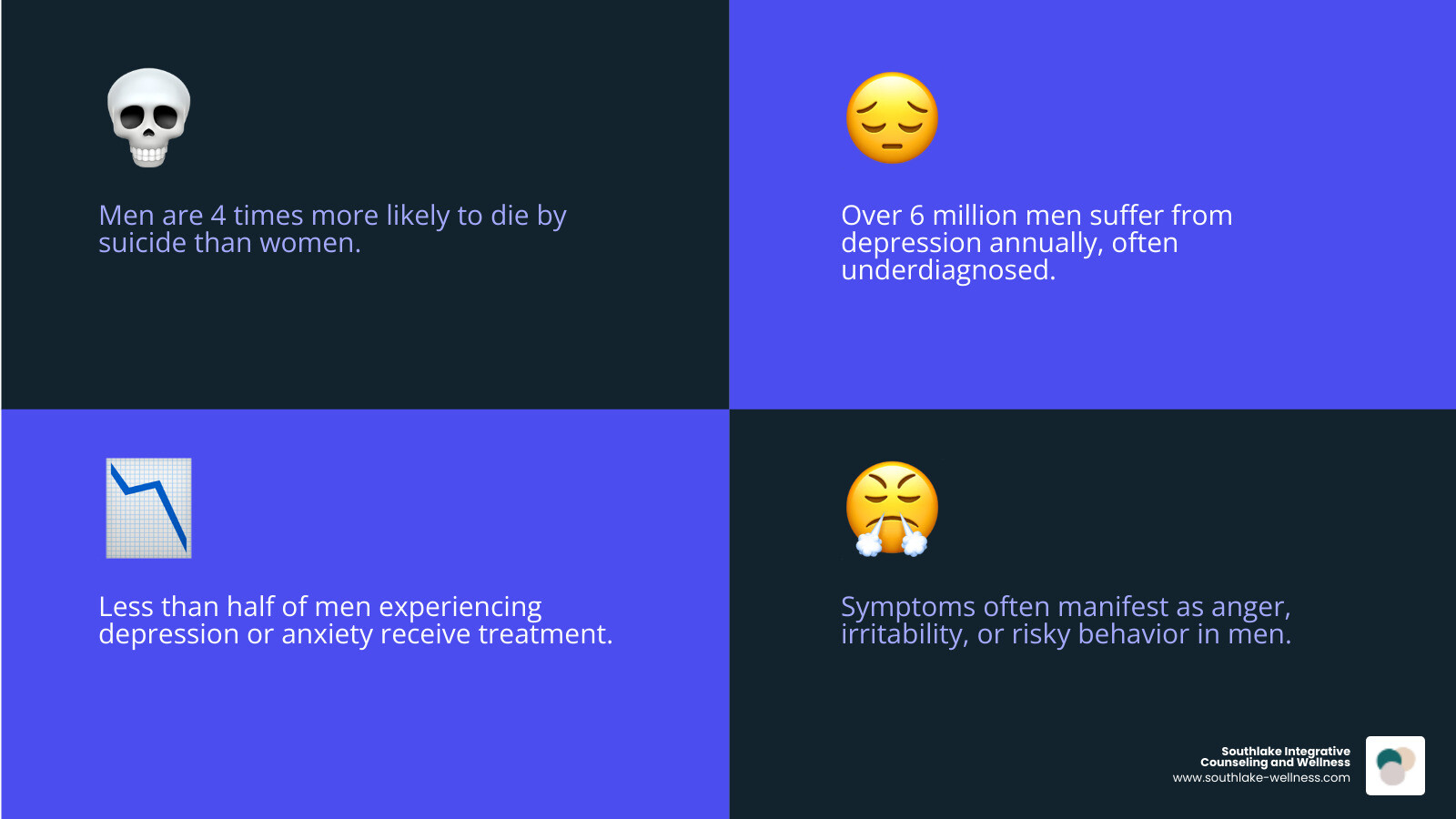
- Men are 4 times more likely to die by suicide than women, accounting for 75% of all suicide deaths
- Over 6 million men suffer from depression annually, but male depression is often underdiagnosed
- Nearly 1 in 10 men experience depression or anxiety, yet less than half receive treatment
- Men are significantly less likely to seek mental health treatment than women in the past year
- Symptoms often look different in men - showing up as anger, irritability, risky behavior, or physical complaints rather than sadness
It's a crisis hiding in plain sight. While we've made progress talking about mental health, men still face unique barriers that keep them suffering in silence.
The numbers tell a sobering story. Men die by suicide at rates four times higher than women. Depression affects over 6 million men each year, yet it frequently goes unrecognized and untreated. The gap between suffering and getting help remains stubbornly wide.
Why does this happen? Societal pressure to "man up" and traditional views of masculinity create a culture where seeking help feels like admitting weakness. Men are expected to be strong, self-reliant, and emotionally controlled. These expectations don't just discourage men from reaching out - they often prevent men from even recognizing they're struggling in the first place.
The good news? Things are changing. More men are recognizing that taking care of your mental health is actually a sign of strength, not weakness. Seeking support shows courage, self-awareness, and a commitment to living your best life.
This guide will help you understand the unique challenges men face with mental health, recognize warning signs, and find practical pathways to wellness. Whether you're struggling yourself or want to support a man in your life, you'll find evidence-based strategies and resources that work.
I'm Holly Gedwed, a Licensed Professional Counselor Associate with 14 years of clinical experience specializing in trauma, anxiety, and customized therapeutic approaches. Throughout my practice, I've worked extensively with men's mental health, helping individuals break unhealthy patterns and build the confidence and skills needed for lasting change.
The Silent Struggle: Why Men's Mental Health is Different

For generations, men have been told, implicitly or explicitly, to "man up." This seemingly innocuous phrase carries a heavy burden, contributing to what is often called the "man box" – a set of rigid expectations about how men should think, feel, and behave. Traditional masculinity, while often emphasizing positive traits like courage and responsibility, can also foster emotional suppression and a reluctance to admit vulnerability. This cultural norm plays a significant role in shaping men's mental health experiences and their willingness to seek help. Research consistently shows that societal constructions of masculinity impact men's mental health help-seeking behavior.
The Impact of Stigma and Societal Expectations
The pressure to conform to these traditional ideals creates a powerful stigma around mental health challenges for men. The fear of appearing weak or "unmanly" can be a massive barrier. Men often feel the need to be the stoic provider, downplaying their own pain and struggles. This expectation of self-reliance makes it difficult for men to talk openly about their feelings, leading many to suffer in silence. As we've seen in our practice in Southlake, Texas, men often present with physical complaints before they acknowledge emotional distress, a clear sign of this ingrained cultural norm.
Unique Challenges Men Face
Beyond the overarching impact of societal expectations, men encounter specific challenges throughout their lives that can significantly affect their mental well-being:
- Fatherhood Pressures: Becoming a father is a joyous occasion, but it also brings immense pressure and can be a stressful, isolating experience. New fathers are vulnerable to postpartum depression and anxiety, with estimates suggesting 5% to 15% experience anxiety and 5% to 10% experience depression during the perinatal period. We often hear fathers report feeling ignored or that their own mental health challenges are illegitimate, which can increase their risk of poor mental health and impact their bond with their baby.
- Workplace Stress: Men are often found in high-risk industries, leading to higher rates of fatal and non-fatal workplace injuries. Long and irregular hours can contribute to poor health outcomes, and exposure to occupational hazards can increase the risk of various health issues. This environment can foster chronic stress and burnout, impacting mental well-being.
- Relationship Breakdown: Divorce and relationship challenges can be particularly devastating for men. The loss of connection, especially with children, can lead to profound social isolation and distress, elevating the risk of mental health issues.
- Mid-Life Challenges: As men age, they may experience what is sometimes referred to as male menopause or andropause, characterized by a sudden loss of testosterone. This hormonal shift can have a significant impact on mental health, contributing to mood changes, fatigue, and depression.
- Health Inequities in Specific Male Populations: Certain groups of men face even greater mental health disparities. This includes men who are homeless, ex-prisoners, LGBTQ+ men, and men with disabilities. For instance, LGBTQ+ men may face increased risks of alcohol and drug misuse, self-harm, and mental health problems due due to societal discrimination and lack of acceptance. Men with disabilities also have higher mortality rates and often die at a younger age. These groups are often overrepresented in chronically excluded populations, further impacting their access to care and overall well-being.
Recognizing the Signs: A Look at Men's Mental Health Statistics and Symptoms
The statistics for men's mental health paint a stark picture: over 6 million men suffer from depression annually, yet male depression often goes underdiagnosed. This underdiagnosis and misdiagnosis contribute to tragic outcomes, with men being four times more likely to die by suicide than women, accounting for approximately three out of every four suicide deaths. Nearly 1 in 10 men experience depression or anxiety, but less than half will receive treatment.
How Symptoms of Poor Men's Mental Health Can Differ
Mental health disorders in men often manifest differently than in women, leading to under-recognition. While women may internalize symptoms, expressing sadness or hopelessness, men frequently externalize their distress.
- Anger and Irritability: Instead of overt sadness, men might display increased anger, irritability, or even aggression. They might have a shorter fuse, lash out more easily, or seem constantly on edge.
- Risky Behavior: Engaging in high-risk activities like reckless driving, excessive gambling, or substance misuse can be a coping mechanism for underlying mental health issues. These behaviors offer a temporary escape or a false sense of control.
- Physical Symptoms: Men are more likely to report physical symptoms such as persistent headaches, digestive problems, or chronic pain, rather than acknowledging emotional distress. These physical complaints can be a masked form of depression or anxiety.
- Escapism: Men might immerse themselves in work, sports, or other activities to avoid confronting their feelings. This escapist behavior can lead to social isolation, even if they appear busy and engaged.
- Substance Misuse: Alcohol and drug use are common coping mechanisms, but they can exacerbate mental health problems. Men are much more likely to have drug and alcohol problems and to die from related causes.
Here's a comparison of how depression symptoms often manifest:
| Classic Depression Symptoms | How They Often Manifest in Men |
|---|---|
| Persistent sadness, hopelessness, feeling empty | Anger, irritability, aggression, frustration |
| Extreme tiredness, lack of energy | Restlessness, agitation, difficulty relaxing |
| Difficulty sleeping or sleeping too much | Sleep disturbances, insomnia, or excessive sleep |
| Loss of interest or pleasure in activities | Escapist behaviors (overworking, excessive sports, gambling) |
| Feelings of worthlessness or guilt | Self-criticism, cynicism, withdrawing from social interactions |
| Changes in appetite or weight | Noticeable changes in eating habits, weight fluctuations |
| Difficulty concentrating, remembering, or making decisions | Difficulty focusing, memory problems, indecisiveness |
| Suicidal thoughts or ideation | Engaging in risky behaviors, substance misuse, suicidal thoughts |
| Unexplained physical aches or pains | Headaches, digestive issues, chronic pain |
Common Conditions Expressed Differently in Men
Many mental health conditions can present uniquely in men:
- Depression: As discussed, male depression can be camouflaged by unhealthy coping mechanisms like substance use, anger, or overworking. It's often not recognized as depression by the individual or those around them.
- Anxiety Disorders: While anxiety is common, men might express it as physical symptoms, excessive worry about performance (work, sexual), or through controlling behaviors rather than overt signs of fear or nervousness.
- Substance Use Disorders: Men are more likely to develop substance use disorders, often using alcohol or drugs to self-medicate for underlying anxiety, depression, or trauma. This can be particularly dangerous, as the association between alcohol use and suicidal thoughts, attempts, and death by suicide is well-documented.
- Alcoholism: Alcohol-related deaths are disproportionately high in men, with mortality rates due to alcohol often significantly higher in men from deprived areas. Heavy alcohol consumption is linked to societal norms promoting risk-taking.
- ADHD: Attention-deficit/hyperactivity disorder (ADHD) is diagnosed at higher rates in men than women, highlighting a difference in prevalence or recognition. For more information on conditions like ADHD, you can refer to the CDC.
- Schizophrenia: The risk of schizophrenia is higher for men in younger age groups compared to women, and antisocial personality disorder is also more prevalent in men. There's been a rise in hospitalizations for eating disorders, including a stark increase among boys and young men, a condition often thought to primarily affect women.
Breaking Down the Barriers to Seeking Help

Despite the clear need, men are significantly less likely to have received mental health treatment than women in the past year. This reluctance isn't a sign of weakness; it's a complex issue rooted in societal norms and practical obstacles. As we often tell our clients, "The only thing more exhausting than being depressed is pretending that you are not." Acknowledging the problem is the first, brave step.
Identifying Obstacles to Treatment
Several factors contribute to men's hesitation in seeking mental health support:
- Stigma: The prevailing societal pressure to be strong and self-reliant often means that admitting to mental health struggles feels like a personal failure. This stigma is a major barrier, as men fear being judged or seen as weak by family, friends, or employers.
- Difficulty Expressing Emotions: Traditional masculinity often discourages emotional expression, leading men to suppress their feelings rather than articulate them. This makes engaging in talk therapy, where verbalizing emotions is key, feel unnatural or uncomfortable.
- Inflexible Work Hours: Many men face practical barriers such as demanding jobs with inflexible hours, making it challenging to schedule appointments during traditional business hours.
- Cost of Treatment: Financial constraints can be a significant obstacle, as mental health services may not always be fully covered by insurance, and out-of-pocket costs can be prohibitive.
- Lack of Awareness of Services: Men may simply not know where to go for help or what types of mental health support are available. Health literacy in men is often lower than in women, impacting their ability to understand and act on health information.
- Distrust in the Healthcare System: Some men, particularly those from marginalized communities, may distrust healthcare providers or feel that services are not culturally responsive to their needs.
Strategies for Overcoming Barriers
Overcoming these deeply ingrained barriers requires a multi-faceted approach, both individually and collectively:
- Normalizing Conversation: We need to create environments where talking about mental health is as normal as discussing physical health. Initiatives like Movember's ALEC model (Ask, Listen, Encourage Action, Check In) provide a simple yet powerful framework for initiating supportive conversations.
- Finding Male-Friendly Therapists: Seeking out therapists who understand the unique challenges and expressions of mental health in men can make a significant difference. Many professionals specialize in men's issues and can tailor their approach accordingly.
- Utilizing Online/Telehealth Options: For men with busy schedules or those who prefer privacy, online counseling and telehealth services offer convenient and accessible support. Our practice in Southlake, Texas, provides virtual services to meet these needs, ensuring that help is always within reach.
- Seeking Peer Support Groups: Informal, peer-based approaches, such as men's groups or community workshops like Men's Sheds, can provide a safe space for men to connect, share experiences, and build health literacy in a non-clinical setting.
- Starting with a Trusted GP: A primary care physician can be a crucial first point of contact, offering referrals to mental health professionals and helping to identify masked symptoms.
- Using Employee Assistance Programs (EAPs): Many workplaces offer EAPs that provide confidential counseling services and referrals, making mental health support more accessible for employees.
Pathways to Wellness: Support and Treatment Options for Men
Taking the step to seek help is a profound act of courage and self-care. At Southlake Integrative Counseling and Wellness, we understand that true wellness involves a holistic approach, recognizing the powerful mind-body connection. We believe in finding the right fit for each individual, offering personalized treatment plans that combine evidence-based therapies with alternative modalities to promote emotional balance and resilience. The earlier treatment begins, the more effective it can be.
Professional Support for Men's Mental Health
There are numerous professional avenues for men to explore on their journey to mental wellness:
- Psychotherapy (Talk Therapy): This includes individual therapy, couples counseling, and group therapy.
- Individual Therapy: Provides a confidential space to explore thoughts, feelings, and behaviors with a trained professional. Therapists experienced in men's issues can help steer societal pressures and emotional suppression.
- Cognitive Behavioral Therapy (CBT): A highly effective, evidence-based therapy that helps men identify and change negative thought patterns and behaviors that contribute to mental health issues.
- Medication: For some, medication, prescribed and monitored by a medical doctor, can be a vital component of treatment, particularly for severe depression or anxiety, working in conjunction with therapy.
- Group Therapy: Offers a powerful sense of community and shared experience. Men can realize they are not alone in their struggles, learn from peers, and practice new coping skills in a supportive environment.
- Couples Counseling: Addresses relationship dynamics that may be contributing to or exacerbating mental health challenges. It can improve communication and support systems within a partnership.
- Accelerated Resolution Therapy (ART): This is one of the specialized and customized therapeutic approaches we offer at Southlake Integrative Counseling and Wellness, particularly effective for trauma, anxiety, and depression.
- Functional Nutrition Counseling: We also offer functional nutrition counseling, which emphasizes the connection between diet and mental well-being, aligning with our holistic approach.
How Friends and Family Can Offer Support
You don't need to be a therapist to make a difference in a man's life. Friends and family play a crucial role in creating a supportive environment:
- Active Listening: Listen without judgment. Give your full attention and let him talk without interrupting or offering unsolicited advice. Sometimes, simply being heard is the most powerful support.
- Non-Judgmental Approach: Avoid language that implies blame or weakness. Instead of "You need to snap out of it," try "I'm here for you, no matter what you're going through."
- Encouraging Professional Help: Gently suggest seeking professional help if you observe persistent changes in mood or behavior. You might say, "I've noticed you haven't seemed yourself lately, and I'm concerned. Maybe talking to a doctor or therapist could help?" If someone has felt low for more than two weeks, suggesting a chat with a doctor is a valid form of encouragement.
- The ALEC Method: Movember, a leading charity for men's health, promotes the ALEC model for having tough conversations:
- Ask: Start by asking how he's really doing. Trust your instincts; if he says "fine" but doesn't seem it, don't be afraid to ask twice.
- Listen: Give him your full attention without judgment. Let him lead the conversation.
- Encourage Action: Suggest small, manageable steps he can take, like improving sleep, exercising, eating well, or talking to a professional.
- Check In: Follow up to see how he's doing. This shows ongoing care and support.You can learn more about how to start a conversation with Movember's ALEC model here.
- Setting Boundaries: While supportive, it's also important to set healthy boundaries to protect your own well-being. You cannot "fix" someone, but you can stand by them.
Immediate Support: Crisis Resources and Helplines
If you or someone you know is experiencing a mental health crisis, immediate help is available. Please do not hesitate to reach out.
- 988 Suicide & Crisis Lifeline: A free, confidential resource available 24/7 across the United States. Call or text 988 to connect with a trained crisis counselor. Support is also available via live chat at 988lifeline.org/chat. In a crisis? Call or text 988 now.
- Veterans Crisis Line: A free, confidential resource for veterans of all ages and circumstances. Call 988 then press 1; text 838255; or chat online at veteranscrisisline.net/get-help-now/chat/ to connect with 24/7 support.
- Disaster Distress Helpline: This helpline from the Substance Abuse and Mental Health Services Administration (SAMHSA) provides immediate crisis counseling for people experiencing emotional distress related to any natural or human-caused disaster. Call or text 1-800-985-5990.
In life-threatening situations, always call 911 or go to your nearest emergency room.
Frequently Asked Questions about Men's Mental Health
We often hear similar questions from men and their loved ones. Here are some of the most common, along with our insights:
Isn't feeling sad or angry just a normal part of being a man?
While sadness, anger, and other emotions are normal human experiences, it's crucial to differentiate between typical emotional fluctuations and a mental health condition. The key lies in the duration, intensity, and impact of these feelings on your daily life. If these emotions are persistent (lasting more than two weeks), overwhelming, or interfering with your relationships, work, or overall well-being, it's a sign that something more serious might be going on. For men, anger and irritability can often be a masked form of depression or anxiety, so paying attention to these signs is especially important. Seeking help isn't about eliminating emotions; it's about learning healthy ways to manage them and address underlying issues.
What if I can't afford therapy?
Financial concerns are a valid barrier, but there are many pathways to affordable mental health support.
- Community Mental Health Centers: These centers often provide services on a sliding scale based on income.
- University Clinics: Many university psychology or counseling departments offer low-cost therapy sessions supervised by licensed professionals.
- Sliding-Scale Therapists: Some private practitioners, including those at Southlake Integrative Counseling and Wellness, offer reduced rates based on financial need. Don't hesitate to ask when you call.
- Employee Assistance Programs (EAP): If you're employed, check if your workplace offers an EAP, which often includes free, short-term counseling sessions.
- Online Resources: Many reputable organizations offer free self-help articles, screening tools, and educational content that can be a starting point.
Prioritizing your mental health is an investment in your overall well-being, and we believe everyone deserves access to support.
How do I talk to my friend or partner about his mental health without him getting defensive?
Approaching a loved one about their mental health requires sensitivity and care. Here are some tips to foster an open conversation:
- Choose the Right Time and Place: Find a private, relaxed setting where you won't be interrupted. Avoid bringing it up during a heated argument or when he's stressed or distracted.
- Use "I" Statements: Frame your concerns around your observations and feelings, rather than making accusations. For example, instead of "You're always angry," try "I've noticed you seem more irritable lately, and I'm concerned about you."
- Express Concern, Not Judgment: Make it clear that your intention is to help, not to criticize. "I care about you, and I'm worried" is more effective than "You need to get it together."
- Listen More Than You Talk: Be prepared to listen patiently, without interrupting or offering immediate solutions. Let him express himself at his own pace. Sometimes, just having someone listen is a huge relief.
- Offer Support, Not Solutions: Avoid trying to "fix" his problems. Instead, offer practical support: "How can I help?" or "Would you like me to help you find a therapist?"
- Be Patient and Persistent: He might not open up immediately, and that's okay. Let him know you're there for him, and follow up later if he seems receptive.
You're planting a seed. The goal is to open the door for conversation and encourage him to consider seeking support when he's ready.
Conclusion: Taking the First Step Towards Mental Wellness
We've explored the unique landscape of men's mental health, from the silent struggle against societal expectations to the specific ways mental health issues can manifest. We've seen the sobering statistics that underscore the urgency of this issue, and we've identified the barriers that often prevent men from seeking the help they deserve.
But most importantly, we've highlighted that seeking support is a sign of immense strength and courage. It's about redefining what it means to be a man in today's world – one who is emotionally intelligent, self-aware, and committed to his overall well-being. There is hope for recovery, and effective pathways to wellness are available.
At Southlake Integrative Counseling and Wellness in Southlake, Texas, we are dedicated to supporting men on this journey. Our holistic approach, combining evidence-based therapies with alternative modalities, emphasizes the powerful mind-body connection. We offer personalized treatment plans for individuals, couples, and groups, helping men steer challenges like trauma, anxiety, and depression.
Don't let outdated notions of masculinity dictate your health and happiness. Take control of your narrative and prioritize your mental wellness.
Take control of your mental wellness with our specialized services for men