
Why Building Resilience Is Essential for Your Mental Well-Being
Resilience building therapy is a structured approach to developing the mental and emotional skills to adapt to life's challenges, bounce back from setbacks, and grow stronger through adversity. It's not about avoiding problems but learning practical techniques to steer difficulties with greater confidence and emotional flexibility.
What Resilience Building Therapy Offers:
- Evidence-based techniques like Cognitive-Behavioral Therapy (CBT), Acceptance and Commitment Therapy (ACT), and mindfulness practices
- Personalized support to identify your unique strengths and develop coping strategies that work for you
- Professional guidance to help you shift from feeling defeated to empowered
- Practical tools for managing stress, anxiety, depression, and trauma
- Long-term benefits including improved mental health, stronger relationships, and a better ability to handle future challenges
Do you tend to bounce back or fall apart when something goes wrong? This question gets to the heart of resilience. Resilience means being able to adapt to life's misfortunes and setbacks. It's the inner strength to rebound from challenges like chronic work stress, relationship problems, health issues, or past trauma.
Here's the good news: resilience is not something you're born with—it's a learned skill. Research shows that resilience involves behaviors, thoughts, and actions that anyone can learn. With practice and the right support, you can become more resilient, no matter what you've faced in the past.
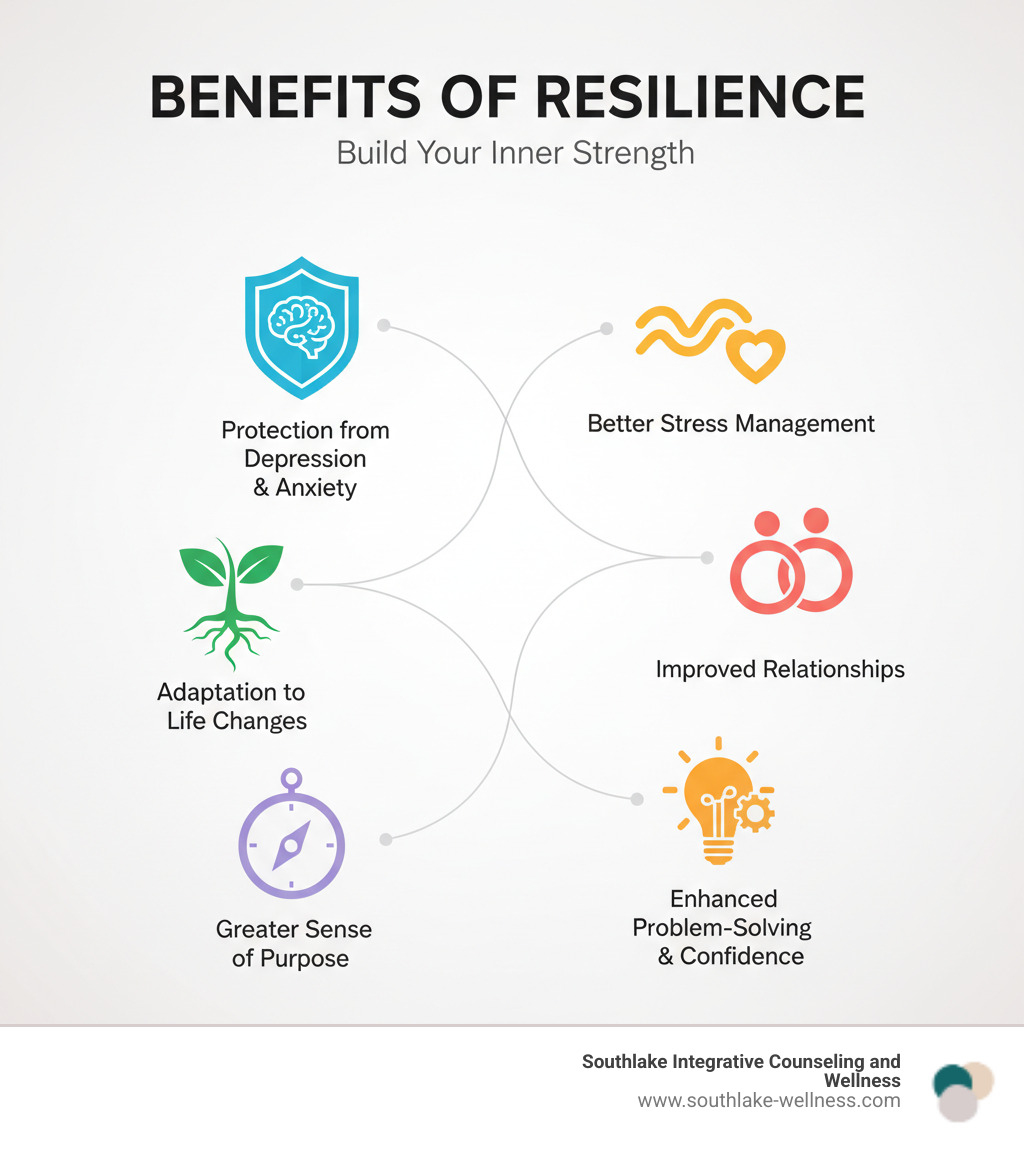
Resilience helps protect you from mental health conditions like depression and anxiety. While it won't make problems disappear, it helps you see past them, enjoy life, and better handle stress. It's a mental toolkit for weathering life's storms.
The reality is that trauma and adversity are part of life. Everyone faces difficult situations. The difference lies in how we respond. People who lack resilience may feel stuck, overwhelmed, or turn to unhealthy coping mechanisms. Those who develop resilience can steer challenges while maintaining their well-being.
I'm Holly Gedwed, a Licensed Professional Counselor Associate with 14 years of clinical experience. I specialize in trauma, anxiety, and resilience building therapy, using evidence-based techniques like CBT, DBT, and ACT. My approach is personalized to help you identify your goals and break unhealthy patterns.
The Core Pillars of a Resilient Mind

Resilience is like a machine with interconnected gears; when the parts work together, the system runs smoothly under pressure. It's not a single trait but is built from several psychosocial factors that create your inner strength.
The empowering part is that these factors aren't fixed. You can strengthen every component through practice and support. Resilience building therapy is effective because it helps you identify areas for improvement and provides practical tools to build them up.
Research shows resilience involves learnable behaviors, thoughts, and actions. Key factors include a sense of purpose, positive emotions, self-efficacy (belief in your abilities), social support, cognitive flexibility, and spirituality. These form the foundation for well-being and are all developable.
The Power of a Positive Outlook
Resilient optimism isn't pretending everything is fine. It means maintaining a hopeful, realistic outlook and believing you can steer through challenges.
Positive emotions do more than feel good. Research shows they can predict resistance to illness and protect mental health. Cultivating them broadens your focus and boosts creativity, improving problem-solving under stress.
Self-efficacy—your belief in your capacity to succeed—is another critical piece. When you feel capable, you're more likely to take action. Hardiness takes this further, helping you view stressful events as opportunities for growth. It's characterized by commitment, a sense of control, and viewing challenges as a normal part of life.
Don't underestimate the role of self-esteem. Believing in your own worth and capabilities provides a solid foundation for facing challenges.
At Southlake Integrative Counseling and Wellness, we help clients shift their internal dialogue and foster a more optimistic perspective. We guide this process, helping you positively appraise situations and employ effective coping strategies.
The Importance of Connection and Purpose
Humans are social beings, and our connections are vital for withstanding stress. Social support acts as a powerful buffer against anxiety and depression. Reaching out for help isn't a weakness—it's a key component of resilience.
Strong relationships provide a safety net, offering different perspectives and practical help. Nurturing these connections is one of the most important things you can do for your mental health.
Resilience is also about what gives your life meaning and purpose. A clear sense of why you're here makes it easier to endure hardship. A sense of coherence—feeling that life is comprehensible, manageable, and meaningful—helps you maintain stability.
Your values, spirituality, or religious beliefs can provide deep motivation. Studies show that religious and spiritual practices are associated with better mental health outcomes, even in high-stress situations. Clarifying your values provides a powerful compass through life's storms.
The Skill of Flexible Coping
Resilience is also about what you do when challenges arise. Flexible coping strategies are essential because different problems require different solutions.
Active coping means proactively addressing problems rather than avoiding them. Cognitive flexibility allows you to adapt your thinking and find creative solutions.
Positive reappraisal is a powerful skill for reframing challenging events in a more constructive light, helping you find lessons or growth opportunities.
Sometimes, the most resilient action is acceptance. When facing something you can't change, fighting reality is exhausting. Resilience includes knowing when to express your emotions and when to regulate them for better long-term adjustment.
Strong problem-solving skills empower you to break down complex issues into manageable steps, helping you tackle difficulties with more confidence and less overwhelm.
Actionable Strategies for Strengthening Your Resilience
Resilience building therapy isn't passive; it's something you actively cultivate, like tending a garden. It's about adopting daily habits and a proactive approach to foster personal growth and prepare you for life's challenges. This is an ongoing journey, and every small step you take today makes you stronger for tomorrow.
From Defeated to Resilient: Shifting Your Mindset
Your mindset about challenges shapes your experience. A defeated mindset makes everything feel heavier. You might feel helpless, blame external factors, fear failure, or turn to unhealthy coping mechanisms.
A resilient mindset is different. It doesn't mean ignoring problems. Instead, it means you see challenges as opportunities for growth. You focus on what you can control, learn from failures, take proactive steps, and maintain a hopeful, realistic outlook.
| Resilient Mindset | Defeated Mindset |
|---|---|
| Sees challenges as opportunities for growth | Views challenges as impossible obstacles |
| Focuses on what can be controlled | Feels helpless and overwhelmed by external factors |
| Learns from failures and setbacks | Fears failure and avoids new experiences |
| Takes proactive steps and adapts | Blames others or circumstances |
| Maintains a hopeful and realistic outlook | Adopts a victim mentality |
The shift to a resilient mindset starts with adopting a growth mindset—the belief that your abilities can be developed. When you face a difficult situation, try looking for the smallest upside. This practice can rewire your brain to see possibilities instead of problems.
Real resilience isn't suppressing negative emotions. It's about continuing on despite them and confronting difficult experiences. True strength comes from facing your fears and learning from them.
Nurturing Your Support System

No one builds resilience alone. In my practice, I've seen that people who bounce back strongest have solid social connections.
Building strong, healthy relationships is one of the most powerful things you can do for your resilience. Engage with empathetic, understanding people who genuinely care. The quality of these connections is what matters most.
Prioritize your relationships and make time for people who matter. Accept help when it's offered. Offering support to others also strengthens your own resilience, creating bonds that remind us we're not alone.
Consider joining civic groups, faith-based communities, or other local organizations for a sense of purpose and a support network. At Southlake Integrative Counseling and Wellness, we offer Group Therapy Southlake to connect with others facing similar challenges. Sharing your story builds a shared sense of resilience.
The Role of Mindfulness and Self-Care
Mindfulness and self-care are fundamental components of resilience building therapy. These practices are essential for maintaining your emotional foundation.
Mindfulness practices like meditation or journaling help you stay present, observe your thoughts without judgment, and increase emotional awareness. Research shows mindfulness can increase positive emotions and improve how you experience daily rewards.
Self-care routines encompass everything you do for your physical and mental well-being, including getting enough sleep, eating a healthy diet, and regular physical activity. These basic needs form the foundation for your mental capacity.
When your body is depleted, your mind struggles. Practicing stress management and engaging in enjoyable hobbies isn't selfish—it's necessary to replenish your energy reserves.
We offer more info about holistic mental healthcare where you can explore how these mind-body connections can improve your overall well-being. The integration of physical and mental health is a practical approach that yields real results.
Learning from Your Life's Journey
Your past holds the blueprint for your future resilience. Every challenge you've faced contains invaluable lessons.
Reflecting on past coping mechanisms that worked provides a roadmap for current challenges. What helped you get through tough times before? What made things worse? These patterns reveal your strengths and areas needing support.
Journaling about past events can help you identify these patterns and gain insight. Review situations when you coped well and times you struggled. Understanding the nature of your resilience helps you tap into it more intentionally.
Sometimes adversity leads to post-traumatic growth—a positive change after hardship. People may emerge with a greater sense of strength, a deeper appreciation for life, and improved relationships. This shows that difficult experiences can transform us in unexpected ways.
This kind of introspection is an excellent tool. It helps you identify resources and strategies that have helped you in the past, so you can use them more deliberately.
The Role of Resilience Building Therapy

Sometimes, a DIY approach to mental health isn't enough. While self-help strategies are useful, professional guidance can make all the difference. Resilience building therapy offers structured support in a safe environment, especially when dealing with trauma, overwhelming stress, or uncertainty on where to start.
Just as you'd see a doctor for a broken bone, sometimes we need expert help to heal emotionally. If you're struggling or stuck, a licensed mental health professional can develop a personalized strategy that fits your life.
What to Expect in Resilience Building Therapy
When you start resilience building therapy, the process is customized to your unique needs and goals. We use evidence-based techniques proven to be effective in helping people develop genuine resilience.
Cognitive-Behavioral Therapy (CBT) is a powerful approach that helps you identify and challenge unhelpful thought patterns. Research shows CBT is highly effective in promoting resilience, with lasting benefits. It involves cognitive restructuring—learning to replace defeating thoughts with more balanced, empowering perspectives.
Acceptance and Commitment Therapy (ACT) takes a complementary approach. Instead of fighting uncomfortable thoughts, you learn to accept them while taking action toward what matters most. It's about making room for difficult emotions without letting them control your choices. We also draw from positive psychology to help clarify your sense of purpose.
Solution-focused coaching helps you recognize your existing strengths. Therapy may involve cognitive restructuring to reframe negative thoughts, mindfulness and acceptance techniques to stay grounded, and learning problem-solving skills. We also work on values clarification, building social connection skills through better communication, and emotional regulation techniques like breathwork.
Some sessions might involve narrative reframing—reshaping your personal story from one of victimhood to one of survival and growth, changing your relationship with past experiences so they don't define your future.
How Therapy Fosters Resilience in Different Contexts
Resilience building therapy isn't just for recovering from major trauma. It's valuable for navigating everyday challenges like workplace stress and preventing burnout. It can improve your well-being and performance at work.
For those in high-stress professions like healthcare or first responders, developing resilience is essential. Studies show that psychological resilience training helps people manage crisis management more effectively. Whether you're coping with family problems, a chronic illness, or a major life transition, therapy provides practical tools to help you adapt and grow.
The scientific research on building resilience from the American Psychological Association demonstrates how targeted therapeutic interventions can strengthen our capacity to handle life's challenges.
Finding the Right Resilience Building Therapy for You
Finding the right therapist is a personal and important decision. You need someone who understands your needs and creates a safe space. At Southlake Integrative Counseling and Wellness, we match you with a licensed professional who gets where you're coming from.
Our approach combines evidence-based therapies with alternative modalities, recognizing the crucial role of the mind-body connection. We create personalized treatment plans because your journey is unique.
Whether you're looking for one-on-one support through our individual counseling services or the shared experience of group therapy, we're here to walk alongside you. Group therapy offers new perspectives and the realization that you're not alone.
The bottom line is you don't have to figure this out alone. Professional support can accelerate your growth and help you develop lifelong resilience skills.
Frequently Asked Questions about Resilience
Isn't resilience just something you're born with?
This is a common misconception. The answer is no. While some people seem naturally more adaptable, resilience is not something you're born with—it's a learned skill. This means anyone can develop it, regardless of their past or personality.
Psychological research confirms that resilience involves specific behaviors, thoughts, and actions that anyone can learn through practice. It's not a fixed trait. Think of it like a muscle—the more you work at it, the stronger it becomes. Some may start with an advantage, but everyone can build significant strength.
Through resilience building therapy, we help clients systematically develop these skills. You learn practical strategies and new ways of thinking to gradually build your capacity to handle life's challenges. It's empowering to realize you can actively grow your resilience.
Does being resilient mean I won't feel stress or emotional pain?
Being resilient doesn't mean you won't experience stress or emotional pain. In fact, the road to resilience often involves considerable emotional distress. Resilient people don't have a magical shield; they feel pain, stress, and sadness like everyone else.
The difference is how you respond to and steer that pain. Resilience won't make your problems disappear, but it equips you with tools to see past them, find joy during difficult times, and handle stress without becoming overwhelmed.
Resilient people experience the storm but have learned to weather it more effectively. They allow themselves to feel and process their emotions, then move forward. Experiencing distress is completely normal and human. Resilience is about adapting well in the face of adversity, not being invulnerable to it.
How long does it take to build resilience?
There's no specific timeline; building resilience is an ongoing process, not a destination. It's a lifelong journey that evolves as you face new challenges and grow.
The timeline varies depending on your circumstances and how consistently you practice resilience-building strategies. Some notice shifts in weeks, while for others, it takes months. What's universal is that small steps matter, and practice and consistency are key.
Like learning any new skill, the more you practice the techniques from resilience building therapy, the more natural they become. You're developing new habits of thinking, feeling, and acting. Each small victory contributes to building a more resilient you.
You don't have to wait until you're "fully resilient" to benefit. You'll notice improvements along the way, gaining confidence with each challenge you steer more successfully.
Conclusion
Building resilience isn't about becoming invincible or never feeling pain—it's about developing the skills and mindset to steer life's storms with greater confidence and grace. Throughout this guide, we've explored how resilience rests on interconnected pillars: cultivating a positive outlook, nurturing meaningful connections and purpose, and developing flexible coping skills that help you adapt when life throws curveballs your way.
We've also walked through practical strategies you can start using today. Shifting from a defeated mindset to a resilient one changes how you view challenges—from impossible obstacles to opportunities for growth. Building and maintaining your support system reminds you that you're never alone in your struggles. Practicing mindfulness and self-care keeps your mental and physical reserves replenished. And reflecting on your past experiences helps you recognize the strength you've already demonstrated and the coping strategies that have worked before.
For those times when life feels overwhelming or you're not sure where to begin, resilience building therapy offers structured, professional support. Through evidence-based approaches like CBT, ACT, and mindfulness practices, therapy provides a safe space to develop these essential skills with expert guidance custom to your unique situation.
Here's what we want you to remember: resilience is a journey, not a destination. It's a lifelong practice of learning, adapting, and growing. Every small step you take—whether it's reframing a negative thought, reaching out to a friend, or simply showing up for yourself on a difficult day—builds your capacity to handle whatever comes next. You have more strength within you than you might realize, and with the right tools and support, you can transform adversity into opportunities for profound personal growth.
At Southlake Integrative Counseling and Wellness, we're passionate about helping you find and strengthen your innate resilience. Our holistic approach honors the mind-body connection, combining evidence-based therapies with alternative modalities to create personalized treatment plans that work for you. Whether you're navigating workplace stress, recovering from trauma, managing relationship challenges, or simply wanting to build a stronger foundation for your mental health, we're here to support you every step of the way.
You don't have to face life's challenges alone. Taking control of your well-being starts with a single decision—the decision to invest in yourself and your future.