Understanding Anxiety's Grip
Meditations for the anxious offer a practical, science-backed way to manage overwhelming worry and stress. If you're looking for immediate relief, here are the most effective techniques:
Quick Meditation Techniques for Anxiety:
- Breath Awareness - Focus on your natural breathing rhythm for 5 minutes
- Body Scan - Systematically relax tension from head to toe
- Mindful Inquiry - Observe anxious thoughts without judgment
- Loving-Kindness (Metta) - Direct compassion toward yourself and others
- 5-4-3-2-1 Grounding - Use your five senses to anchor in the present moment
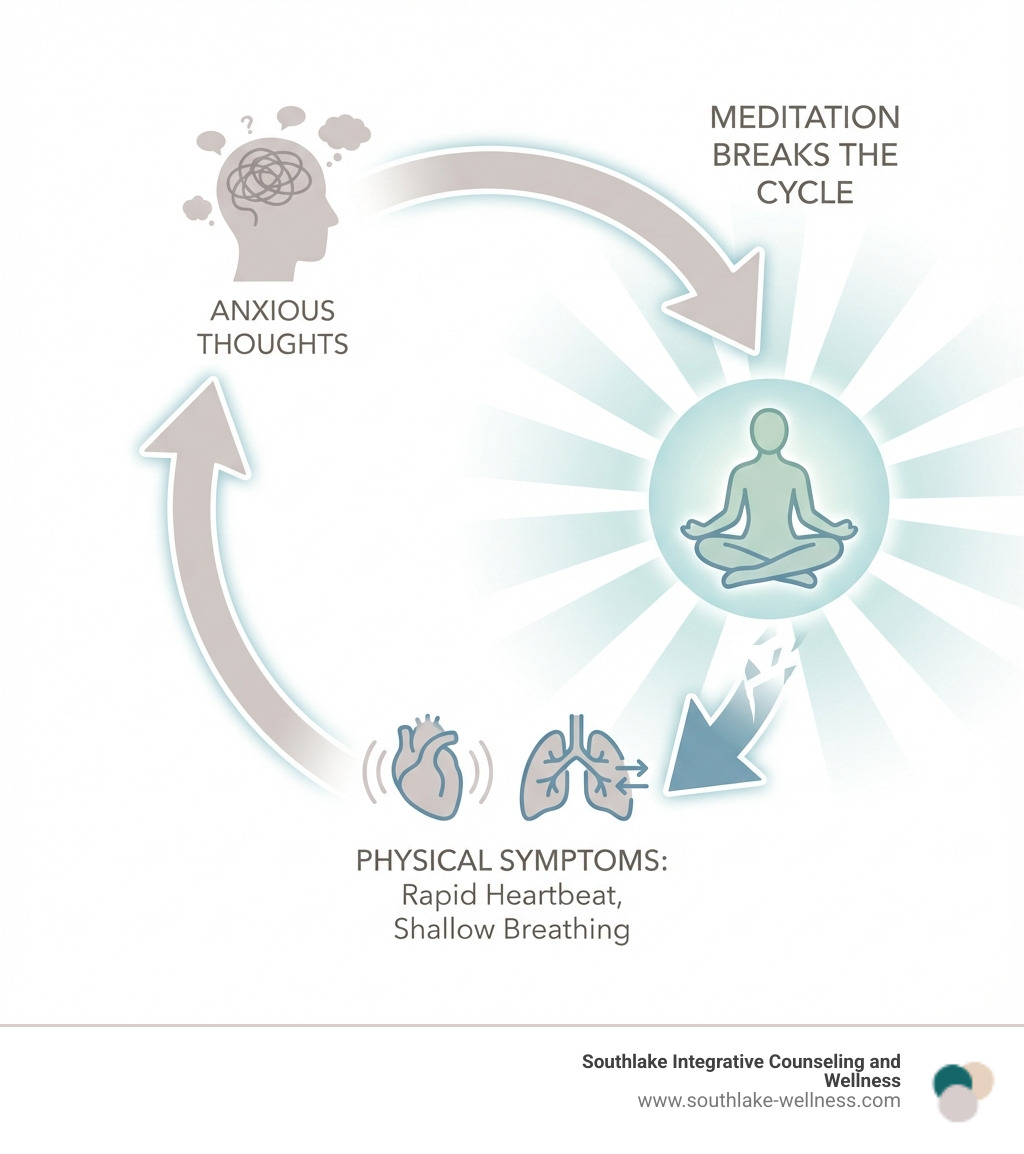
Anxiety is your body's way of saying, "Hey, I'm experiencing too much stress all at once." It's more than just worry—it manifests physically through rapid heartbeat, shallow breathing, muscle tension, and digestive issues. Mentally, it shows up as racing thoughts, difficulty concentrating, and constant "what if" scenarios that loop endlessly.
The difference between normal stress and problematic anxiety lies in persistence. Stress typically responds to a specific trigger and fades when that trigger resolves. Anxiety, however, can become background noise that never quite goes away, leaving you in a constant state of alert even when there's no real threat.
This happens because your brain's fight-or-flight response gets stuck in the "on" position. Your nervous system can't tell the difference between a real danger and an imagined one, so it keeps flooding your body with stress hormones.
As Holly Gedwed, LPC-Associate with 14 years of clinical experience, I've guided countless clients through personalized meditations for the anxious using evidence-based approaches like CBT and DBT. The techniques you'll learn here have helped my clients break free from anxiety's grip and build lasting emotional resilience.
How Mindfulness Halts the Anxiety Spiral
Anxiety often feels like a runaway train, but mindfulness offers us a way to gently step off the tracks and observe the scenery. It’s about cultivating a deep connection between our mind and body, recognizing that what affects one profoundly impacts the other. When we practice mindfulness, we bring our attention to the present moment, observing our thoughts, emotions, and physical sensations without judgment. This non-judgmental observation is key to breaking free from the habitual thought patterns that fuel anxiety.
Imagine your anxious thoughts as a tangled ball of yarn. Mindfulness doesn't try to force the yarn apart; instead, it provides the space to gently untangle it, thread by thread. It creates a buffer between us and distressing thoughts, allowing us to choose our response rather than being swept away by automatic reactions. This practice offers us the space to change our response to our situation, even if we cannot change the situation itself. This is a core principle in our approach to Holistic Stress Management Techniques.
Scientific evidence supports the power of mindfulness for anxiety relief. A 2014 meta-analysis, examining 47 randomized controlled trials, found that meditation programs resulted in small to moderate reductions in anxiety and depression. While initial research sometimes suggested dramatic impacts, the growing body of studies confirms that mindfulness meditation does improve mental health. The key insight here is that while mindfulness might not always be a magic bullet, it consistently helps us improve our relationship with our internal experiences. For anxious individuals, just 10 minutes of mindfulness can help with ruminative thought patterns by promoting a switch of attention from internal worries to the external environment, helping us focus on what's happening in the moment. This shift in attention is a powerful tool for emotional regulation, allowing us to observe and acknowledge our feelings rather than letting them overwhelm us.
Your How-To Guide: Practical Meditations for the Anxious
Starting on a journey with meditations for the anxious is a profound act of self-care. To make the most of your practice, we suggest setting an intention for each session—perhaps to cultivate calm, observe thoughts, or simply be present. Creating a calm space, even if it's just a quiet corner in your home in Southlake, Texas, can significantly improve your experience. Starting small is perfectly fine. Consistency over duration is our mantra; a few minutes every day is far more beneficial than one long session once a week. This consistent practice helps us to Develop Coping Skills that serve us in the long run.
Simple Meditations for the Anxious: Breath and Body
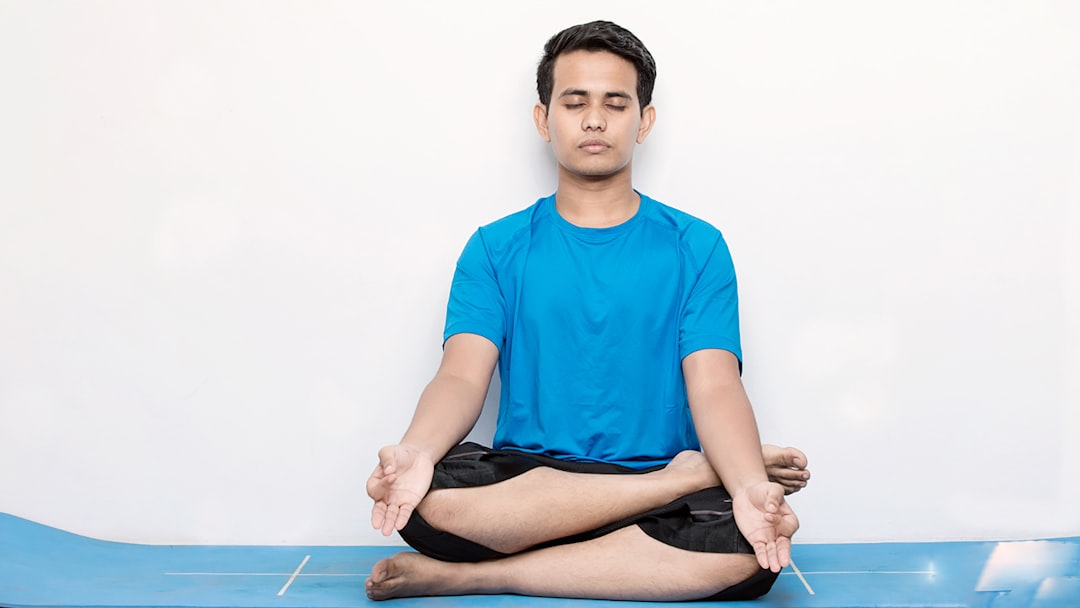
Our breath is an anchor, always available, always in the present moment. Breath awareness is one of the most fundamental and immediate ways to manage anxiety. When we're anxious, our breathing often becomes shallow and rapid, which can exacerbate panic symptoms. Diaphragmatic, or "belly" breathing, helps activate the body's relaxation response. It's an "anti-panic/anxiety" breath because it signals to our nervous system that we are safe.
Here's how to practice a simple 5-minute breathing exercise:
- Find a comfortable position, either sitting upright with a straight spine or lying down.
- Gently place one hand on your belly and the other on your heart.
- Close your eyes or soften your gaze.
- Inhale slowly through your nose for a count of four, feeling your belly rise.
- Hold your breath gently for a count of four.
- Exhale slowly through your mouth for a count of six, feeling your belly fall.
- Repeat this cycle for five minutes, allowing your breath to become smooth and even.
Another powerful technique is the body scan meditation, which helps us release physical tension often held unknowingly when anxious. As we learned from the research, our emotions are felt in the body, not just the mind. This practice invites us to systematically bring awareness to different parts of our body, noticing sensations without judgment, and consciously releasing tension with each exhale. For example, you might visualize tension in your shoulders dissolving like ice to water.
Progressive Muscle Relaxation (PMR) is another excellent technique for releasing anxiety-induced tension. It involves tensing and then relaxing different muscle groups throughout the body, helping us become more aware of the difference between tension and relaxation. Start by tensing the muscles in your feet for five seconds, then fully release. Move up through your body, tensing and relaxing each muscle group from calves to thighs, abdomen, arms, and finally, your neck and face.
Deeper Meditations for the Anxious: Working with Thoughts
Beyond calming the body, meditations for the anxious also teach us to work skillfully with our thoughts, observing them without identifying with or believing in them. This is where mindful inquiry comes in. It's an investigation into the nature of our own mind and being, looking into the physical sensations, emotions, and thoughts that contribute to our stress and anxiety.
When thoughts arise, especially anxious ones, we don't try to push them away or get rid of them. Instead, we observe them as passing mental phenomena, like clouds drifting across the sky or leaves floating down a river. We recognize their impermanent nature. This practice helps us understand that we are not our thoughts; we are the observer of our thoughts. This awareness is a cornerstone of Emotional Regulation Therapy, helping us gain distance from overwhelming mental chatter.
Acknowledging our feelings, even the uncomfortable ones, with kindness and acceptance is crucial. As one expert suggests, by going with what’s happening rather than expending energy fighting or turning away from it, we create the opportunity to gain insight into what’s driving our concerns. When we allow ourselves to feel and acknowledge our worries, irritations, and painful memories, this often helps them dissipate.
Self-compassion plays a vital role here. When anxious thoughts or sensations arise, we can offer ourselves comforting messages, as a loving caregiver would speak to an anxious child. Messages like "I'm here. It's okay. You can relax." or a gentle hand on our heart can send soothing signals to our nervous system. Loving-kindness (Metta) meditation takes this a step further, extending wishes of well-being first to ourselves ("May I be happy, may I live with ease"), then to loved ones, neutral persons, and even those we find difficult, and finally to all beings. This practice cultivates an open, compassionate heart, which is a powerful antidote to the isolating grip of anxiety.
Structured Mindfulness Programs for Anxiety Relief
For those seeking a more comprehensive and structured approach to managing anxiety, evidence-based mindfulness programs offer a clear path. These programs, typically spanning eight weeks, combine guided practices, group discussions, and home assignments to integrate mindfulness into daily life. They provide professional guidance and a supportive community, which can be incredibly beneficial. We often explore these options as part of a broader Mindfulness Based Therapy Guide 2026.

Mindfulness-Based Stress Reduction (MBSR)
Developed by Jon Kabat-Zinn in the late 1970s, Mindfulness-Based Stress Reduction (MBSR) is considered the gold standard for research-backed mindfulness. It's designed for anyone dealing with chronic stress, pain, or illness, and it's highly effective for general anxiety. A 1992 study in the American Journal of Psychiatry found that MBSR can effectively reduce symptoms of anxiety and panic, even in those with generalized anxiety disorder, panic disorder, or panic disorder with agoraphobia.
The core components of MBSR include:
- Body Scan Meditation: Systematically bringing awareness to different parts of the body.
- Sitting Meditation: Focusing on breath, thoughts, and sensations.
- Mindful Movement: Gentle yoga or stretching to connect body and mind.
- Walking Meditation: Paying attention to the sensations of each step.
MBSR works by changing how individuals react to stress and difficult emotions, rather than eliminating the stressors themselves. It teaches us to observe thoughts and emotions without judgment, fostering acceptance and lessening the internal struggle against anxiety.
Mindfulness-Based Cognitive Therapy (MBCT)
Mindfulness-Based Cognitive Therapy (MBCT) was created by Zindel Segal, John Teasdale, and Mark Williams in 1992. While initially developed to prevent depressive relapse, it has proven to be a potentially effective intervention for mood and anxiety disorders. MBCT combines the principles of MBSR with elements of Cognitive Behavioral Therapy.
The key difference for MBCT is its focus on changing our relationship to thoughts. Instead of trying to change the content of negative thoughts, MBCT helps us become more intimately and consistently aware of challenging thoughts and patterns. This awareness itself reduces the grip of persistent thought loops, a common experience for those with anxiety. Research published in The Journal of Consulting and Clinical Psychology (2000 and 2008) showed MBCT reduces rates of depression relapse by 50% among patients who suffer from recurrent depression. Furthermore, combining MBCT with a tapering off of medication has been shown to be as effective as ongoing maintenance medication, highlighting its powerful role in long-term mental wellness.
Weaving Mindfulness into Your Daily Life
Meditation isn't just for formal sessions; it's a way of being that we can weave into the fabric of our everyday lives. This informal practice is about bringing mindful awareness to routine activities, changing mundane moments into opportunities for peace and presence.
Imagine sipping your morning coffee or tea. Instead of scrolling through your phone, notice the warmth of the mug, the aroma, the taste, and the sensation as you swallow. This is mindful eating or drinking. Similarly, during a walk, we can engage in mindful walking by paying attention to the sensation of our feet on the ground, the rhythm of our steps, and the sights and sounds around us in Southlake.
Other informal practices include:
- Single-tasking: Dedicate your full attention to one task at a time, whether it's doing dishes or responding to an email.
- Digital detox moments: Periodically step away from screens and simply observe your surroundings.
- Mindful check-ins: Throughout the day, pause for a moment to notice your breath, body, and current emotional state.
These small, consistent acts of mindfulness build emotional resilience, helping us steer life's challenges with greater ease. They empower us to Build Emotional Resilience by fostering a deeper connection with ourselves and the present moment, creating an inner sanctuary from the storms of anxiety.
Frequently Asked Questions about Meditation for Anxiety
How long does it take for meditation to help with anxiety?
The journey with meditations for the anxious is unique for everyone, but consistency is undeniably key. While some individuals report feeling calmer after just one session, the cumulative effects build over time. Our research indicates that even small, daily practices can make a significant difference. For instance, a study at the University of Waterloo suggests that just 10 minutes of mindfulness helps with ruminative thought patterns, which are a hallmark of anxiety.
Think of it like learning a new skill: the more you practice, the more proficient you become. Regular, even short, meditation sessions help rewire your brain, building new neural pathways that support calm and resilience. Long-term benefits include reduced stress reactivity, improved emotional regulation, and a greater sense of well-being. Patience and self-compassion are vital; don't get discouraged if your mind wanders. Gently bring it back to your anchor, and celebrate each moment of presence.
What's the difference between normal stress and an anxiety disorder?
This is a crucial distinction. Stress is a natural and often temporary response to a specific demand or threat. For example, feeling stressed before a big presentation or a job interview is normal. Once the event passes, the stress typically subsides.
Anxiety, particularly an anxiety disorder, is different. It's characterized by persistent, excessive worry that often feels disproportionate to the actual situation and can occur without any clear trigger. This kind of anxiety can significantly impact daily functioning, interfering with work, relationships, and overall quality of life. Symptoms might include constant apprehension, irritability, difficulty sleeping, and physical manifestations like muscle tension or digestive issues that don't go away.
If your anxiety is chronic, overwhelming, or interfering with your ability to live your life fully in Southlake, Texas, it's time to seek professional help. A qualified therapist can help you differentiate between normal stress and an anxiety disorder and provide custom support. You can explore options for an Anxiety Psychologist Near Me to get the personalized care you deserve.
Can meditation make anxiety worse?
It's a valid concern. For some individuals, particularly those new to mindfulness, the initial stages of meditation can sometimes bring an increased awareness of difficult feelings, thoughts, or bodily sensations that were previously suppressed. This can feel uncomfortable or even overwhelming at first. The research notes that scientific skepticism exists regarding the initial claims of dramatic impact, and that meditation may not be more effective than other steps you can take.
However, with proper guidance and a gradual approach, this increased awareness becomes a pathway to healing rather than worsening anxiety. This is why the importance of guidance from a qualified instructor or therapist cannot be overstated, especially when dealing with significant anxiety. We encourage starting slowly, perhaps with just a few minutes a day, and focusing on simple breath awareness.
Meditation is not a replacement for therapy in severe cases. If you're experiencing severe anxiety or panic attacks, work with a mental health professional who can provide comprehensive support and help you integrate mindfulness practices safely and effectively into your treatment plan. A therapist can help you steer any challenging experiences that arise during meditation and ensure your practice is supportive of your overall well-being.
Begin Your Journey to Inner Calm
We hope this extensive guide to meditations for the anxious has illuminated a path toward greater peace and resilience. The benefits are profound: from reducing physical tension and quieting racing thoughts to fostering emotional balance and cultivating self-compassion. Meditation is a skill, one that we can all develop with practice and patience. It empowers us to respond to life's inevitable challenges with greater calm and clarity, rather than being swept away by anxiety's tide.
Your journey of self-findy and inner calm begins with a single mindful breath. At Southlake Integrative Counseling and Wellness, we believe in supporting you every step of the way. If you're ready to explore how mindfulness can transform your relationship with anxiety, we invite you to connect with us. Learn more about our Mindfulness Based Group Therapy and find how our holistic approach can help you find your zen in Southlake, Texas.