
Why Finding the Right Psychiatrist Matters for Your Mental Health Journey
Psychiatrist near me is one of the most important searches you might make when you're ready to prioritize your mental health. If you're looking for a psychiatrist quickly, here's what you need to know:
Quick Answer: How to Find a Psychiatrist Near You
- Check your insurance provider's directory for in-network psychiatrists
- Use professional directories like the American Psychiatric Association's "Find a Psychiatrist" tool
- Consider telepsychiatry options if local availability is limited
- Verify credentials including board certification and specializations
- Read verified patient reviews to gauge communication style and approach
- Contact offices directly to confirm they're accepting new patients
Nearly one in five adults in the U.S. lives with mental illness. Since the COVID-19 pandemic, demand for mental health services has surged dramatically—some telepsychiatry providers reported a 500% increase in usage. Yet finding the right mental health professional can feel overwhelming, especially when you're already struggling.
The challenge isn't just about finding any psychiatrist. It's about finding the right one—someone who understands your unique needs, accepts your insurance, and offers the treatment approach that resonates with you.
A psychiatrist is a medical doctor who specializes in mental health. Unlike therapists or psychologists, psychiatrists can prescribe medication and provide psychotherapy. They're trained to assess both the mental and physical aspects of your condition, making them uniquely qualified to treat complex mental health concerns.
But here's what makes this search particularly difficult: the U.S. has only 13.4 psychiatrists per 100,000 people. Wait times can stretch from several weeks to several months, depending on your location and insurance coverage.
This guide walks you through everything you need to know about finding a qualified psychiatrist near you—from understanding what psychiatrists do differently, to evaluating credentials, to preparing for your first appointment. You'll learn practical steps to steer insurance, assess whether a provider is the right fit, and take control of your mental health journey.
I'm Holly Gedwed, a Licensed Professional Counselor Associate with 14 years of clinical experience. I've worked closely with psychiatrists to provide coordinated care and understand the critical role finding the right psychiatrist near me plays in healing.
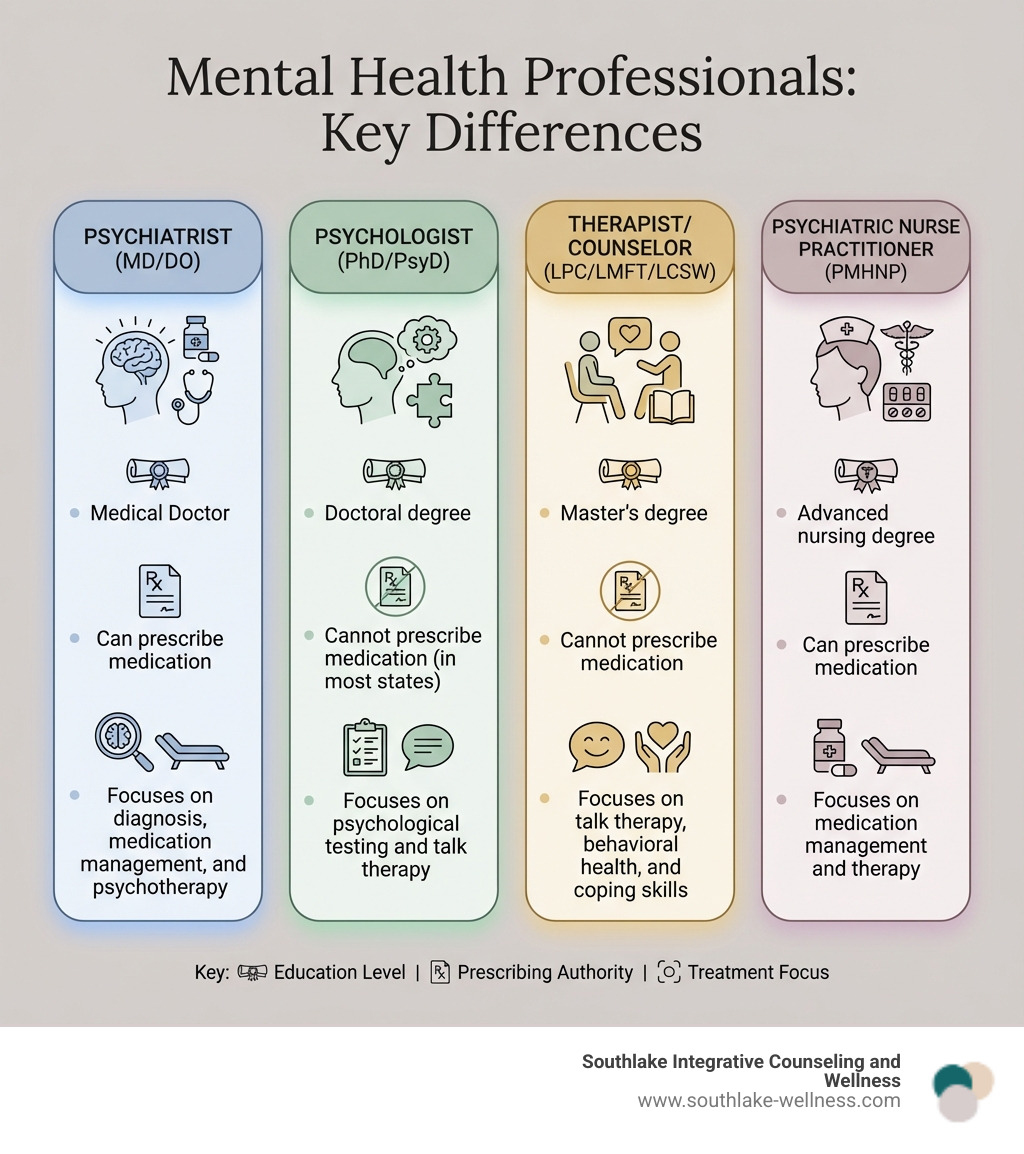
This infographic compares the roles, education, and prescription abilities of Psychiatrists, Psychologists, Therapists, and Psychiatric Nurse Practitioners.
Understanding the Role of a Psychiatrist
When you search for a psychiatrist near me, it's important to understand exactly what a psychiatrist does. Simply put, a psychiatrist is a medical doctor (either an M.D. or a D.O.) who has specialized in diagnosing, treating, and preventing mental, emotional, and behavioral disorders. This extensive medical training is what sets them apart from other mental health professionals.
According to the American Psychiatric Association, a psychiatrist is a medical specialist who specializes in diagnosing, treating, and preventing emotional disorders and mental illness. They use a combination of talk therapy, medication, and other therapies to help patients with mental health problems. This means they are uniquely equipped to consider both the psychological and physical aspects of your well-being. At Southlake Integrative Counseling and Wellness, we deeply appreciate this comprehensive approach, as it aligns with our belief in the powerful mind-body connection. Psychiatrists are trained to perform physical examinations and order lab tests to rule out any underlying medical conditions that might be contributing to mental health symptoms, ensuring a holistic understanding of your health.
Psychiatrist vs. Other Mental Health Professionals
The landscape of mental health care can be confusing, with many different types of professionals offering support. Understanding the distinctions is crucial when deciding who to see for your specific needs. Here's a quick comparison:
| Professional Type | Education | Ability to Prescribe | Primary Focus |
|---|---|---|---|
| Psychiatrist (MD/DO) | Medical Doctor + 4+ years residency in psychiatry | Yes (in most states) | Diagnosis, medication management, psychotherapy, medical perspective |
| Psychologist (PhD/PsyD) | Doctoral degree (Ph.D. or Psy.D.) | No (in most states; some exceptions with additional training) | Psychological testing, psychotherapy, research |
| Therapist/Counselor (LPC/LMFT/LCSW) | Master's degree (e.g., MS, MA, MFT, MSW) | No | Talk therapy, behavioral health, emotional support |
| Psychiatric Nurse Practitioner (PMHNP) | Advanced nursing degree (MSN or DNP) | Yes | Medication management, psychotherapy, holistic care |
Psychiatrists have completed medical school, followed by a residency program specializing in psychiatry. This extensive medical training allows them to understand the complex interplay between physical health and mental health. They can diagnose mental health conditions, prescribe and manage medication, and often provide psychotherapy.
Psychologists hold a doctoral degree (Ph.D. or Psy.D.) and specialize in psychological assessment and various forms of talk therapy. They generally cannot prescribe medication.
Therapists and Counselors (LPCs, LMFTs, LCSWs) hold a master's degree and focus on talk therapy and behavioral interventions to help clients develop coping skills and work through personal challenges.
Psychiatric Nurse Practitioners (PMHNPs) are advanced practice nurses specializing in mental health. They can diagnose, prescribe medication, and provide psychotherapy, often with a holistic approach to care.
At Southlake Integrative Counseling and Wellness, we believe in collaborative care. This means that if you're working with one of our therapists and it's determined that medication might be beneficial, we can facilitate coordination with a psychiatrist or psychiatric nurse practitioner to ensure your care plan is cohesive and responsive to your overall well-being.
The Role of Medication in Treatment
Medication can be a powerful tool in psychiatric treatment, but it's not always the first or only answer. A psychiatrist's medical background enables them to determine when medication is appropriate, what type of medication might be most effective, and how to manage it safely.
Psychiatrists might prescribe medication for conditions such as severe depression, bipolar disorder, schizophrenia, severe anxiety disorders, or ADHD, especially when symptoms significantly interfere with daily functioning. The goal of medication is often to alleviate severe symptoms, allowing individuals to engage more effectively in therapy and daily life. As one provider noted, psychiatric medicines are meant to put a person back in control of their emotions and behaviors, and to be used in conjunction with therapy.
Types of psychiatric medications include antidepressants, anti-anxiety medications, mood stabilizers, and antipsychotics. When medication is prescribed, "medication management" becomes an ongoing process. This involves regular follow-up appointments to monitor the medication's effectiveness, adjust dosages, and manage any side effects. Your psychiatrist will also educate you on potential side effects and safe medication use.
We often find that combining medication management with therapy yields the best outcomes. Therapy helps you develop coping skills, process emotions, and address underlying issues, while medication can help manage the biological symptoms. If you're exploring this integrated approach, you can learn more about our individual therapy services and how they complement psychiatric care.
When to Consider Psychiatric Support

It's a brave and important step to consider seeking psychiatric support. We understand that recognizing the need for help can be challenging, but it's a sign of strength, not weakness. So, when is it time to consider finding a psychiatrist near me?
You might consider psychiatric support if you're experiencing:
- Persistent sadness or anxiety: If feelings of sadness, hopelessness, excessive worry, or panic are overwhelming and lasting for weeks or months, interfering with your daily life.
- Severe mood swings: Rapid and intense shifts in mood, energy, or activity levels that disrupt your relationships or work, often indicative of conditions like bipolar disorder.
- Difficulty functioning daily: If you find it hard to go to work or school, maintain personal hygiene, or engage in social activities that you once enjoyed.
- Thoughts of self-harm or suicide: If you or someone you know is having suicidal thoughts, please reach out immediately to the 988 Suicide and Crisis Lifeline or seek emergency help.
- Hallucinations or delusions: Experiencing things that aren't real, or holding strong beliefs that aren't based in reality, which can be symptoms of psychotic disorders like schizophrenia.
- Problematic alcohol or drug use: If substance use has become unmanageable and is negatively impacting your life, a psychiatrist can help address the underlying mental health components.
- Intense trauma or grief: When past traumatic experiences or significant loss continue to cause severe emotional distress and impair your ability to cope.
Seeking help is a normal and healthy part of life. Whether coping with everyday stressors, a traumatic event, or a big life change, working with a mental health professional can be very helpful.
Common Conditions Psychiatrists Treat
Psychiatrists are equipped to diagnose and treat a wide range of mental health conditions. Their medical training allows them to understand the biological, psychological, and social factors contributing to these disorders. Here are some of the common conditions they can help with:
- Anxiety Disorders: These include generalized anxiety disorder, panic disorder, social anxiety disorder, and specific phobias. Psychiatrists can help manage the symptoms through medication and therapy. You can find more information on anxiety disorders here.
- Depression and Mood Disorders: Such as major depressive disorder, persistent depressive disorder, and seasonal affective disorder. These conditions are characterized by sadness, hopelessness, difficulty sleeping, and loss of interest in activities. Mood disorders also encompass bipolar disorders, which involve extreme mood swings.
- Bipolar Disorder: Characterized by significant shifts in mood, energy, activity levels, and concentration.
- ADHD (Attention-Deficit/Hyperactivity Disorder): Affecting focus, attention, hyperactivity, and impulsivity, ADHD can impact both children and adults.
- PTSD (Post-Traumatic Stress Disorder) and Trauma: For individuals who have experienced traumatic events and are struggling with flashbacks, nightmares, severe anxiety, or uncontrollable thoughts about the event.
- Obsessive-Compulsive Disorder (OCD): Involving unwanted, intrusive thoughts (obsessions) and repetitive behaviors (compulsions) performed to reduce anxiety.
- Eating Disorders: Conditions like anorexia nervosa, bulimia nervosa, and binge-eating disorder, which involve severe disturbances in eating behaviors and related thoughts and emotions.
- Sleep Disorders: Such as insomnia, sleep apnea, and narcolepsy, which prevent a person from getting proper rest and can significantly impact mental health.
- Personality Disorders: These involve long-lasting and disruptive patterns of thinking, moods, and behaviors when interacting with others, leading to distorted perceptions of reality and difficulties in relationships.
Benefits of Seeking Help for Anxiety and Depression
Anxiety and depression are two of the most common mental health concerns, affecting millions of people. Seeking psychiatric help for these conditions offers numerous benefits that can significantly improve your quality of life:
- Symptom relief: Psychiatrists can provide effective medication and therapy strategies to reduce the overwhelming symptoms of anxiety and depression, such as persistent worry, panic attacks, sadness, and fatigue.
- Improved coping skills: Through psychotherapy, you can learn valuable techniques and strategies to manage stress, regulate emotions, and develop healthier responses to challenging situations.
- Improved quality of life: By addressing the root causes and symptoms, psychiatric care can help you regain interest in activities, improve relationships, and improve overall well-being.
- Personalized treatment plans: A psychiatrist will work with you to create a custom treatment plan that considers your unique history, symptoms, and goals, potentially combining medication, talk therapy, and lifestyle adjustments.
- Gaining new perspectives: Therapy provides a safe, non-judgmental space to explore your thoughts and feelings, leading to increased self-awareness and new insights into your patterns and behaviors. It's a journey of self-findy that fosters personal growth and empowerment.
If you're struggling with anxiety, we encourage you to read our Anxiety Psychologist Near Me guide for additional resources and insights.
Your Step-by-Step Guide to Finding a Psychiatrist Near Me

Finding a psychiatrist near me in Southlake, Texas, can feel daunting, but by taking actionable steps, you can find the right fit. A trusting therapeutic relationship is foundational to effective treatment, so taking control of your search is a crucial part of your mental health journey.
Step 1: Use Reputable Online Directories and Resources
When starting your search for a psychiatrist near me, leveraging reliable online resources is your best bet.
- Insurance Provider Directories: Your health insurance company's website is an excellent starting point. They often have a directory of in-network providers, which can save you significant costs. Be sure to verify the information with the provider's office directly, as directories can sometimes be outdated.
- Professional Organizations: The American Psychiatric Association (APA) offers a valuable "Find a Psychiatrist" tool. This directory allows you to search for qualified professionals, often by location and specialization. You can access it directly through the APA's website.
- Verified Patient Reviews: Online mental health directories can be helpful. These sites allow you to search for specialists, view their profiles (including education, experience, and treatment philosophies), and filter by insurance and location. Many of these platforms verify providers and allow only verified patients to leave reviews, giving you a more accurate picture of a psychiatrist's approach and patient experience.
- Telepsychiatry Options: Given the increased demand for mental health services, especially since the pandemic, telepsychiatry has become a vital resource. Telepsychiatry services have seen a significant increase in demand, with some providers reporting a 500% rise in usage. If finding an in-person psychiatrist near me in Southlake proves difficult, or if you prefer the convenience, a Texas-licensed telepsychiatrist can provide care remotely, as long as you are physically located in Texas during your session.
Step 2: Evaluate Credentials and Specializations
Once you have a list of potential psychiatrists, it's time to dig deeper into their qualifications to ensure they align with your needs.
- Board Certification: Look for psychiatrists who are board-certified by the American Board of Psychiatry and Neurology. This indicates they have met rigorous standards of education, training, and experience.
- Clinical Experience: Consider their years of experience and whether they have a track record of successfully treating conditions similar to yours.
- Areas of Expertise: Psychiatrists often specialize in particular areas, such as child and adolescent psychiatry, addiction psychiatry, geriatric psychiatry, or forensic psychiatry. If you have a specific concern (e.g., ADHD, PTSD, or an eating disorder), seek someone with expertise in that area.
- Treatment Philosophies: Some psychiatrists may emphasize a more integrative approach, focusing on the mind-body connection, while others might be more medication-focused. At Southlake Integrative Counseling and Wellness, we value a holistic approach, so finding a psychiatrist who shares this philosophy can be beneficial.
Understanding how to evaluate mental health professionals is key to finding the best fit. For a broader perspective on finding the right support, you might find our guide on how to find the best therapist in Texas helpful.
Step 3: Consider Practical Factors for a "psychatrist near me"
Beyond credentials, practical considerations play a huge role in the success of your treatment.
- Location and Accessibility: For in-person appointments, consider the psychiatrist's office location in Southlake, TX, and how easy it is to get there. Is it conveniently located near your home or work?
- In-person vs. Telehealth: Decide whether you prefer in-person sessions or if telehealth (online therapy) suits your lifestyle better. Many providers now offer both, and telepsychiatry can be a great option for flexibility and access. As long as you are physically located in Texas, you can use telepsychiatry services offered within the state.
- Office Hours: Check if their office hours align with your schedule. Some psychiatrists offer early morning, evening, or even weekend appointments.
- Availability for New Patients: Due to high demand, some psychiatrists may not be accepting new patients, or their wait times might be extensive. It's crucial to confirm this when you first contact their office. The average wait time to see a psychiatrist can range from several weeks to several months. Don't be discouraged if you encounter a waitlist; it's common.
Preparing for Your First Psychiatric Appointment
The thought of a first psychiatric appointment can sometimes bring on a wave of anxiety. But with a little preparation, you can reduce this apprehension and ensure you make the most of your initial visit. This first meeting is crucial for establishing rapport and setting the foundation for a productive therapeutic relationship.
What to Expect During the Initial Evaluation
Your first visit with a psychiatrist is typically an initial evaluation, which is more comprehensive than a regular follow-up. Here's what you can generally expect:
- Comprehensive Discussion: The psychiatrist will engage in a thorough conversation to understand your current concerns, symptoms, and how they impact your daily life. They will ask open-ended questions to get a complete picture.
- Medical and Family History: They will inquire about your personal and family medical history, including any previous mental health diagnoses or treatments, significant life events, and substance use.
- Review of Symptoms: You'll discuss the specific symptoms you're experiencing, their duration, intensity, and any patterns you've noticed.
- Psychiatric Evaluation: This involves assessing your mental state, mood, thought patterns, and cognitive functions.
- Diagnostic Process: Based on all the gathered information, the psychiatrist will begin to form a diagnosis, often referencing diagnostic criteria from the Diagnostic and Statistical Manual of Mental Disorders (DSM-5).
- Ruling Out Physical Causes: As medical doctors, psychiatrists are trained to consider potential physical causes for mental health symptoms. They may perform a brief physical examination or order lab tests (e.g., blood tests to check for thyroid issues or vitamin deficiencies, or tests to rule out substance abuse) to ensure there isn't an underlying medical condition contributing to your distress.
How to Prepare for Your First Visit with a "psychatrist near me"
Preparing for your appointment can help you feel more in control and ensure you convey all necessary information.
- Write down symptoms and triggers: Before your appointment, jot down a list of your symptoms, when they started, how often they occur, and what seems to make them better or worse. Include any patterns or triggers you've noticed.
- List current medications: Bring a comprehensive list of all medications you are currently taking, including dosages, supplements, and over-the-counter drugs. This helps the psychiatrist understand your physiological state and avoid potential drug interactions.
- Prepare questions to ask: Don't hesitate to write down any questions you have about your condition, treatment options, potential side effects of medication, or the psychiatrist's approach. This is your opportunity to gather information and assess if they're a good fit for you.
- Bring identification and insurance info: Have your photo ID, insurance card, and any relevant referral documents ready. It's also wise to call your insurance provider beforehand to understand your coverage for psychiatric services.
- Be open and honest: It's essential to be as transparent as possible with your psychiatrist. They can only help you effectively if they have accurate information, even if it feels sensitive or embarrassing. They are there to help, not to judge.
The Diagnostic Process Explained
The diagnostic process is comprehensive, aiming to understand your unique symptoms to create the most effective treatment plan. It's not just about applying a label. The process often involves integrating information from several sources:
- Clinical Interviews: Detailed discussions about your history, symptoms, and experiences.
- Psychological Evaluations: Assessments, such as those for ADHD, to evaluate cognitive, emotional, and behavioral functioning.
- Lab Tests: Medical screenings to rule out physical conditions that could mimic mental health symptoms, like thyroid imbalances.
By building a complete clinical picture, the psychiatrist ensures the diagnosis is accurate and the treatment plan is customized to your specific needs. At Southlake Integrative Counseling and Wellness, we believe in this thorough approach and offer comprehensive psychological testing. To learn more, explore our Southlake Mental Health Resources Guide.
Navigating Costs and Insurance for Psychiatric Care
Understanding the financial aspects of psychiatric care is a crucial step in your search for a psychiatrist near me. We know that navigating costs and insurance can be confusing, but don't let it deter you from seeking the help you need.
- Average Session Costs: The cost of psychiatric services can vary widely. For instance, some individual psychiatric sessions can range from $180 to $500 per session, depending on the provider's experience, location, and the type of service (e.g., initial evaluation versus follow-up medication management).
- In-network vs. Out-of-network:
- In-network: If a psychiatrist is "in-network" with your insurance plan, it means they have a contract with your insurance company, and you'll typically pay a co-pay or a percentage of the cost after meeting your deductible. Always verify with both the provider's office and your insurance company that they are indeed in-network for your specific plan.
- Out-of-network: Many psychiatrists, especially those in private practice, may be "out-of-network." This means they don't have a direct contract with your insurance provider. You would pay the full fee upfront, and then your insurance might reimburse you a portion of that cost.
- Superbills for Reimbursement: If you see an out-of-network psychiatrist, their office can often provide you with a "superbill." This is a detailed receipt that you can submit to your insurance company for potential reimbursement. We recommend contacting your insurance provider beforehand to understand their out-of-network reimbursement rates and processes.
- Sliding Scale Options: Some psychiatrists may offer a "sliding scale" fee structure, where the cost of services is adjusted based on your income and ability to pay. Don't hesitate to inquire about this option if financial concerns are a barrier to treatment.
At Southlake Integrative Counseling and Wellness, our providers are typically out-of-network. We can provide you with a superbill so you can request reimbursement from your insurance. We encourage you to call us, and we can go over pricing and options available to you to best meet your needs. We believe that financial considerations should not prevent you from accessing quality mental health care.
Conclusion
The journey to finding your ideal psychiatrist near me in Southlake, Texas, is a significant step towards emotional balance and resilience. We've explored what makes a psychiatrist unique, how they differ from other mental health professionals, and the profound benefits of their specialized care for conditions like anxiety and depression. We've also provided you with actionable steps for navigating the search, evaluating credentials, and preparing for your first appointment.
You are not alone in this search. With the right information and a proactive approach, you can find a mental health professional who is a perfect fit for your needs. The therapeutic relationship is a powerful catalyst for healing and growth, and investing in it is an investment in yourself.
At Southlake Integrative Counseling and Wellness, we are committed to providing holistic mental healthcare, combining evidence-based therapies with alternative modalities to promote your well-being. Our unique approach emphasizes the mind-body connection, offering personalized treatment plans for individuals, couples, and groups right here in Southlake, Texas.
Taking the first step towards seeking psychiatric support is an act of courage. We are here to support you on your path to a more fulfilling and balanced life.