
Why Therapeutic Group Topics Matter for Your Mental Wellness
Therapeutic group topics are the focused discussion areas that guide group therapy sessions, helping participants connect, heal, and grow together. Whether you're managing anxiety, processing grief, or building healthier relationships, the right group topics create a safe space for shared experiences and meaningful progress.
Common therapeutic group topics include:
- Emotional Wellness: Managing stress, anxiety, depression, and anger
- Relationships: Building healthy boundaries, improving communication, resolving conflict
- Identity and Self-Esteem: Exploring values, strengths, and self-compassion
- Substance Use Recovery: Understanding triggers, preventing relapse, building sober support
- Grief and Loss: Processing bereavement and finding new meaning
- Trauma Recovery: Establishing safety, learning grounding techniques, building resilience
- Mental Health Conditions: Coping with anxiety disorders, PTSD, bipolar disorder, ADHD
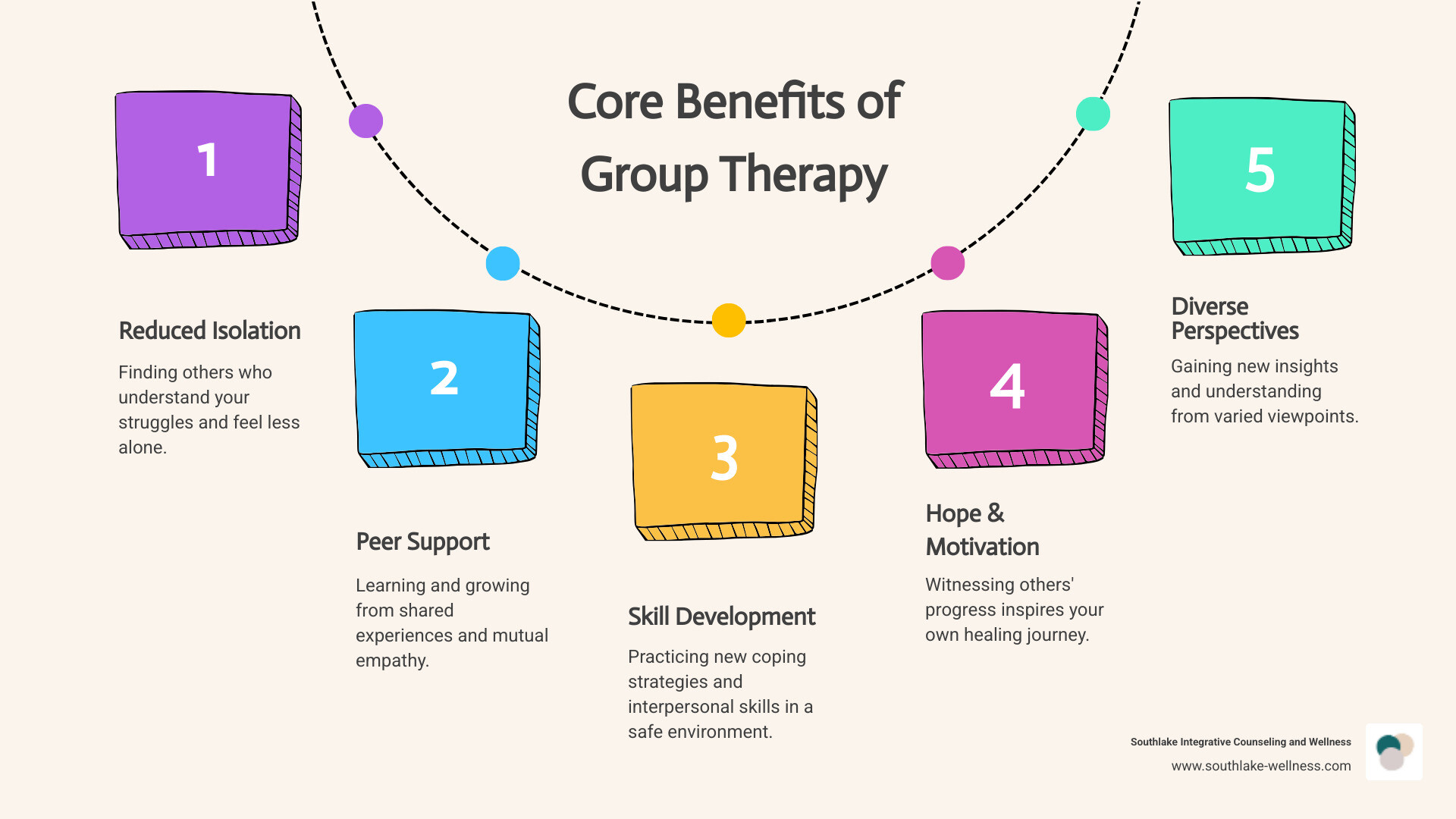
Research from over 50 clinical trials shows group therapy can be as effective as individual therapy. Participants experience reduced isolation, learn practical coping skills, and find hope through shared experiences.
Group therapy works by tapping into the powerful realization that you're not alone. Hearing others share similar struggles reduces shame and creates a sense of belonging. You learn new perspectives, practice skills in a safe environment, and witness others' progress, which can inspire your own healing journey.
I'm Holly Gedwed, and with 14 years of clinical experience specializing in trauma and addiction, I've witnessed how therapeutic group topics create transformative healing spaces for individuals seeking connection and growth in Southlake, Texas and beyond. Throughout my practice, I've seen how the right therapeutic group topics help people break unhealthy patterns and build lasting change.
Understanding the Two Main Types of Therapeutic Groups
Therapeutic groups generally fall into two main categories: psychoeducational and process-oriented group therapy. Both aim for healing and growth but approach these goals with different structures and focuses.
A group's purpose is central to its design. Psychoeducational groups are typically more structured, focusing on imparting knowledge and teaching specific skills related to a particular issue. Process-oriented groups are less structured, emphasizing interpersonal dynamics, emotional exploration, and feedback among members.
The role of the facilitator also shifts between these two types. In psychoeducational groups, the leader often acts more as an instructor, guiding discussions and providing materials. In process-oriented groups, the facilitator plays a more subtle role, observing interactions, highlighting group dynamics, and encouraging deeper emotional exploration.
The concept of psychoeducation itself has a rich history. The idea was first noted in medical literature in 1911 in an article by John E. Donley, "Psychotherapy and re-education." The word 'psychoeducation' first appeared in a book title in 1941, but its popularization is widely attributed to C.M. Anderson in 1980 for her work in schizophrenia treatment, focusing on educating relatives about symptoms and coping.
What Are Psychoeducational Groups?
Psychoeducational groups are group therapy sessions conducted by a mental health professional that educate clients about their disorders and ways of coping. These groups combine the supportive environment of group therapy with a strong educational component, often incorporating materials like information sheets, videos, handouts, and curriculum-based discussions.
The primary focus of these groups is on education and skill-building. We aim to equip participants with practical tools and coping mechanisms to manage their specific challenges. The curriculum is structured, meaning there's often a clear agenda for each session, covering topics relevant to the group's focus. The therapist acts as an instructor, providing information and engaging clients in learning.
Psychoeducational groups can address a wide array of conditions and concerns, including:
- Mental Illnesses: Providing information on conditions like depression, anxiety, and bipolar disorder, along with coping strategies.
- Substance Abuse: Educating on triggers, relapse prevention, and self-care.
- Grief: Covering stages of grief, healthy coping, and planning for a new future.
- Social Phobia (Social Anxiety Disorder): Teaching social skills and anxiety management.
- Domestic Violence: Discussing power and control dynamics and safety planning.
- Trauma: Understanding the impact of trauma and developing resilience.
- Anger Management: Learning conflict resolution and stress reduction techniques.
- Chronic Physical Diseases: Helping individuals cope with the emotional and practical aspects of living with a chronic illness.
- Criminal Behavior: Focusing on cognitive behavioral therapy (CBT) techniques to improve social skills, reasoning, and impulse control.
What Is Process-Oriented Group Therapy?
In contrast to psychoeducational groups, process-oriented group therapy digs deeply into interpersonal dynamics. The focus is less on teaching and more on the "here-and-now" interactions within the group itself. Members are encouraged to explore their emotions, share personal experiences, and provide and receive feedback from one another.
In these groups, the therapist acts primarily as a facilitator. We guide the discussion, highlight patterns of interaction, and help members understand how their behaviors and communication styles impact others within the group. This allows for a powerful corrective emotional experience, as participants can practice new ways of relating in a safe and supportive environment.
Process groups foster a unique form of healing by creating a microcosm of the outside world. Here, individuals can identify and work through relational challenges they face in their daily lives. The insights gained from these direct, interpersonal experiences can lead to profound personal growth and improved relationships outside the group. The many ways group therapy can benefit you are truly remarkable, offering a unique blend of support and insight. If you're curious about the broader advantages, you can learn more about The many benefits of group therapy.
FeaturePsychoeducational GroupsProcess-Oriented Group TherapyPrimary GoalImpart knowledge, teach specific skills, provide informationExplore interpersonal dynamics, emotional processing, feedbackStructureHighly structured, curriculum-basedLess structured, emergent themesFacilitator RoleInstructor, expert, guide for specific topicsFacilitator, observer, interpreter of group dynamicsContent FocusSpecific topics, disorders, coping mechanisms"Here-and-now" interactions, feelings, relationships within groupActivitiesHandouts, exercises, role-plays (skill-focused)Open discussion, feedback, emotional sharing, role-plays (relational)BenefitsIncreased knowledge, practical skills, structured supportImproved interpersonal skills, self-awareness, emotional regulation
Core Therapeutic Group Topics for Personal Growth and Wellness

At Southlake Integrative Counseling and Wellness, we believe that true mental wellness is built on a foundation of self-awareness, healthy relationships, and effective coping strategies. Our core therapeutic group topics are designed to foster personal growth in these essential areas, helping you steer life's challenges with greater resilience and emotional balance.
Building Healthy Relationships and Boundaries
A profound area for personal growth is our relationships. Many of us struggle with dysfunctional family dynamics, communication breakdowns, or difficulty setting boundaries. Our groups address these challenges by focusing on key skills such as:
- Communication Skills: Learning active listening, "I" statements, and assertive communication to express needs clearly and respectfully.
- Conflict Resolution: Developing strategies to steer disagreements constructively, rather than avoiding them or escalating them.
- Setting Boundaries: Understanding the importance of healthy boundaries and practicing how to establish and maintain them.
- Family Dynamics: Discussing the impact of family relationships on mental well-being.
- Empathy and Trust: Building the capacity to understand and share the feelings of others, fostering deeper connections.
- Interpersonal Effectiveness: Practicing social skills and receiving feedback in a safe environment.
Managing Stress, Anxiety, and Anger
Life in Southlake, and anywhere, can be demanding, leading to significant stress, anxiety, and anger. Our groups provide strategies for emotional regulation and equip you with tools to manage these intense feelings effectively. We explore:
- Coping Strategies: Developing a personal "coping skills toolbox" with strategies like exercise, journaling, and cognitive restructuring.
- Mindfulness Practices: Incorporating techniques like guided meditation, mindful eating, and reflection walks to increase present-moment awareness and reduce stress. If you're interested in deepening your understanding of these techniques, our Mindfulness-Based Group Therapy offers a complete guide to these practices.
- Identifying Triggers: Learning to recognize the specific situations, thoughts, or sensations that precede feelings of stress, anxiety, or anger.
- Relaxation Techniques: Practicing deep breathing, progressive muscle relaxation, and other methods to calm the nervous system.
- Anger Management: Learning skills to control anger and practicing new strategies for handling it constructively.
Anxiety disorders are particularly common, with research showing that approximately 31.1% of adults experience an anxiety disorder during their lifetime. Our groups provide a supportive space to address these concerns.
Exploring Identity and Improving Self-Esteem
Understanding who we are and developing a strong sense of self is fundamental to mental wellness. Our groups offer a space for self-exploration and affirmation, covering:
- Self-Awareness: Reflecting on personal experiences, values, and beliefs to gain a deeper understanding of one's inner world.
- Values Clarification: Identifying core personal values and exploring how daily actions align with them.
- Personal Strengths: Recognizing and celebrating individual strengths, often through exercises where group members offer positive feedback to one another.
- Identity Exploration: For individuals navigating complexities of personal and social identities (for example gender, sexuality, race, ethnicity, age, and roles), our groups can serve as affinity spaces that foster belonging and mutual understanding.
- Self-Compassion: Learning to treat oneself with kindness and understanding, especially during difficult times.
- Overcoming Shame and Building Confidence: Creating a safe environment to process feelings of shame related to past experiences or identity, and building a stronger sense of self-worth.
Specialized Therapeutic Group Topics for Targeted Healing
Sometimes, our healing journey requires focused attention. At Southlake Integrative Counseling and Wellness, we offer specialized therapeutic group topics for targeted healing, providing a supportive environment for individuals facing specific mental health conditions, life transitions, or past traumas.
Common therapeutic group topics for managing mental health
Managing mental health conditions can feel isolating, but group therapy offers a powerful antidote. Our groups provide education, coping strategies, and peer support for various conditions, including:
- Anxiety Disorders: Addressing generalized anxiety, panic disorders, and social anxiety. According to research, approximately 31.1% of adults will experience an anxiety disorder during their lifetime.
- Depression: Offering support for coping with symptoms, identifying triggers, and developing strategies for mood regulation.
- Bipolar Disorder: Providing psychoeducation on managing mood swings, medication adherence, and relapse prevention.
- PTSD (Post-Traumatic Stress Disorder): Focusing on understanding trauma's effects, emotional regulation, and building resilience.
- ADHD (Attention-Deficit/Hyperactivity Disorder): Sharing strategies for focus, organization, and managing impulsivity.
- Coping Skills and Medication Education: Teaching coping mechanisms custom to specific mental health challenges and offering space to discuss psychiatric medications, their effects, and adherence.
- Peer Support: The invaluable benefit of connecting with others who share similar struggles, reducing isolation and fostering a sense of belonging.
Navigating Substance Use and Recovery
For those on the path to sobriety, group therapy is a cornerstone of effective treatment. Our therapeutic group topics for substance use and recovery provide a supportive and structured environment for healing and sustained wellness. We integrate insights from established research and advisories on group therapy in substance use treatment.
These groups typically involve 6 to 12 clients meeting regularly with one or two therapists, a size found optimal for fostering interaction and cohesion. We focus on:
- Addiction Triggers: Identifying personal triggers, both internal and external, that can lead to cravings or relapse.
- Relapse Prevention: Developing proactive strategies and coping mechanisms to steer high-risk situations and maintain sobriety.
- Sobriety Support: Building a strong network of peers who understand the challenges of recovery, offering encouragement and accountability.
- 12-Step Concepts: Exploring the principles of 12-step programs and how they can be integrated into a personal recovery journey.
- Building a Sober Network: Fostering healthy relationships and social connections that support a substance-free lifestyle.
- Coping Skills for Cravings: Learning mindfulness techniques, alternative activities, and role-playing strategies to effectively manage cravings.
- Culturally Responsive Practices: We ensure our groups are inclusive and affirming, recognizing the importance of cultural awareness and tailoring approaches to meet diverse needs.
Research consistently shows that group therapy is a cost-effective modality, producing client outcomes comparable to individual therapy in substance use disorder (SUD) treatment, including improved engagement, abstinence rates, and perceived peer support.
Processing Grief and Loss
Grief is a universal, yet deeply personal, experience. Our groups dedicated to grief and loss offer a compassionate space to steer the complex emotions that accompany loss. We understand that grief can stem from many sources, such as the death of a loved one, the end of a relationship, job loss, relocation, or even the loss of identity. Our Grief Support Groups provide a haven for shared healing.
In these groups, we explore:
- Stages of Grief: Understanding the non-linear process of grieving, including feelings of sadness, confusion, anger, denial, and guilt.
- Coping with Loss: Developing healthy coping mechanisms to manage intense emotions and the practical challenges that arise after a loss.
- Bereavement: Providing a supportive environment to share experiences of mourning and find comfort in collective understanding.
- Finding New Meaning: Helping individuals adjust to life without the deceased and find ways to integrate the loss into their lives.
- Memorializing Loved Ones: Exploring creative ways to honor and remember those who have passed.
- Adjusting to Life After Loss: Focusing on the key tasks of mourning, from accepting the reality of the loss to finding an enduring connection while starting on a new life.
Exploring specialized therapeutic group topics for trauma recovery
Traumatic experiences can leave lasting imprints on our minds and bodies. Our therapeutic group topics for trauma recovery are designed to create a safe and healing environment for survivors. Studies show that approximately 70% of adults in the United States have experienced a traumatic event at least once, highlighting the widespread need for trauma-informed care.
In these groups, we prioritize:
- Establishing Safety: Creating a secure and predictable environment where participants feel safe enough to explore their experiences without re-traumatization.
- Emotional Regulation: Learning and practicing skills to understand and manage intense emotions in healthy ways.
- Grounding Techniques: Utilizing strategies to stay present and connected to the body during moments of distress.
- Understanding Trauma's Effects: Providing psychoeducation on how trauma impacts the brain, body, and relationships, including concepts like the "window of tolerance."
- Resilience and Post-Traumatic Growth: Building inner strength and the capacity to adapt to adversity, so that participants can move toward a sense of meaning and possibility after trauma.
Bringing Topics to Life: Effective Group Activities and Facilitation
The magic of group therapy often lies not just in the topics discussed, but in how we bring those therapeutic group topics to life. Engaging activities and skilled facilitation are crucial for fostering group cohesion, encouraging participation, and ensuring experiential learning.
Engaging Group Therapy Activities
Effective group therapy activities play a key role in facilitating personal growth and emotional wellness. They help reduce anxiety, build trust, and provide practical ways to explore complex issues. Here are a few examples of activities we might use, many of which you can find more about in our article on Fun Mental Health Group Therapy Activities for Adults:
- Icebreakers: Simple, low-pressure activities like "Two Truths and a Lie" or "Desert Island" help members feel more comfortable and connected at the start of a session.
- Role-Playing Scenarios: Practicing communication skills, conflict resolution, or assertive responses in a safe environment.
- Creative Expression: Activities like collaborative art projects, music sharing circles, or writing poems allow members to articulate difficult emotions and insights non-verbally.
- Journaling Prompts: Providing structured questions for self-reflection, such as "What patterns do you notice in your life experiences?"
- Mindfulness Exercises: Guided meditations, body mapping (identifying where emotions are felt physically), or mindful eating to increase self-awareness and emotional regulation.
- Support Network Mapping: Drawing out one's support system to identify strengths and gaps in connection.
- Values Exploration: Clarifying personal values by reflecting on what matters most.
- Coping Skills Toolbox: Creating a personalized list or collection of strategies for managing stress, anxiety, or cravings.
- Worry Exchange: An anonymous activity where members write down a worry, and others offer supportive perspectives or solutions.
These activities are carefully chosen to align with our therapeutic group topics, ensuring that learning is not just intellectual but also experiential and personal.
The Crucial Role of the Group Facilitator
The success of any therapeutic group hinges on the skill of its facilitator. At Southlake Integrative Counseling and Wellness, our group leaders are experienced mental health professionals who understand group therapy dynamics. Their role is essential for creating a safe, productive, and healing environment. If you're interested in the specifics of how these sessions are guided, our guide on How to facilitate a group counseling session offers deeper insights.
Key responsibilities of our group facilitators include:
- Maintaining Safety: Establishing clear ground rules, protecting confidentiality, and intervening when discussions become overwhelming.
- Setting Boundaries: Clearly defining the parameters of the group, including time, topics, and acceptable behaviors.
- Managing Group Dynamics: Observing and responding to the complex interactions between members.
- Fostering Participation: Encouraging all members to contribute, while respecting individual comfort levels.
- Empathy and Connection: Modeling empathy, active listening, and concern for the well-being of each member.
- Guiding Discussions: Keeping the group focused on the chosen therapeutic group topics, asking questions, and helping members draw connections between their experiences and the session's themes.
- Emotional Regulation: Helping to cool down emotions when intensity rises, and supporting individuals who feel overwhelmed.
- Ethical Practice: Adhering to confidentiality regulations and professional limitations, always acting in each client's best interest.
Our facilitators balance instruction with emotional support, creating a space where conflict can be worked through and personal growth can flourish.
Frequently Asked Questions about Therapeutic Groups
We often get questions about how therapeutic groups work and what to expect. Here are some of the most common inquiries we receive:
How effective is group therapy compared to individual therapy?
More than 50 clinical trials and several decades of research have shown that group therapy can be just as effective as individual therapy. For many mental health issues, the benefits of peer support, shared experiences, and reduced isolation in a group setting can be powerful. Group therapy provides a unique environment for interpersonal learning and practicing new skills in a social context.
What makes a therapeutic group successful?
A successful therapeutic group is built on several key pillars: a skilled and empathetic facilitator, strong group cohesion (the quality of relationships among members), a safe and confidential environment, and members who are motivated and committed to the process. Clear goals for the group and consistent attendance by members also play a crucial role.
Can I participate in both group and individual therapy?
Yes. Many people find that combining group therapy with individual therapy provides a comprehensive and highly effective approach to healing and personal growth. Individual therapy offers a space for deep, one-on-one exploration of personal history and specific concerns, while group therapy provides an opportunity to practice new skills, receive diverse feedback, and gain a sense of community.
Begin Your Journey with Group Therapy
Exploring therapeutic group topics can be a transformative experience, offering a blend of personal insight, shared understanding, and practical skill-building. At Southlake Integrative Counseling and Wellness in Southlake, Texas, we are committed to providing a supportive and enriching environment where you can connect with others who understand your journey.
Whether you're seeking to manage anxiety, process grief, build healthier relationships, or simply improve your overall mental wellness, our groups offer a path forward. We believe in the power of community and the healing that occurs when individuals come together to share, learn, and grow.
Taking the first step can feel daunting, but you don't have to face your challenges alone. We invite you to explore the possibilities that group therapy holds for you.
To learn more about our current offerings and find how our therapeutic group topics can support your path to healing, please visit our page on Explore group therapy options in Southlake. Your journey toward meaningful discussions and mental wellness starts here.