
Why Therapeutic Groups for Adults Are Changing Mental Health Care
Therapeutic groups for adults provide a powerful space for healing through shared experience, peer support, and guided professional care. If you're searching for group therapy, here's what you need to know:
Quick Answer: Finding Therapeutic Groups for Adults
- Ask healthcare providers - Your doctor or therapist can refer you to vetted groups
- Search online directories - Reputable websites offer searchable databases for therapy groups
- Check local resources - Hospitals, community centers, and clinics often host groups
- Search online locally - Use terms like "group therapy near me" or your specific issue
- Explore specialized options - Find groups for anxiety, grief, trauma, or life transitions
Group therapy works because you're not alone. With nearly one-third of US adults facing anxiety and depression, sitting with others who have similar challenges lifts the isolation. You realize your struggles aren't unique, and neither is your capacity for healing.
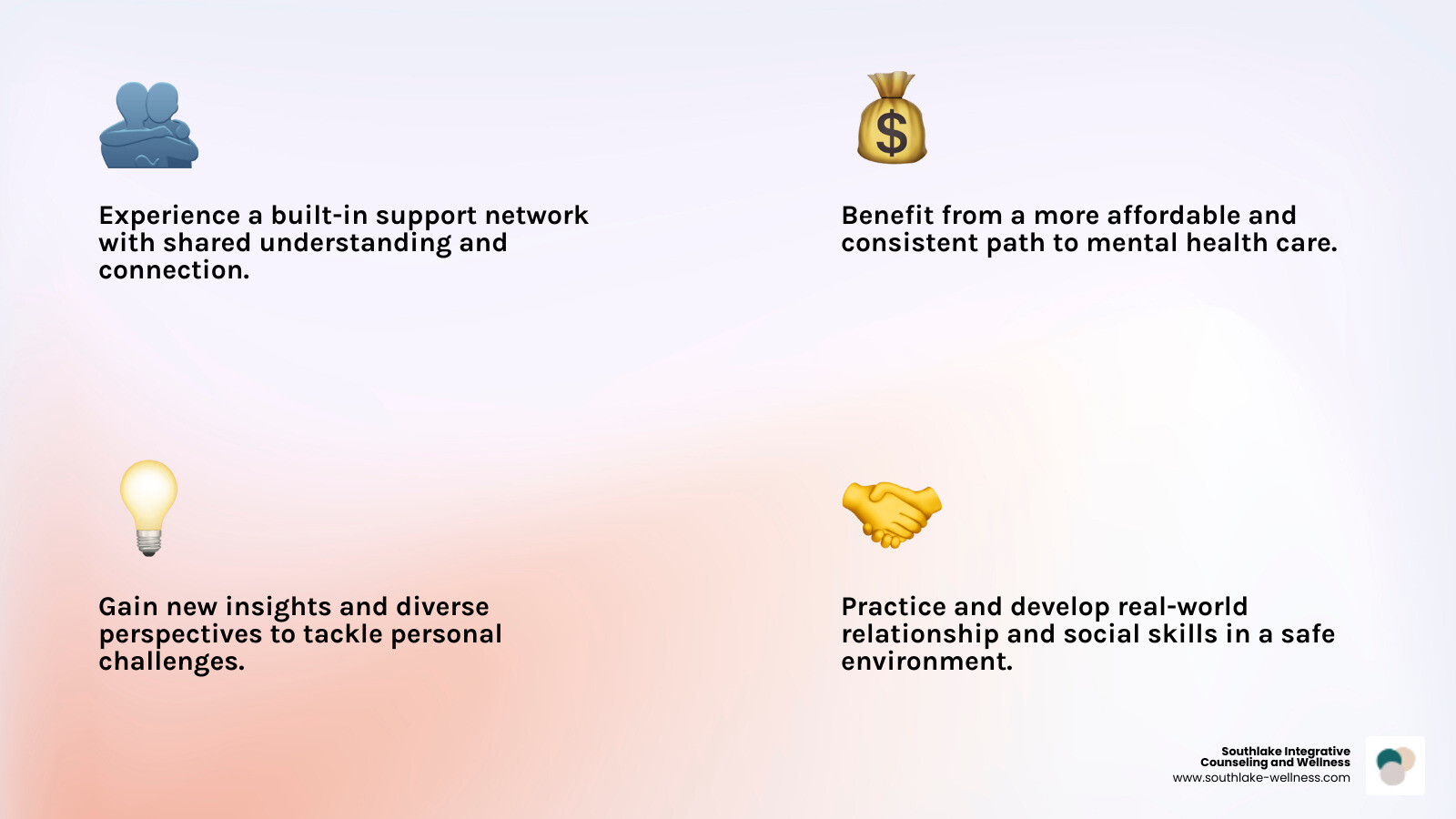
Groups of 5 to 15 members typically meet weekly for one to two hours. The core idea is that what was hurt in relationships often needs to be healed through relationships. Group therapy provides unique benefits like a built-in support network, diverse perspectives, a safe space to practice social skills, and a more affordable path to care.
The group setting helps you see challenges through others' eyes, find new coping strategies, and practice new ways of relating to people. Whether managing stress, trauma, or relationship issues, therapeutic groups create connection where there was once isolation.
As Holly Gedwed, I've spent 14 years as a clinician specializing in trauma and addiction, and I've witnessed how therapeutic groups for adults create profound change through the power of shared healing. My approach combines evidence-based modalities like CBT and DBT with the unique interpersonal dynamics that only group settings can provide.
The Unique Power of Group Therapy vs. Individual Counseling
While individual therapy is often the first thing that comes to mind for mental health support, therapeutic groups for adults offer a distinct and powerful pathway to healing. It's not about one being "better," but about recognizing the unique advantages of each.
A primary benefit of group therapy is the built-in support network. While individual therapy offers a therapist's undivided attention, a group provides a circle of peers who truly understand your experiences. This camaraderie combats the profound sense of isolation many feel, offering significant healing and relief.
A group serves as a sounding board with diverse perspectives. This collective wisdom helps you see your problems through others' eyes, sparking new coping strategies and insights you might not find alone.
Moreover, group therapy is a real-time laboratory for developing relationship skills. In a safe environment, you can practice active listening, respectful communication, and new ways of interacting. These skills directly improve your daily relationships with family, friends, and colleagues.
Finally, group therapy is often a more affordable, yet still highly effective, alternative to individual sessions. This accessibility ensures financial barriers don't prevent people from getting the support they need.
While individual therapy provides deep, personalized exploration, group therapy offers a "social microcosm" for healing in connection with others. Many find that combining both approaches yields the best results, and joining a group can jump-start progress if individual therapy has stalled.
Here's a quick comparison:
FeatureGroup TherapyIndividual TherapyCostGenerally more affordable, making it accessible to a wider range of people.Typically higher cost per session.Support StructureBuilt-in network of peers with shared experiences, fostering camaraderie and mutual support.Focused on the one-on-one relationship with the therapist.FocusExplores interpersonal dynamics, shared experiences, and collective problem-solving.Deep, personalized exploration of individual history, thoughts, and feelings.Skill PracticeOffers a safe environment to practice social skills, communication, and new behaviors in real-time.Skills are often discussed and planned, but real-time practice with peers is limited.PerspectivesBenefits from diverse viewpoints and strategies from multiple group members.Primarily guided by the therapist's expertise and the individual's self-reflection.IsolationActively combats feelings of isolation by demonstrating that struggles are shared.Can sometimes feel isolating, though the therapeutic relationship provides connection.AccountabilityPeers can provide encouragement and hold each other accountable, in addition to the therapist.Primarily driven by self-motivation and accountability to the therapist.
The best choice depends on your unique needs and goals. For more insights, check out our guide on the Benefits of Group Therapy, and for a broader understanding, the American Psychological Association provides excellent information on Psychotherapy: Understanding group therapy.
5 Practical Ways to Find Therapeutic Groups for Adults
Finding the right therapeutic groups for adults can feel overwhelming, but a clear strategy makes it manageable. Consider if you prefer virtual or in-person sessions and if the group is "open" (new members can join anytime) or "closed" (all members start and end together). The goal is to find a community that aligns with your therapeutic goals, comfort level, and practical needs.

1. Ask for Professional Referrals
A reliable way to find quality therapeutic groups for adults is through professional referrals. Your primary care physician, individual therapist, or psychiatrist can recommend groups that fit your specific needs and treatment plan. These professionals can vet groups for qualified leadership and evidence-based approaches, saving you time and uncertainty. For more on this, explore our Evidence-Based Therapy Complete Guide.
2. Use Online Mental Health Directories
Reputable online directories can help you find therapeutic groups for adults. These platforms often allow you to filter by location, issue, and insurance, making it easier to narrow down your options. Look for well-established websites dedicated to connecting individuals with mental health professionals and support services. These directories can be invaluable for broadening your search.
3. Check with Local Hospitals and Community Centers
Local institutions are excellent resources for therapeutic groups for adults. Hospitals and medical centers often sponsor groups for specific health conditions or life challenges like grief. Community mental health clinics, non-profits, and even university counseling centers frequently offer accessible, affordable groups or can provide referrals to local programs.
4. Search Online for Local Therapy Practices
A targeted online search can uncover local therapeutic groups for adults. Use specific terms like "group therapy near me" or "anxiety group Southlake TX." When reviewing a practice's website, look for their therapeutic approach, facilitator credentials, and detailed descriptions of group goals and structure. A good website offers insight into the practice's philosophy. For local options, start by exploring resources like Group Therapy Southlake.
5. Explore Specialized Support Groups
Specialized therapeutic groups for adults offer targeted support for specific issues, creating a powerful sense of understanding and validation.
- Grief and Loss Groups: These provide a compassionate space to process bereavement. For dedicated resources, see our Grief Support Groups.
- Anxiety, Depression, or Trauma Groups: These groups help manage symptoms and underlying causes, often using skills-based approaches like CBT or DBT.
- Groups for Chronic Illness or Life Transitions: These connect individuals facing similar circumstances like divorce or chronic health conditions, fostering mutual support.
- Substance Abuse Groups: These focus on recovery, relapse prevention, and building a robust support system for sobriety.
Finding a group focused on your specific struggle can create a powerful environment for healing.
A Look Inside: What to Expect in a Therapy Group
Stepping into a therapeutic groups for adults for the first time can be daunting, but knowing what to expect helps. Group therapy is a dynamic process where 5 to 15 members learn and grow together, guided by a skilled therapist. Sessions typically last one to two hours weekly. The therapist facilitates discussion, ensures safety, and offers insights into social patterns by observing group dynamics.

Essential Ground Rules for a Safe Space
To ensure a healing environment, therapeutic groups for adults operate under essential ground rules built on trust and respect.
- Confidentiality as the cornerstone: What is shared in the group stays in the group. We ask everyone to respect privacy by not disclosing identities or session content outside the group to create a safe space for honesty.
- Punctuality and respect for time: Starting and ending on time shows respect for everyone's commitment and creates a predictable, structured environment.
- Using "I" statements: We encourage personal responsibility by using "I" statements (e.g., "I feel...") to express feelings constructively without blame.
- No cross-talk or unsolicited advice: It's crucial to let each person speak without interruption. The role of members is to listen and empathize, not to offer quick fixes. The therapist guides the process.
- The right to pass: You are never forced to share. The "right to pass" means you can decline to speak on a topic. Participation is encouraged, but trust is built over time.
These rules help cultivate an environment where everyone feels safe and supported. For a deeper dive, refer to our guide on How to Conduct a Group Counseling Session.
The Structure and Flow of a Typical Session
While each session varies, a general structure provides comfort and predictability:
- Session check-ins: Each member briefly shares their current feelings, recent events, or session goals.
- Introduction of a topic or theme: The therapist introduces a topic, skill, or activity aligned with the group's goals.
- Group discussion and processing: The core of the session, where members share experiences and feelings. The therapist facilitates, ensuring everyone can speak and guiding the discussion toward insight.
- Experiential activities: Hands-on exercises or role-playing help members practice new skills and explore emotions.
- Closing the session with a check-out: Each member shares a key takeaway or a commitment for the week, helping to integrate the session's lessons.
This flow creates a rhythm for deep processing and practical skill-building. For more on structuring sessions, see our Group Counseling Session Outline, and for ideas on ending on a positive note, check out Closing a Group Counseling Session.
Engaging Activities in therapeutic groups for adults
Engaging activities make therapeutic groups for adults dynamic and impactful. They help us connect and grow in ways that discussion alone might not. Here are a few examples:
- Trust-building (Trust Walk): In pairs, one blindfolded person is guided by another, building trust and communication.
- Communication (Active Listening Pairs): Partners practice speaking and active listening, summarizing what they heard without judgment to hone interpersonal skills.
- Self-awareness (Values Auction): Participants use "play money" to "bid" on personal values, helping to clarify priorities.
- Emotional Regulation (Coping Skills Toolbox): The group creates personalized "toolboxes" of coping strategies (e.g., deep breathing, journaling) to manage intense emotions.
- Mindfulness (Guided Meditation): Short meditations help members focus on the present and observe feelings without judgment.
- Creative Expression (Group Story Building): Each member adds a sentence to a story, fostering creativity and revealing group themes.
- Problem-Solving (Role-Playing): Members act out challenging scenarios to practice new communication and problem-solving skills in a safe setting.
These activities make group therapy effective and enjoyable. For more ideas, check out our Fun Mental Health Group Therapy Activities for Adults.
A Group for Every Journey: Common Types of Therapy Groups
One of the great things about therapeutic groups for adults is the diversity available. Finding a group custom to your specific needs is key to effective healing, as members often benefit from sharing similar difficulties.
Skills Development Groups
These groups teach practical, evidence-based coping skills to manage mental health challenges, with the therapist often acting as an instructor.
- Dialectical Behavior Therapy (DBT) Skills: DBT groups teach mindfulness, distress tolerance, emotion regulation, and interpersonal effectiveness to manage intense emotions and improve relationships.
- Cognitive Behavioral Therapy (CBT) Skills: CBT groups help members identify and challenge negative thought patterns and behaviors contributing to anxiety and depression.
- Anger Management: These groups provide strategies for identifying triggers, expressing anger constructively, and developing healthier responses.
- Social Skills Training: These groups offer a safe space to practice communication, boundary setting, and relationship building for those with social anxiety.
We often integrate mindfulness into these groups. For more, explore our insights on Mindfulness-Based Group Therapy.
Psychoeducational Groups
These groups provide information and education about specific mental health conditions or life challenges, empowering members with knowledge to manage their well-being.
- Understanding a Diagnosis: Groups may focus on conditions like ADHD or Bipolar Disorder, teaching about symptoms, treatment, and coping strategies.
- Learning About Recovery: These groups educate individuals on topics like the neuroscience of addiction, relapse prevention, and building a sober lifestyle.
- Managing Chronic Pain or Illness: These groups offer information and support for the psychological impact of chronic health conditions.
The therapist acts as an instructor, sharing expertise and facilitating discussion. Learn more in our article on Evidence-Based Group Therapy.
Process-Oriented Groups
Process-oriented groups focus on interpersonal relationships and group dynamics, using the "here and now" interactions between members for exploration and growth.
- Exploring Personal Patterns: Members gain insight by observing how their interactions within the group mirror patterns in their outside lives, revealing how they handle conflict, connection, and vulnerability.
- Gaining Insight from Real-Time Interactions: The group acts as a "social microcosm" to try new behaviors, receive immediate feedback, and understand one's impact on others.
- A "Social Microcosm": This safe environment allows for practicing new interpersonal skills. The idea that what was hurt in relationships often needs to be healed through relationships is central here. These groups are often unstructured to allow for genuine self-exploration.
These groups are powerful tools for understanding the complexities of human connection.
Support Groups for specific issues in therapeutic groups for adults
Support groups unite individuals with similar life challenges, creating a powerful sense of community. Professionally facilitated groups offer added structure and guidance.
- Grief and Loss: These groups provide a compassionate space to process the complex emotions of loss.
- Anxiety and Panic Disorders: Members share experiences and coping strategies for managing symptoms like panic attacks or social anxiety.
- Depression: These groups reduce isolation and help members explore pathways to improved well-being.
- Trauma and PTSD: In a safe environment, survivors can share stories, learn about trauma's impact, and develop healing strategies.
- Eating Disorders: These groups provide essential support for recovery, addressing body image, self-esteem, and healthy relationships with food.
At Southlake Integrative Counseling and Wellness, we offer various support groups, including for Counseling Group Session Anxiety and Eating Disorders. These groups offer encouragement and validation from others who truly understand.
Frequently Asked Questions about Therapeutic Groups for Adults
We understand that you might have some questions or reservations about joining therapeutic groups for adults. It's completely normal to feel that way! Let's address some common concerns.
How much do I have to share?
You are always in control of what you share. Confidentiality is a core rule, and you share at your own pace. You always have "the right to pass" and decline to speak on a topic. There's no pressure to disclose sensitive information before you're ready. Many members start by listening and gradually share as they build trust. Your comfort is the priority.
What if I have social anxiety?
It's valid to feel daunted by group therapy if you have social anxiety. However, therapeutic groups for adults are designed to be safe and effective places to practice social skills. Our therapists create a non-judgmental environment and facilitate interactions in a manageable way. You can start by observing and engage as you feel comfortable. The group becomes a safe space to take social risks, receive feedback, and realize you're not alone in your anxiety. This process can be incredibly empowering.
Is group therapy as effective as individual therapy?
Research shows that therapeutic groups for adults are highly effective, offering unique benefits. It's not a question of which is better, but how they differ. The power of group therapy is in the shared experience: realizing you're not alone, gaining diverse perspectives, and practicing skills in a social context. Many people find combining group and individual therapy yields the most powerful results. Individual therapy offers deep exploration, while group therapy provides a dynamic space for practice and peer support. This combination can accelerate personal growth.
Begin Your Journey Toward Connection and Healing
We've explored the profound benefits of therapeutic groups for adults, from the unique power of shared experience and diverse perspectives to the practical advantages of affordability and skill development. We've walked through how to find these groups, what to expect inside a session, and the various types available to suit diverse needs. The courage to take this first step, to seek connection and support, is a powerful act of self-care.
At Southlake Integrative Counseling and Wellness, we understand the importance of finding the right fit for your healing journey. We provide holistic mental healthcare in Southlake, Texas, combining evidence-based therapies with alternative modalities to promote emotional balance and resilience. Our unique approach emphasizes the mind-body connection, offering personalized treatment plans for individuals, couples, and groups. We believe in the transformative power of community and guided professional care.
Your struggles, your hopes, and your capacity for healing are all part of the shared human experience. We invite you to explore how therapeutic groups for adults can provide the connection and growth you deserve. Explore our services to find the right support for you and take that courageous step toward a brighter, more connected future.