
The Power of a Meaningful Goodbye
Closing activities for group therapy are structured exercises or discussions designed to bring a therapy session to a meaningful conclusion. These activities help participants process their experiences, reinforce what they've learned, and transition back to daily life. Here are the most effective types:
Quick Closing Activities:
- One-Word Check-Out - Each member shares a single word describing their current state
- Rose, Thorn, and Bud - Share a positive moment, a challenge, and a future hope
- Gratitude Circle - Express appreciation for something or someone in the group
- The Web Activity - Use yarn to visually represent group connections
- Future Self Postcard - Write goals and commitments for the coming week
- Mindful Moment - Brief guided meditation or breathing exercise
- The Group Motto - Collaboratively create a phrase capturing the session's essence
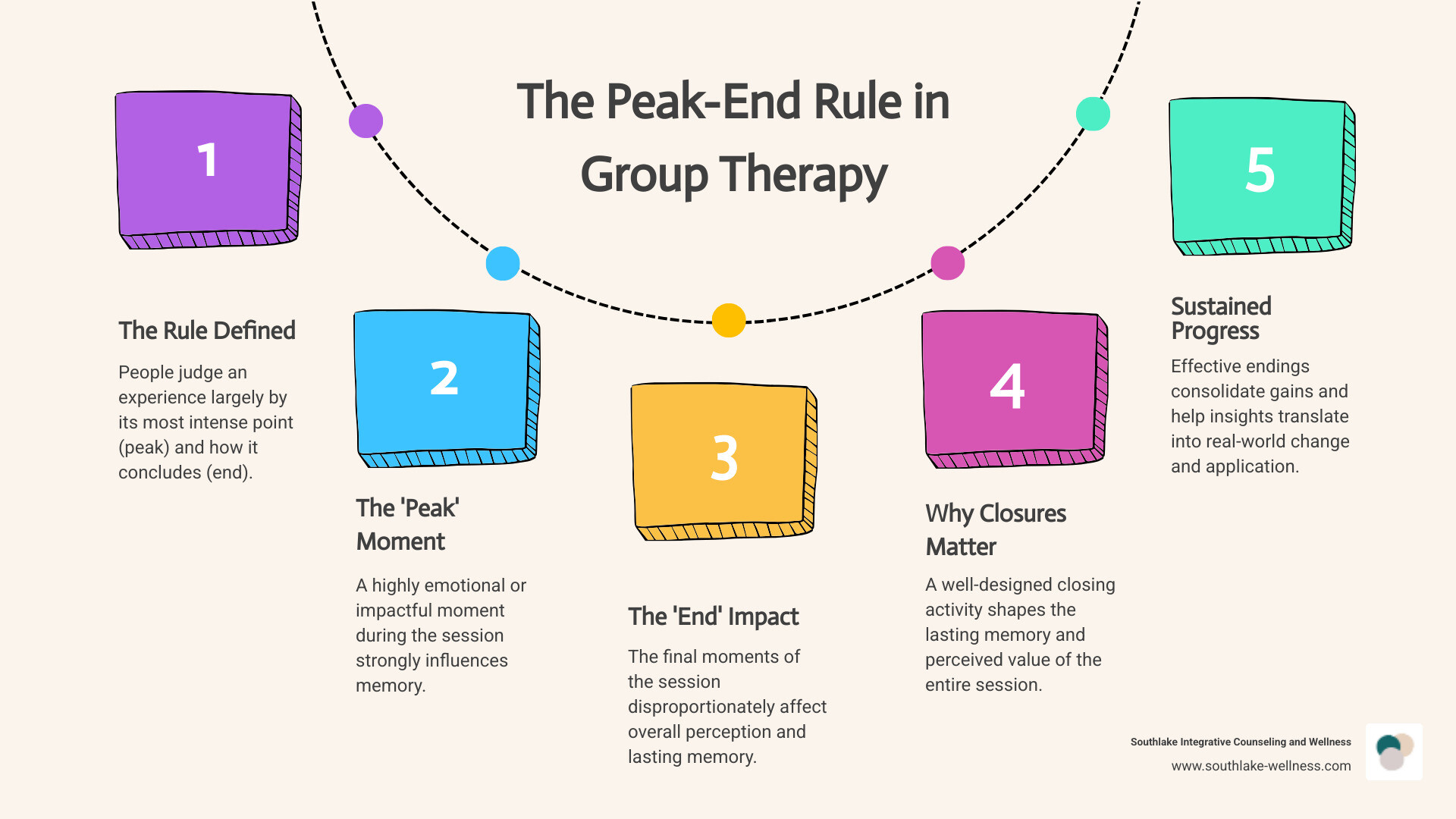
As your group therapy journey winds down, that final moment matters more than you might think. Research shows that people judge an experience largely by how it ends—a psychological principle called the peak-end rule. This means the last five to ten minutes of your session can shape how participants remember and apply everything they've learned.
A well-designed closing activity does more than just signal it's time to leave. It consolidates gains from the session, helps members process their emotions, and builds a bridge between the safety of the therapy room and the challenges of daily life. Without this intentional conclusion, insights can fade and commitments can waver before participants even reach their cars.
The ending phase is also when group cohesion deepens. When members share final reflections or participate in a closing ritual together, they reinforce their connections and create a sense of accomplishment. This isn't just feel-good theory—approximately one-third of US adults struggle with anxiety and depression, and research demonstrates that the supportive environment created through effective group processes, including meaningful closures, can significantly improve mental health outcomes.
As Holly Gedwed, an LPC-Associate with 14 years of clinical experience, I've witnessed how thoughtfully chosen closing activities for group therapy transform sessions from informative to transformative, helping clients with anxiety, trauma, and addiction carry their progress forward. The right closing activity creates lasting impact that extends well beyond the therapy room.
Why End on a High Note? The Purpose of Closing Activities
The end of any group therapy session, and especially the termination of a group series, is a critical component of the therapeutic process. It's not just about wrapping things up; it's about purposefully concluding the shared journey in a way that maximizes therapeutic benefits and prepares members for continued growth. We view this as an essential part of our commitment to Evidence-Based Group Therapy here in Southlake, Texas.
One of the primary purposes of closing activities for group therapy is to help participants process their feelings and review their progress. Throughout the group's duration, members often experience a wide range of emotions, make significant breakthroughs, and build strong connections. Without a dedicated time for closure, these experiences can feel unresolved or incomplete. Closing activities provide a structured opportunity for individuals to reflect on their personal journey, acknowledge the changes they've made, and articulate their emotional responses to the group ending. This reflection solidifies the lessons learned and helps members integrate their insights into their daily lives.
Moreover, termination activities play a crucial role in fostering group cohesion and strengthening the support network that has developed. By sharing final thoughts, offering appreciation, and discussing future plans, members reinforce the bonds they've formed. This communal processing helps validate individual experiences and reminds everyone that they are not alone in their struggles or successes. For many, the group becomes a vital source of support, especially given that approximately one-third of US adults struggle with anxiety and depression, as highlighted by the Kaiser Family Foundation. Effective closure ensures that this support extends beyond the formal group setting, encouraging members to maintain progress and use their newfound coping skills.
The benefits of incorporating meaningful closing activities for group therapy are profound. They provide a sense of completion and accomplishment, allowing participants to leave feeling empowered and prepared rather than abandoned or anxious. They help to consolidate the therapeutic gains, ensuring that the hard work done within the group translates into sustainable change in the real world. Without these intentional endings, the full impact of the group experience may be diminished, making the journey less effective in the long run.
7 Quick and Easy Closing Activities for Group Therapy
Choosing the right closing activities for group therapy can transform the end of a session from a simple wrap-up into a powerful moment of reflection, connection, and commitment. These activities are designed to be quick, engaging, and adaptable to various group dynamics and therapeutic goals. Here are seven of our favorite go-to activities that can easily be incorporated into your sessions.
1. The One-Word Check-Out
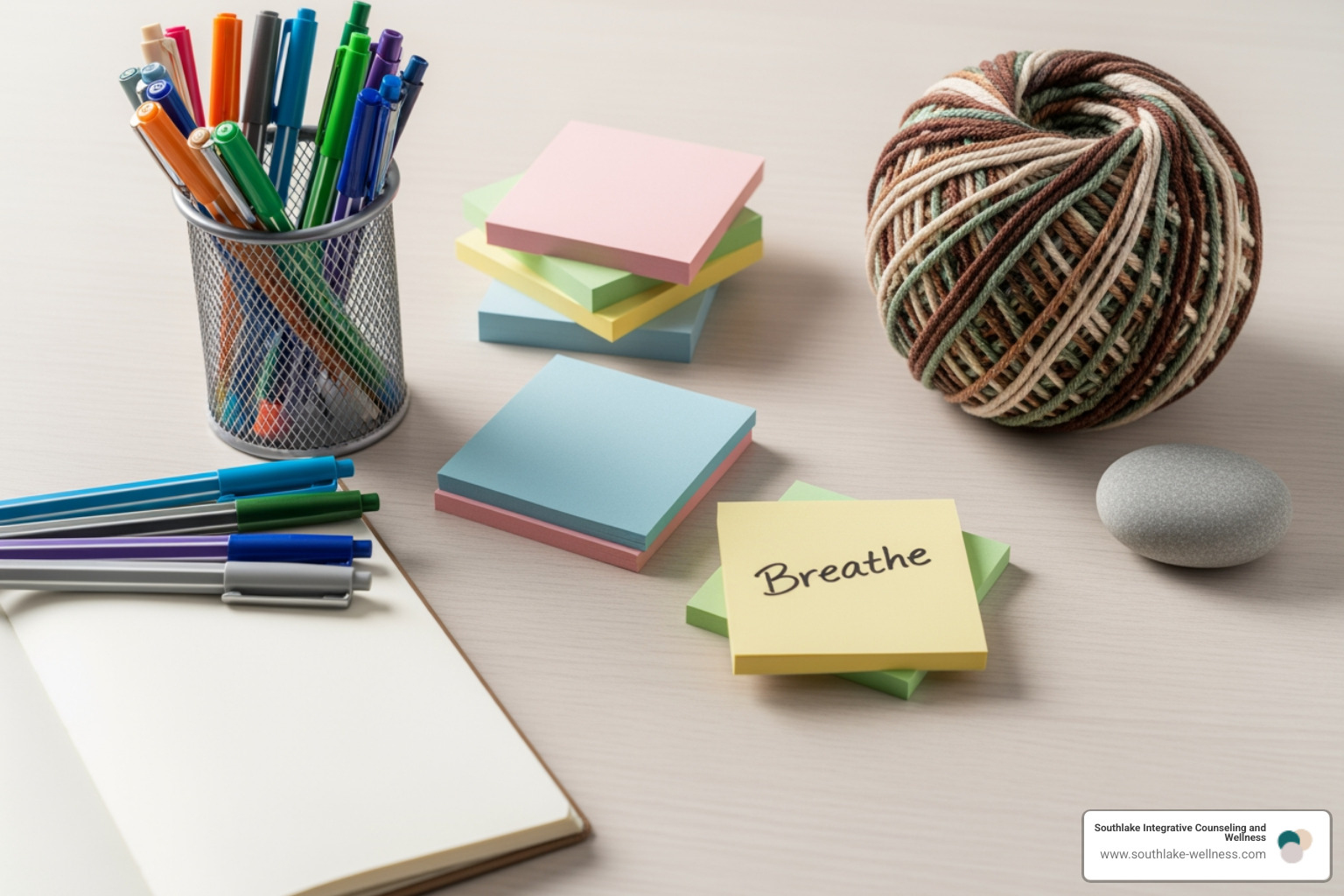
This activity is a staple for its simplicity and effectiveness. As the session draws to a close, we ask each group member to share one word that encapsulates their current feeling, a key takeaway from the session, or their overall state of mind.
Why it works: The One-Word Check-Out offers a quick, low-pressure way for everyone to participate. It encourages members to synthesize their experience into a concise thought, providing a snapshot of their emotional summary or what resonated most deeply. For those who may be less verbal, it's an accessible way to contribute, ensuring that even quiet members have a voice. This activity provides the facilitator with immediate feedback on the group's current state and helps us gauge the overall mood or impact of the session. It also fosters a sense of collective closure, as each person contributes to the final mosaic of the session. You can explore more general Group Therapy Activities that promote engagement throughout a session.
2. Rose, Thorn, and Bud
The Rose, Thorn, and Bud activity is a beautiful way to encourage balanced reflection, incorporating elements of positive psychology. We invite each member to share:
- Rose: Something positive, a success, or a moment of gratitude from the session or their week.
- Thorn: A challenge, a difficulty, or something they struggled with.
- Bud: Something they are looking forward to, a hope for the future, or an insight that is beginning to blossom.
Why it works: This activity provides a comprehensive yet succinct overview of each member's experience. It balances positive affirmations with acknowledging challenges, promoting a realistic and holistic view of progress. The "bud" element injects a sense of hope and forward-thinking, which is crucial for maintaining momentum outside the group. It's an excellent tool for helping individuals Develop Coping Skills by consciously identifying areas of strength, areas for growth, and future aspirations. This structure encourages members to reflect on their journey and articulate their ongoing development.
3. The Gratitude Circle
In a Gratitude Circle, we go around the group, and each member shares something they are grateful for—it could be related to the session, another group member, or an experience from their week.
Why it works: Expressing gratitude shifts the focus towards positive emotions, which is particularly beneficial at the end of a session. It strengthens group bonds by highlighting the positive impact members have had on one another, building empathy and appreciation. This simple, verbal activity creates a warm, supportive atmosphere, leaving everyone with a sense of connection and positive regard. It's one of the most Fun Mental Health Group Therapy Activities for Adults because it naturally fosters a sense of community and upliftment. The shared experience of gratitude can be a powerful antidote to negative feelings and a reminder of the inherent goodness present even amidst challenges.
4. The Web Activity
For this activity, we use a ball of yarn. One person starts by holding the end of the yarn and shares a key takeaway, a feeling, or an appreciation for another group member. They then gently toss the ball of yarn to that person, who catches it, holds onto a piece, and shares their own thoughts before tossing it to someone else. This continues until everyone has had a turn, creating a visual "web" of interconnectedness.

Why it works: The Web Activity provides a powerful visual representation of the group's interconnectedness and the impact each member has had on the collective journey. It’s a tangible reminder that even after the group formally ends, the connections and lessons learned remain. This symbolic ritual reinforces the idea that therapy happens not just individually, but through the shared experience and mutual support of the group. Each strand of yarn represents a thread of connection, a shared moment, or a piece of wisdom exchanged, making the abstract concept of group dynamics feel concrete. This activity is especially impactful for Small Group Counseling Sessions where individual contributions are highly valued and visible.
5. Future Self Postcard
We provide each group member with a postcard and invite them to write a message to their "future self." This message can include goals they want to achieve, promises they want to keep, insights they want to remember, or words of encouragement for the coming days, weeks, or months. We can even offer to mail these postcards at a later date (e.g., in 1 month, 3 months, or 6 months).
Why it works: This activity is highly action-oriented and focuses on future planning and maintaining progress. It encourages members to internalize their therapeutic goals and commitments, fostering a sense of accountability to themselves. The act of writing to one's future self promotes self-compassion and provides a tangible reminder of their intentions and growth. When the postcard arrives weeks or months later, it serves as a powerful prompt, reigniting motivation and reminding them of the strategies and Holistic Coping Strategies they learned in the group. It's a wonderful way to bridge the gap between the therapy room and ongoing life.
6. Mindful Moment: A guided closing for group therapy
To conclude a session, we can lead the group in a brief guided mindfulness exercise. This might involve a few minutes of focused breathing, a body scan, or a short loving-kindness meditation. The goal is to help members transition from the active discussion to a state of inner peace and calm before re-entering their daily routines.
Why it works: Mindfulness is a powerful tool for stress reduction and cultivating inner peace. Research has demonstrated that mindfulness leads to improvements in nearly every aspect of mental health, as noted in studies like Sundquist et al. (2015) in The British Journal of Psychiatry. Ending with a mindful moment helps members ground themselves, bringing their attention to the present and allowing them to gently process any emotions that arose during the session. It provides a peaceful transition, equipping them with a practical skill they can use outside of therapy to manage stress and maintain emotional balance. This practice is a cornerstone of Mindfulness-Based Group Therapy and an excellent way to integrate holistic wellness into our sessions.
7. The Group Motto
In this collaborative activity, we invite the group to collectively create a motto or a unifying statement that summarizes their shared journey, the key lessons learned, or the spirit of their group. We might write down key words or phrases on a whiteboard as they brainstorm, eventually crafting a short, impactful statement.
Why it works: The Group Motto is a fantastic team-building exercise that culminates in a shared identity and a powerful reminder of the collective experience. It encourages collaborative effort, requiring members to listen to each other and find common themes. Ending on a unified note like this fosters a strong sense of belonging and accomplishment. This motto can serve as a lasting symbol of their journey together, providing inspiration and a sense of shared purpose long after the group has ended. This activity, like many others that build group cohesion, aligns with the principles of positive psychology.
Best Practices for Facilitating Closing Activities for Group Therapy
Effective facilitation is the backbone of successful group therapy, and nowhere is this more evident than during the termination phase. Our role as facilitators in guiding the termination process is crucial for ensuring a positive and impactful conclusion for all members. We strive to create an environment where every individual feels supported, heard, and prepared for their path forward. You can learn more about our approach to Facilitating a Group Counselling Session in detail.
One of the most effective strategies for facilitating group termination is to start early. We introduce the idea of the group ending several sessions before the actual termination date. This allows members ample time to process their feelings about the upcoming separation, address any unresolved issues, and plan for their continued growth. Surprising members with an abrupt ending can evoke feelings of abandonment or anxiety, undermining the therapeutic gains.
We also believe in individualizing the approach. While we use structured activities, we recognize that each group and each member within it is unique. Some individuals may be more emotionally impacted by the ending than others, and our approach must be sensitive to these differences. We offer extra support to those who are struggling, which might involve individual check-ins or providing additional resources. Our goal is to create a personalized experience that respects each person's journey.
Managing common challenges during termination is another key aspect of our role. It's not uncommon for members to exhibit resistance, express sadness, or even anger as the group approaches its end. When faced with member resistance, we gently explore their feelings, validating their emotions while guiding them towards accepting the ending. This exploration might uncover fears of loss, uncertainty about the future, or a reluctance to let go of the supportive group environment. We help members verbalize these feelings, process them in a healthy way, and reinforce the coping strategies they've developed.
Time management is also critical. While a single session might dedicate 5-10 minutes for a quick closing activity, a longer-term group termination typically requires at least one to two full sessions to adequately address all aspects of closure. This allows enough space for reflection, feedback, and future planning without rushing the emotional process.
Finally, we actively encourage group members to maintain progress and support networks after the formal group ends. We discuss how they can apply the skills learned in their daily lives, connect with external resources, and, where appropriate and agreed upon by all parties, maintain informal contact with fellow group members. The ethical considerations of post-group contact are always discussed, emphasizing healthy boundaries and individual preferences.
The nature of closing activities for group therapy can also differ for various types of groups or populations. For instance:
- Children's groups might benefit from more concrete, playful, and symbolic activities, like creating a group art piece or a "memory jar" filled with notes.
- Adult groups, especially those focused on specific therapeutic goals like anxiety or trauma, might engage in more verbal processing, goal-setting, and reflection on how to apply their new skills in real-world scenarios. For trauma groups, closure needs to be handled with particular sensitivity to avoid re-triggering, focusing on safety, empowerment, and future coping.
- Psychoeducational groups might emphasize a review of learned concepts and practical application plans.
Our role is to adapt these activities to ensure they resonate with the group's unique needs and therapeutic journey, facilitating a conclusion that is both meaningful and empowering.
Frequently Asked Questions about Group Session Closures
How much time should be dedicated to closing activities?
The amount of time dedicated to closing activities for group therapy can vary depending on the length and nature of the group. For a single, standalone session, we typically allocate at least 5-10 minutes for a quick check-out or reflection activity. This ensures that members have a moment to summarize their experience and transition out of the therapeutic space.
However, for the termination of a longer-term group series (e.g., several weeks or months), it is crucial to dedicate more substantial time. Research and best practices suggest that at least one to two full sessions should be devoted to the termination process. This allows ample opportunity for members to process their feelings, review their progress, provide feedback, and plan for their future without feeling rushed. Flexibility is key; we assess the group's needs and emotional responses to determine the optimal time frame.
What if a group member resists the termination process?
Resistance to the termination process is a common and understandable reaction in group therapy. It often stems from fears of loss, anxiety about stepping out of a supportive environment, or a reluctance to confront unresolved issues. As facilitators, our approach is to gently explore this resistance rather than confront it directly.
We validate the member's feelings, acknowledging that it's natural to feel apprehension or sadness when a supportive structure is ending. We encourage them to articulate their fears and concerns, which can often be a therapeutic process in itself. This might involve exploring what the group has meant to them, what they anticipate losing, or any uncertainties they have about their ability to cope independently. By simultaneously validating their feelings and gently guiding them towards accepting the ending, we help them process this emotional transition. We also reinforce the skills and strengths they've developed throughout the group, reminding them of their capacity for resilience and self-support, often drawing on principles from Emotional Regulation Therapy.
How do you end a group therapy session on a positive note?
Ending a group therapy session on a positive note is essential for reinforcing therapeutic gains and ensuring members leave feeling uplifted and motivated. We achieve this by intentionally crafting the final moments of the session.
First, we make sure to summarize key points discussed during the session, highlighting important insights or breakthroughs. This helps to consolidate learning and ensures everyone is on the same page. Second, we reinforce progress, acknowledging the efforts and growth of individual members and the group as a whole. This can be done through verbal affirmations or by having members share their own successes.
Third, we often incorporate a gratitude or appreciation activity, such as the Gratitude Circle, where members express thanks for something they gained from the session or from another group member. This fosters positive emotions and strengthens group bonds. Finally, we conclude with a unifying ritual that brings a sense of closure and connection, like the One-Word Check-Out or a brief mindful moment. The goal is to ensure members feel heard, valued, and leave with a sense of accomplishment and hope for their continued journey.
Your Path Forward After Group Therapy
As we've explored, the journey through group therapy is transformative, and its conclusion is just as vital as its beginning. The intentional use of closing activities for group therapy ensures that you not only gain insights but also consolidate your journey and are equipped to maintain progress long after the formal sessions end. These deliberate goodbyes are not just about ending; they are about empowering you for what comes next.
The importance of skilled facilitation throughout this process cannot be overstated. Our expert facilitators at Southlake Integrative Counseling and Wellness are dedicated to guiding groups through every stage of the therapeutic process, ensuring a supportive and transformative experience from beginning to end. We understand that true healing and growth extend beyond the therapy room, encompassing a holistic approach to your well-being.
At Southlake Integrative Counseling and Wellness, we are committed to fostering Holistic Mental Wellness, combining evidence-based therapies with alternative modalities to promote emotional balance and resilience. Our unique approach emphasizes the mind-body connection, offering personalized treatment plans for individuals, couples, and groups right here in Southlake, Texas.
We invite you to experience the profound benefits of group therapy and find how our expert-led sessions can support your journey toward lasting well-being.
Explore our group therapy services and take the next step toward a more balanced and resilient you.