
Why Learning to Cope is a Superpower for Adults
Coping mechanisms for adults are the thoughts and behaviors we use to manage stress, difficult emotions, and challenging situations in daily life. Whether you're navigating work pressure, relationship struggles, or unexpected life changes, how you cope determines your ability to maintain emotional balance and move forward.
Effective coping mechanisms for adults include:
- Problem-focused strategies - Taking action to address the source of stress directly (setting boundaries, asking for help, problem-solving)
- Emotion-focused strategies - Managing your emotional response (journaling, positive reframing, self-compassion)
- Mindfulness practices - Staying present and grounded (deep breathing, meditation, grounding techniques)
- Physical release - Using your body to process stress (exercise, yoga, creative expression)
- Social support - Connecting with others for help and validation (talking to friends, joining support groups)
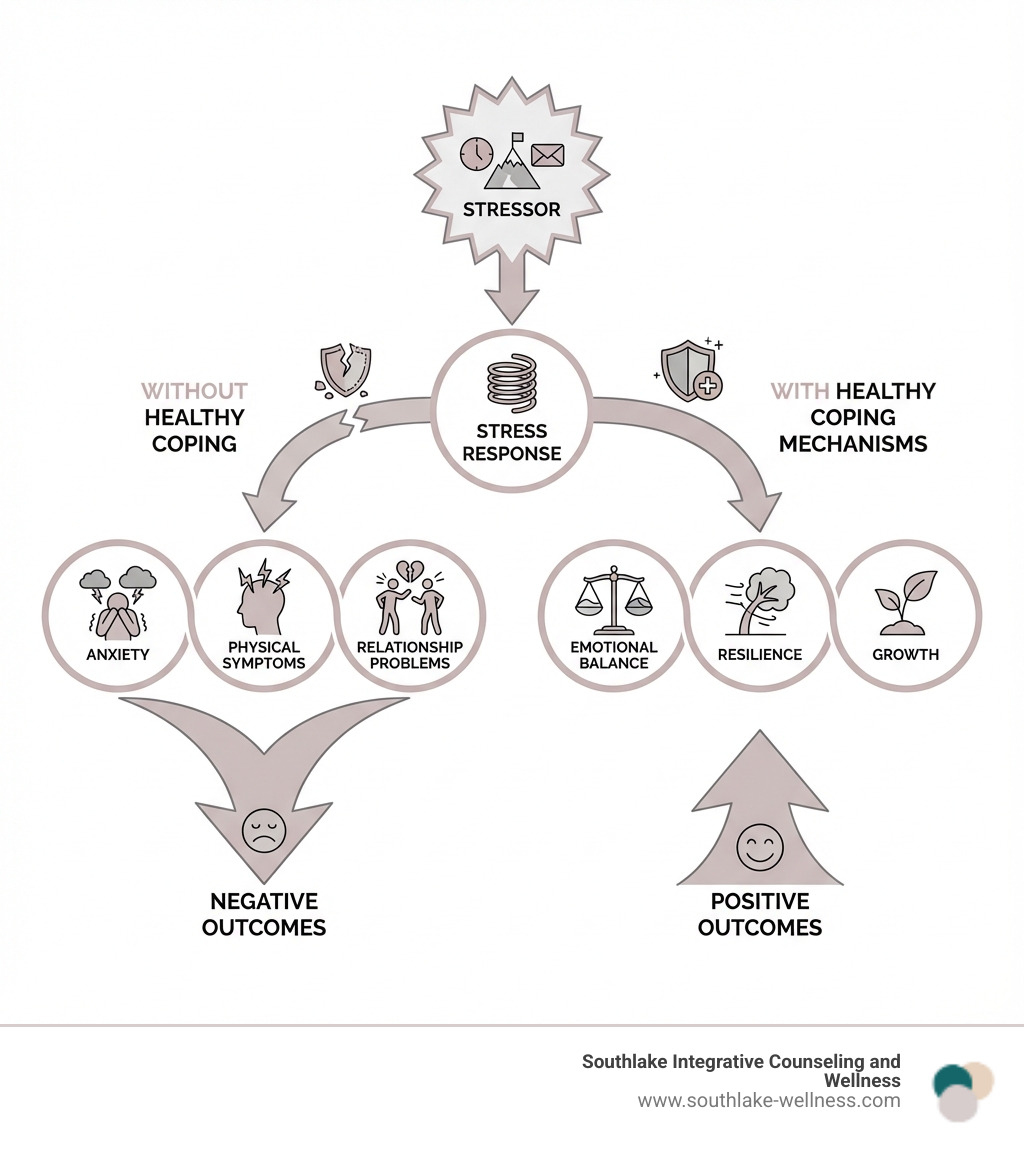
Everyone experiences stress—from missing work deadlines to caring for aging parents to dealing with unresolved trauma. The difference between thriving and merely surviving often comes down to how you respond. Coping is about adjusting to negative events while maintaining your positive self-image and emotional equilibrium. When you lack effective coping strategies, chronic stress can lead to anxiety, depression, physical illness, and strained relationships. Research shows that over 60% of American adults have experienced at least one adverse childhood experience, and maladaptive coping mechanisms are directly linked to poor mental health outcomes.
The good news? Coping skills can be learned, practiced, and strengthened over time. Building a repertoire of healthy coping mechanisms acts as your personal safety net—a toolbox you can reach for whenever life gets overwhelming. This isn't about eliminating stress entirely (that's impossible). It's about responding to stress in ways that protect your well-being rather than harm it.
I'm Holly Gedwed, a Licensed Professional Counselor Associate with 14 years of clinical experience specializing in trauma, addiction, and helping adults develop healthier coping mechanisms for adults through evidence-based approaches like CBT and DBT. Throughout my career, I've seen how the right coping strategies can transform lives, breaking unhealthy patterns and building genuine resilience from the inside out.
Understanding Your Current Coping Style: Healthy vs. Unhealthy
Before we can build a stronger foundation for managing stress, we first need to understand our current methods. How do you instinctively react when faced with a challenge? Do you confront it head-on, or do you find yourself trying to push it away? This self-reflection is the first step in identifying your personal coping patterns.
Our coping styles are often learned early in life, influenced by our families and significant figures. For many adults, these patterns can be deeply rooted in past experiences. For instance, research from the CDC indicates that over 60% of American adults have experienced at least one Adverse Childhood Experience (ACE). Unresolved childhood trauma can significantly impact how we cope as adults, leading to the formation of false beliefs and less adaptive behaviors. We believe that almost every problem we face in adulthood can be traced back to these adverse experiences and the beliefs we form as a result. Understanding this connection is crucial for achieving holistic mental wellness. Dive deeper into this journey with our Holistic Mental Wellness Ultimate Guide.
Coping mechanisms can broadly be categorized into adaptive (healthy) and maladaptive (unhealthy) strategies. Adaptive coping helps us manage stress effectively and contributes to our long-term well-being. Maladaptive coping, while offering temporary relief, often exacerbates problems and harms our mental, physical, and relational health in the long run.
Healthy Coping MechanismsUnhealthy Coping MechanismsProblem-solving, seeking help, setting boundariesAvoidance, ignoring problems, blaming othersExpressing emotions constructively, journalingEmotional suppression, lashing out, aggressionSelf-care (exercise, healthy eating, sleep)Substance use (alcohol, drugs), reckless spendingSeeking social support, connecting with loved onesIsolation, social withdrawalMindfulness, meditation, relaxation techniquesSelf-harm, negative self-talk, ruminationPositive reframing, challenging beliefsBinge eating, restrictive eating
Examples of Unhealthy Coping Mechanisms to Avoid
It's easy to fall into unhealthy coping patterns because they often provide immediate, albeit fleeting, relief. However, these strategies don't address the root cause of stress and can lead to a host of other problems. Some common examples we see include:
- Substance Use: Consuming too much alcohol or using drugs can numb pain temporarily but leads to addiction and worsens mental health over time.
- Avoidance and Disengagement: Ignoring problems, procrastinating, or completely disengaging from situations. While this might feel like a break, it often allows issues to fester and grow.
- Emotional Suppression: Pushing down feelings rather than processing them. This can lead to emotional outbursts or internalizing stress, which impacts physical health.
- Impulsive Behaviors: Engaging in reckless spending, gambling, or other risky activities to distract from emotional pain.
- Aggression or Blaming Others: Outbursts of anger or consistently blaming others for our problems prevents us from taking responsibility and finding solutions.
- Social Withdrawal: Isolating ourselves from friends, family, and support networks when we need them most.
- Binge Eating or Restrictive Eating: Using food as a way to cope with emotions, which can lead to eating disorders and further distress.
- Self-Harm: Engaging in behaviors that intentionally cause physical pain as a way to cope with overwhelming emotional pain. This is a serious sign that professional help is needed.
How to Recognize if Your Coping is Maladaptive
Identifying maladaptive coping is crucial for making positive changes. Maladaptive coping mechanisms are associated with poor mental health outcomes and higher levels of psychopathology symptoms. If you find yourself consistently using the strategies mentioned above, or notice any of the following, it might be time to reassess:
- Worsening Mental Health: Increased anxiety, depression, irritability, or persistent feelings of hopelessness. Psychiatric disorders such as PTSD, anxiety, and major depression are often correlated with coping styles related to avoidance.
- Strained Relationships: Frequent arguments, isolation from loved ones, or difficulty maintaining healthy connections.
- Negative Impact on Physical Health: Chronic fatigue, digestive issues, frequent headaches, or worsening of existing health conditions. Patients using maladaptive coping mechanisms are more likely to engage in health-risk behaviors than those with appropriate mechanisms.
- Problems Multiplying: Instead of solving one problem, your coping strategy creates more. For example, using alcohol to cope with stress at work leads to problems at home.
- Feeling Stuck or Powerless: A sense that you can't break free from negative patterns, despite wanting to.
Our research shows that maladaptive coping mechanisms are strongly linked to negative outcomes. For a deeper dive into the connection between coping styles and mental health, consider this research on maladaptive coping and psychopathology.
A Comprehensive Guide to Healthy Coping Mechanisms for Adults
The good news is that just as we can learn unhealthy coping mechanisms, we can also learn and practice healthy ones. There's no one-size-fits-all approach; what works for one person might not work for another, and what works today might not work tomorrow. The key is flexibility and building a diverse repertoire of strategies.

Problem-Focused & Action-Based Strategies
These strategies involve directly addressing the source of stress or the problem itself. They are most effective when you have some control over the situation.
- Taking Control & Problem-Solving: Instead of avoiding, brainstorm possible solutions. For a work stressor, this might mean creating a to-do list, prioritizing tasks, or breaking down a large project into smaller, manageable steps.
- Setting Boundaries: Learning to say no, protecting your time and energy, and communicating your limits clearly. This is a powerful way to reduce overwhelming demands.
- Practicing Assertive Communication: Expressing your thoughts, feelings, and needs directly and respectfully, without being aggressive or passive. This can improve relationships and resolve conflicts.
- Asking for Help: Recognizing when you need assistance and reaching out to others—friends, family, colleagues, or professionals. Asking for help is a sign of strength, not weakness.
Learning to develop these problem-focused skills is fundamental to effective stress management. Our Develop Coping Skills Guide offers more insights into building these foundational abilities.
Emotion-Focused & Cognitive-Based Strategies
When you can't change a stressful situation, you can change your emotional response to it. These strategies help you manage your feelings and shift your perspective.
- Journaling for Clarity: Writing down your thoughts and feelings can help you process emotions, gain perspective, and identify patterns. It's like having a conversation with yourself on paper.
- Practicing Gratitude: Making a conscious effort to acknowledge the good things in your life. This can shift your focus away from stress and towards positive emotions.
- Positive Reframing & Challenging Beliefs: Instead of dwelling on negative interpretations, look for alternative, more positive ways to view a situation. Questioning irrational thoughts and replacing them with more balanced ones is a core principle of Cognitive Behavioral Therapy, which we often use in our practice.
- Self-Compassion: Treating yourself with the same kindness and understanding you would offer a good friend, especially during difficult times.
- Expressing Emotions Constructively: Finding healthy outlets for your feelings, whether through talking, creative arts, or physical activity, rather than suppressing them. This is a key component of Emotional Regulation Therapy.
Relaxation & Mindfulness-Based Coping Mechanisms for Adults
These techniques help calm your nervous system, bring you into the present moment, and reduce the physiological symptoms of stress, anxiety, and panic.

- Deep Breathing Exercises: Simple yet powerful. Techniques like box breathing (inhale for 4, hold for 4, exhale for 4, hold for 4) can quickly activate your body's relaxation response.
- Progressive Muscle Relaxation (PMR): Tensing and then relaxing different muscle groups throughout your body. This helps you become aware of physical tension and consciously release it.
- Grounding Techniques (5-4-3-2-1 Method): When anxiety or panic strikes, this technique helps bring you back to the present. Identify 5 things you can see, 4 things you can touch, 3 things you can hear, 2 things you can smell, and 1 thing you can taste.
- Yoga: Combines physical postures, breathing exercises, and meditation to promote physical and mental well-being.
- Meditation & Mindfulness: Intentionally paying attention to the present moment without judgment. This practice helps you observe thoughts and emotions without getting swept away by them. You can find more information on meditation and mindfulness and explore our Mindfulness Based Therapy Guide 2026.
Lifestyle & Physical Release Strategies
Our physical and mental health are deeply interconnected. How we treat our bodies significantly impacts our ability to cope with stress.
- Regular Exercise: Physical activity releases endorphins, natural mood boosters, and helps reduce stress hormones. Aim for 2.5 hours of physical activity per week, which can be broken into smaller amounts like 20 to 30 minutes a day.
- Balanced Diet: Eating healthy foods, including fruits, vegetables, lean protein, and whole grains, fuels your body and mind, making you more resilient to stress.
- Quality Sleep: Adults need 7 or more hours of sleep per night. Sleep deprivation significantly impairs your ability to cope.
- Spending Time in Nature: Even a short walk outdoors can reduce stress, improve mood, and improve cognitive function.
- Creative Expression: Engaging in art, music, dance, or writing can be a powerful way to process emotions and find joy.
- Avoiding Caffeine and Alcohol: While they might offer a temporary lift or calm, excessive consumption can disrupt sleep, increase anxiety, and worsen overall stress levels.
These lifestyle choices are foundational to managing stress holistically. For a deeper understanding, check out our Holistic Stress Management Ultimate Guide.
Social & Community Support
Humans are social creatures, and connection is a powerful antidote to stress and isolation.
- Connecting with Others: Talking to trusted friends or family members about your concerns and feelings can provide emotional relief and new perspectives.
- Joining Support Groups: Finding a community of people who share similar experiences can be incredibly validating and empowering.
- Volunteering: Helping others can shift your focus, provide a sense of purpose, and reduce feelings of helplessness.
- Seeking Advice: Reaching out to mentors or experts for guidance on specific problems.
A vast field of research demonstrates that emotional support buffers individuals against the negative impact of stress. Maintaining emotionally supportive relationships is a cornerstone of building emotional resilience coaching.
How to Build Your Personal 'Coping Toolbox'
Think of your coping mechanisms as tools in a toolbox. Just as a carpenter needs different tools for different jobs, you need a variety of coping strategies for life's diverse challenges. Building a personal "coping toolbox" is a proactive approach, preparing you for difficult times and acting as a safety net for your mental well-being.
Your coping toolbox can be physical, mental, or a combination of both. The idea is to have readily accessible resources to turn to the moment you feel anxious, distressed, or overwhelmed.
Here are some ideas for what to include:
- Physical Toolbox Ideas:
- A stress ball or fidget toy
- Items with calming scents (e.g., lavender essential oil, a scented candle)
- Photos that evoke happy memories or loved ones
- A journal and pen for writing
- A cozy blanket or a soft stone to hold
- Headphones for listening to music or guided meditations
- A favorite book or a coloring book
- A list of emergency contacts or affirmations
- Mental Toolbox Ideas:
- A personalized list of your go-to deep breathing exercises
- A collection of positive affirmations or mantras
- Mental visualizations of peaceful places
- The 5-4-3-2-1 grounding technique memorized
- A list of trusted friends or family members you can call
- A mental "playlist" of uplifting songs
- A gratitude list you can recall anytime
Creating this toolbox helps you be prepared, so when stress hits, you don't have to scramble for a solution. It empowers you to take action and regain control.
When to Seek Professional Help
While developing healthy coping mechanisms for adults is empowering, there are times when self-help isn't enough, and professional guidance becomes essential. It's a sign of strength to recognize when you need additional support, not a weakness.
Consider seeking professional help if:
- Healthy Coping Isn't Enough: You're consistently using healthy coping strategies, but they don't seem to alleviate your distress, or you find yourself struggling to implement them.
- Stress is Overwhelming or Chronic: You're experiencing persistent, high levels of stress that feel unmanageable, or you're dealing with what is chronic stress that impacts your daily life.
- Symptoms Persist or Worsen: Symptoms of anxiety, depression, anger, or other difficult emotions are persistent, intense, or getting worse.
- Daily Functioning is Impaired: Your emotional struggles are significantly interfering with your work, relationships, sleep, or overall quality of life.
- You're Turning to Unhealthy Coping: You find yourself relying on maladaptive coping mechanisms (like substance abuse, self-harm, or extreme isolation) despite wanting to stop.
Therapeutic Approaches for Developing Coping Mechanisms for Adults
Therapy provides a safe, confidential, and non-judgmental space to explore your thoughts, feelings, and behaviors. A trained therapist can help you identify the root causes of your stress, process past experiences (including childhood trauma), and develop personalized coping strategies custom to your unique needs.
At Southlake Integrative Counseling and Wellness, we use evidence-based approaches to help you build a robust coping repertoire:
- Cognitive Behavioral Therapy (CBT): Helps you identify and change negative thought patterns and behaviors that contribute to stress and emotional distress. It's highly effective for managing anxiety, depression, and other mood disorders.
- Dialectical Behavior Therapy (DBT): Focuses on teaching practical skills for emotional regulation, distress tolerance, interpersonal effectiveness, and mindfulness. DBT's TIPP skills (Temperature, Intense exercise, Paced breathing, Paired muscle relaxation) are excellent for quickly calming overwhelming emotions by changing your body chemistry.
- Eye Movement Desensitization and Reprocessing (EMDR): An effective therapy for processing traumatic memories and reducing their emotional charge, allowing you to develop healthier coping responses to triggers.
- Somatic Therapies: Focus on the mind-body connection to release physical stress associated with trauma and emotional tension, helping you become more attuned to your body's signals and respond with greater self-awareness.
These therapeutic modalities, combined with our holistic approach, offer powerful tools for developing effective coping mechanisms for adults and fostering lasting emotional well-being. Learn more about how Behavioral Therapy for Stress Management can support your journey.
Frequently Asked Questions about Coping Strategies
We often hear similar questions from adults seeking to improve their coping skills. Here are some common ones:
How do I know which coping mechanism is right for me?
This is where flexibility comes in! The "right" coping mechanism depends on the situation, your personal preferences, and what you're trying to achieve. Problem-focused strategies are great when you can change the stressor, while emotion-focused and relaxation techniques are better when the situation is out of your control or you need to manage your internal response.
It's a process of trial and error. Experiment with different strategies from our comprehensive guide. Pay attention to how each one makes you feel, both immediately and in the long term. Does it genuinely help, or does it just distract you temporarily? What works for a minor annoyance might not be enough for a major life crisis. Building a diverse coping toolbox means you have options for every scenario.
How long does it take to develop new, healthy coping habits?
Developing new habits takes time, consistency, and patience. There's no magic number, but generally, it can take anywhere from a few weeks to several months for a new behavior to become automatic. The key is consistent practice. Start small, choose one or two new coping mechanisms, and commit to practicing them regularly, even when you're not feeling stressed.
Think of it like learning a new skill, like playing an instrument or a sport. The more you practice, the more natural and effective it becomes. Don't get discouraged if you slip up; simply acknowledge it and recommit to your practice. Over time, these new, healthy ways of responding will become your default.
Can positive life events still require coping mechanisms?
Absolutely! While psychological stress is often associated with negative life changes, all changes require some form of adaptation, even positive ones. Getting married, having a child, starting a new job, or moving to a new city are wonderful life events, but they still bring new responsibilities, adjustments, and demands that can be stressful.
Coping in these situations might involve managing excitement alongside anxiety, adapting to new routines, or seeking support for the challenges that come with growth. The ability to adapt to change, whether positive or negative, is a fundamental aspect of resilience and emotional well-being. So yes, even when life is great, having solid coping mechanisms for adults helps us steer the exciting, yet sometimes overwhelming, journey.
Conclusion: Take Control of Your Emotional Well-being
We've explored what coping mechanisms for adults are, why they're vital for our mental and physical health, and how to identify and replace unhealthy patterns with a rich repertoire of adaptive strategies. From problem-solving and emotional regulation to mindfulness and social support, these tools empower us to steer life's inevitable challenges with greater resilience and grace.
Building effective coping skills is a continuous process of learning and growth. It's about being proactive, understanding yourself, and having a diverse set of tools at your disposal. At Southlake Integrative Counseling and Wellness, we believe in a holistic, mind-body approach to help you build resilience and foster lasting emotional well-being. We're here to guide you, offering personalized treatment plans that combine evidence-based therapies with alternative modalities to support your unique journey.
Ready to master your mind and take control of your emotional well-being? Explore our services for holistic mental healthcare and find how we can help you build your ultimate coping toolbox right here in Southlake, TX.