Why Sleep Anxiety Affects Millions—And How Guided Meditation Can Help
Guided sleep meditation for anxiety is an audio-based practice that uses calming instructions, breathing exercises, and visualization techniques to quiet racing thoughts and relax your body before bed. Here's what you need to know:
Quick Answer: What Is Guided Sleep Meditation for Anxiety?
- What it does: Activates your parasympathetic nervous system to lower heart rate, reduce cortisol, and prepare your body for sleep
- How it works: A recorded voice guides you through body scans, breathing patterns, or peaceful imagery while you lie in bed
- Why it helps anxiety: Redirects your mind from worry loops to present-moment awareness, reducing the mental hyperactivity that keeps you awake
- Expected results: Immediate relaxation after one session; significant improvements in sleep quality after 6 weeks of consistent practice
- Best for: People whose anxiety makes it hard to fall asleep or stay asleep, especially those with racing thoughts at bedtime
If you're one of the more than 100 million Americans who don't get adequate sleep—or part of the 30% of adults struggling with insomnia—you already know how bedtime anxiety feels. Your mind races through tomorrow's tasks, replays today's conversations, or spirals into worst-case scenarios the moment your head hits the pillow.
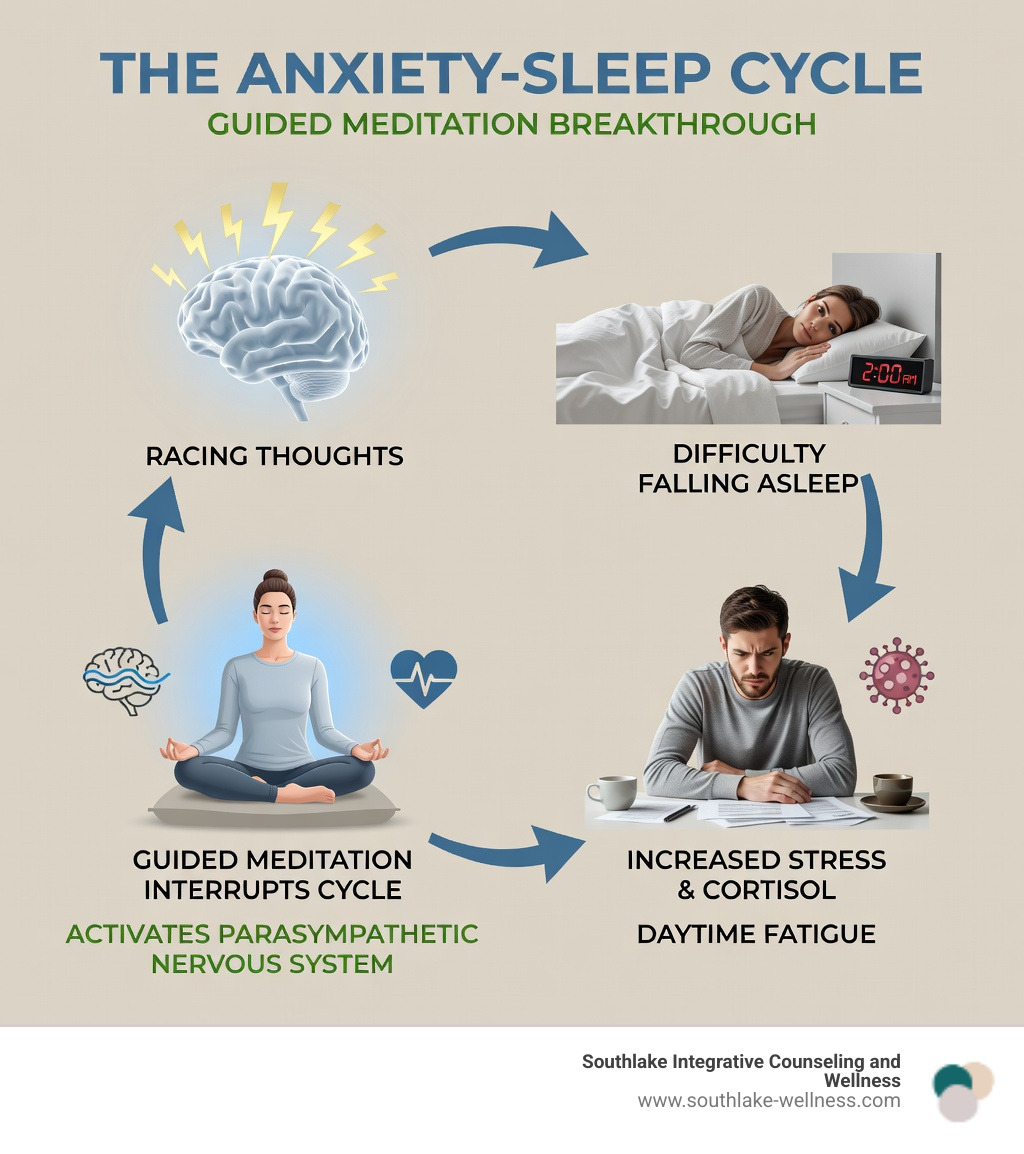
The connection between anxiety and poor sleep creates a vicious cycle. Anxiety disrupts sleep, and sleep deprivation makes anxiety worse. Research shows that mindfulness meditation can be more effective than traditional sleep hygiene interventions for improving sleep quality, with benefits extending to reduced daytime fatigue and depression.
Unlike trying to force yourself to sleep, guided meditation works by creating conditions that allow sleep to happen naturally. You're not fighting your thoughts—you're learning to let them pass while your body relaxes.
I'm Holly Gedwed, a Licensed Professional Counselor Associate with 14 years of experience helping clients overcome anxiety, trauma, and sleep disruptions through evidence-based approaches including mindfulness and somatic therapies. Throughout my practice, I've seen how guided sleep meditation for anxiety transforms not just sleep quality, but overall emotional resilience and daily functioning.
The Science Behind Guided Sleep Meditation for Anxiety
When we are anxious, our bodies are essentially stuck in "high alert" mode. This is the sympathetic nervous system at work—the "fight or flight" response. It’s great if you’re being chased by a bear, but it’s terrible when you’re trying to sleep in Southlake on a Sunday night.
Guided sleep meditation works by flipping the switch to the parasympathetic nervous system, often called the "rest and digest" system. This physiological shift is what allows your heart rate to slow down and your breathing to become steady. One of the most powerful scientific findings regarding these practices is the 78% reduction in serum cortisol levels (the primary stress hormone) observed in studies of breath-based meditation.
Cortisol, Brain Waves, and Better Sleep
Research, including a 2015 JAMA study, has shown that mindfulness meditation significantly improves sleep quality and reduces daytime impairment. By lowering cortisol, we allow the brain to transition from high-frequency Beta waves (active thinking and anxiety) into slower Alpha and Theta waves, which characterize deep relaxation and the early stages of sleep.
According to the American Sleep Association, approximately 30% of adults experience short-term insomnia. For many, the root cause is an overactive mind. Guided sleep meditation for anxiety addresses this by reducing "sleep onset latency"—the fancy scientific term for how long it takes you to actually fall asleep once the lights go out.
Beyond just falling asleep faster, these practices offer:
- Daytime fatigue reduction: Better quality sleep leads to more energy during the day.
- Emotional regulation: Meditation helps you notice anxious thoughts without being swept away by them.
- Heart rate variability (HRV) improvement: A higher HRV is a sign of a robust, resilient nervous system.
For those interested in how these techniques integrate into a broader wellness plan, you can find more info about mindfulness-based therapy and its long-term benefits for emotional balance.
Core Techniques in Guided Sleep Meditation for Anxiety
In our practice at Southlake Integrative Counseling and Wellness, we often discuss different "flavors" of meditation. Not every technique works for every person, which is why guided sessions are so helpful—they provide a menu of options for your brain to focus on.
1. The Body ScanThis is perhaps the most popular technique for sleep. You are guided to bring your attention to different parts of your body, starting from your toes and moving up to your head. As you focus on each area, you notice tension and consciously release it. You can even follow a transcript for body scan meditation to understand the flow.
2. Progressive Muscle Relaxation (PMR)Similar to a body scan, PMR involves tensing a muscle group (like your shoulders) as you inhale and suddenly releasing that tension as you exhale. This physical "letting go" signals the brain that the body is safe to rest.
3. Visualization and Nature ImageryGuided imagery uses the power of your imagination. A guide might lead you through a peaceful summer night, stargazing on a grassy hill, or watching clouds drift by. The "cloud technique" is particularly effective for anxiety; you visualize your racing thoughts as clouds floating across the sky—you see them, you acknowledge them, and you watch them drift away without engaging with them.
4. Grounding and Present-Moment AwarenessAnxiety usually lives in the future (worrying about what might happen) or the past (ruminating on what did happen). Grounding techniques pull you back into the "now." By focusing on the weight of your body against the mattress or the sound of the guide’s voice, you anchor yourself in the present. If you find yourself struggling with persistent worry, exploring meditations for the anxious can provide specific scripts to help.
How to Prepare for Guided Sleep Meditation for Anxiety
To get the most out of your practice, the environment matters just as much as the meditation itself. Think of this as "setting the stage" for your nervous system to feel safe.
- Temperature and Light: Keep your room cool (around 65–68 degrees) and as dark as possible. Use blackout curtains or an eye mask if needed.
- Comfortable Positioning: Most people practice sleep meditation lying on their back, but if you’re a side sleeper, that’s fine too! The goal is to be supported so you don't have to "hold" your body up.
- Audio Equipment: Use what works for you. Some prefer headphones to "shut out" the world, while others find a small bedside speaker more comfortable.
- Set an Intention: Before you press play, tell yourself, "It is okay to rest. I don't need to solve anything tonight." This simple anti-anxiety sleep meditation tip can lower the pressure to "perform" meditation perfectly.
- Consistency and Habit Stacking: Try to meditate at the same time every night. Pair it with an existing habit, like brushing your teeth or putting on your pajamas, to help your brain recognize the "sleep is coming" signal.
Effective Strategies for Better Sleep Hygiene
While guided sleep meditation for anxiety is a powerful tool, it works best when supported by a solid foundation of sleep hygiene. You can't expect a 10-minute meditation to undo a day of 15 espressos and 6 hours of blue light exposure right before bed!
The Pillars of Sleep Hygiene
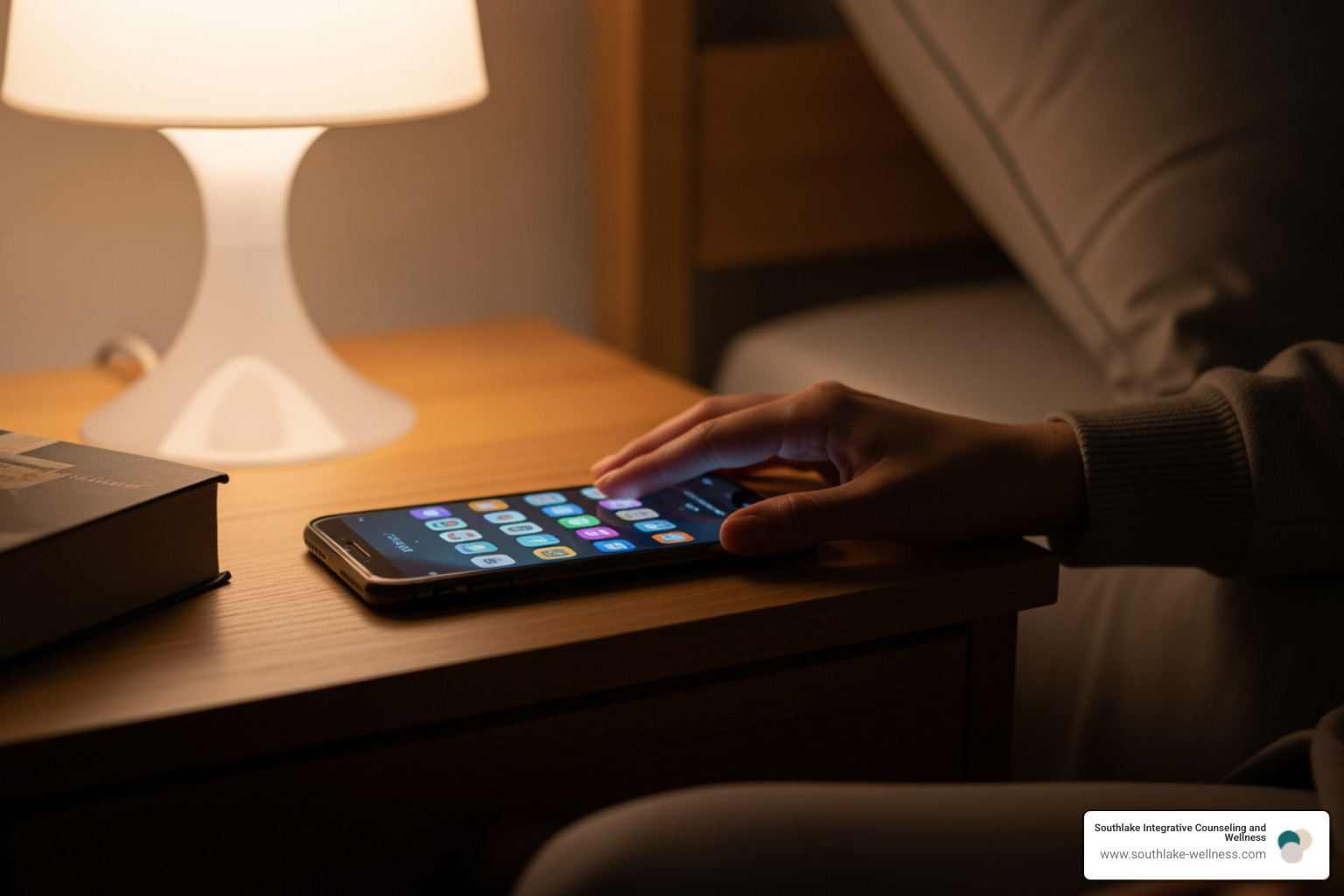
- Limit Blue Light: The glow from your phone or laptop mimics sunlight, which suppresses melatonin. Try to put devices away at least 60 minutes before bed.
- Consistent Schedule: Going to bed and waking up at the same time—even on weekends—regulates your internal clock.
- Bedroom Sanctuary: Use your bed only for sleep and intimacy. If you work from your bed, your brain starts to associate that space with stress rather than rest.
- Caffeine and Hydration: Stop caffeine intake by early afternoon. While staying hydrated is important, try to taper off fluids in the evening to avoid middle-of-the-night bathroom trips that can trigger a "worry loop."
Comparison: Meditation vs. Traditional Sleep Hygiene
| Feature | Traditional Sleep Hygiene | Guided Sleep Meditation |
|---|---|---|
| Primary Goal | Environmental/Behavioral control | Internal/Mental state control |
| Mechanism | Regulates circadian rhythm | Activates parasympathetic system |
| Focus | Room temp, light, caffeine | Breath, body scan, visualization |
| Anxiety Impact | Indirect (reduces triggers) | Direct (quiets racing thoughts) |
| Ease of Start | Requires lifestyle changes | Can start tonight with an audio track |
Integrating these habits doesn't have to be overwhelming. Learning how to practice mindfulness daily can help you stay aware of these choices throughout the day, making the transition to sleep much smoother.
When to Seek Professional Support for Anxiety
Sometimes, despite our best efforts with meditation and sleep hygiene, anxiety and insomnia remain stubborn. It is important to know when "self-care" needs to become "professional care."
We recommend seeking support if you experience:
- Chronic Insomnia: Difficulty sleeping more than three nights a week for three months or more.
- Panic Attacks: If your anxiety escalates into physical symptoms like chest pain, shortness of breath, or a feeling of impending doom, a panic attack therapy guide can help you understand your options.
- Severe Hypervigilance: Feeling "on edge" or startled easily, which is often a sign of stored trauma.
- Childhood Trauma: Adverse childhood experiences (ACEs) can rewire the brain to stay in a state of high alert. Somatic experiencing and specialized therapy can help release this stored stress.
At Southlake Integrative Counseling and Wellness, we offer several anxiety therapy options, including Cognitive Behavioral Therapy (CBT). In fact, CBT-I (CBT for Insomnia) is considered the gold standard for treating chronic sleep issues. You can read our anxiety CBT complete guide to see how we help clients challenge the negative beliefs that keep them awake.
Frequently Asked Questions about Sleep Meditation
How long does it take to see results?
Most people feel a sense of immediate relaxation after their first session of guided sleep meditation for anxiety. However, the "rewiring" of your nervous system takes time. Research suggests that 6 weeks of consistent practice leads to significant, lasting improvements in sleep quality and a reduction in daytime anxiety. Think of it like going to the gym for your brain; consistency builds the "muscle" of relaxation.
Is guided meditation better than unguided for anxiety?
For those with high anxiety, unguided (silent) meditation can actually be difficult because the silence provides a vacuum that the "monkey mind" fills with worries. Guided meditation provides a structure—a "mental anchor"—that gives your mind something specific to hold onto, making it much easier for beginners to stay focused and avoid overthinking.
What if I can't stop my thoughts during meditation?
This is the most common concern we hear! Here is a secret: the goal of meditation isn't to stop your thoughts; it's to change your relationship with them. When a thought pops up (and it will), simply notice it without judgment. You might say to yourself, "Oh, there’s a thought about work," and then gently return your attention to the guide's voice. This practice of "noticing and returning" is actually where the real magic happens. It builds self-compassion and helps you realize that thoughts are just mental events, not necessarily facts. Understanding how mindfulness helps for self-care can help you embrace this non-judgmental approach.
Conclusion
At Southlake Integrative Counseling and Wellness, we believe that healing is holistic. Whether you are struggling with "Sunday Scaries" or chronic sleep anxiety, guided sleep meditation for anxiety is an accessible, evidence-based tool that can help you reclaim your nights.
By combining these mind-body techniques with professional support when needed, you can move toward a life of emotional balance and resilience. Our unique approach in Southlake, Texas, emphasizes the deep connection between your mental state and your physical well-being. If you're ready to explore how movement and mindfulness can further support your journey, we invite you to explore our yoga and wellness services.
Rest is not a luxury—it is a fundamental requirement for a healthy life. We are here to help you find your way back to it.