
Why So Many People Are Looking Beyond Medication for Anxiety and Depression

Alternative treatments for anxiety and depression include a wide range of proven, non-drug approaches that can reduce symptoms — sometimes as effectively as medication.
Here's a quick overview of the most effective options:
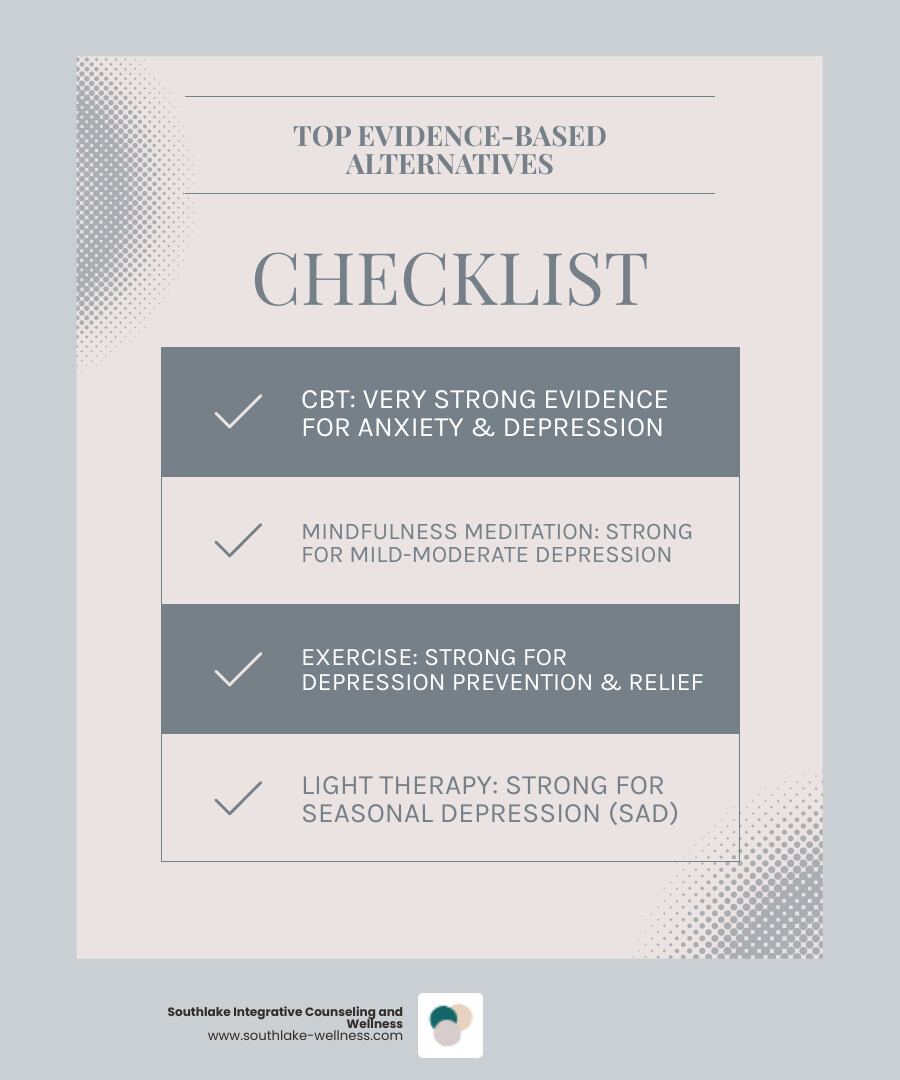
| Treatment | Best For | Evidence Level |
|---|---|---|
| Cognitive Behavioral Therapy (CBT) | Anxiety & depression | Very strong |
| Mindfulness meditation | Mild-moderate depression | Strong |
| Exercise | Depression prevention & relief | Strong |
| Yoga | Depressive symptoms | Moderate-strong |
| Mediterranean diet | Depressive symptoms | Moderate |
| St. John's Wort | Mild-moderate depression | Moderate (with caution) |
| Omega-3 fatty acids | Depression support | Moderate |
| Light therapy | Seasonal depression (SAD) | Strong |
| Acupuncture | Anxiety & depression | Moderate |
| Mindfulness-Based CBT (MBCT) | Depression relapse prevention | Strong |
Depression affects an estimated 5.7% of adults worldwide, according to the World Health Organization. Anxiety is even more widespread. And while medication and talk therapy help the majority of people who try them, a significant portion — somewhere between 19% and 34% of those with depression — don't see meaningful improvement from standard treatments alone.
That's a lot of people left looking for something more.
The good news? Research has caught up. There's now solid evidence behind many non-drug approaches — from mindfulness programs that rival antidepressants in symptom relief, to diet changes that measurably shift mood, to structured exercise that cuts major depression risk by 26%.
This guide covers what actually works, what's overhyped, and how to combine approaches safely.
I'm Holly Gedwed, a Licensed Professional Counselor-Associate with 14 years of clinical experience specializing in anxiety, depression, trauma, and addiction — and helping clients explore alternative treatments for anxiety and depression is a core part of how I work. I look forward to walking you through what the research says and how these approaches can be tailored to fit your life.
Evidence-Based Alternative Treatments for Anxiety and Depression
When we talk about alternative treatments for anxiety and depression, it is important to distinguish between "unproven" and "non-drug." Many of the most powerful tools we use at Southlake Integrative Counseling and Wellness are grounded in rigorous clinical research.
In fact, the NICE clinical guidelines for treating depression suggest that for mild cases of depression, healthcare providers should actually offer alternative treatments such as talking therapies ahead of antidepressant medication. This reflects a growing understanding that pills aren't the only way to rebalance the brain.
The Power of Talking Therapies
Talk therapy is often the "gold standard" for a reason. Statistics show that talk therapy and medications help approximately 75% of those who try them for conditions like anxiety, depression, and PTSD. Within this category, cognitive behavioural therapy (CBT) is particularly effective. It works by helping you identify and challenge the "glitches" in your thinking—those negative thought loops that fuel anxiety and sink your mood.
Mindfulness and Symptom Reduction
Mindfulness is no longer just a buzzword; it is a clinical powerhouse. A 2021 review of 136 trials involving over 11,000 people found that mindfulness-based programs reduced depression to roughly the same degree as active controls. Furthermore, scientific research on mindfulness-based interventions indicates that these practices can provide 10% to 20% relief from depression symptoms and 5% to 10% improvement in anxiety symptoms after just an eight-week course.
For those in Southlake looking for structured support, exploring Anxiety Therapy Southlake can be a vital first step in integrating these evidence-based practices into your daily life.
Mind-Body Practices and Clinical Modalities
The connection between the mind and the body is a two-way street. Physical practices can directly influence our neurochemistry, regulating the "stress hormone" cortisol and boosting feel-good neurotransmitters like serotonin and GABA.
Scientific research on yoga for depression has shown that yoga interventions are associated with significant reductions in depressive symptoms. One 2021 systematic review of 19 randomized controlled trials (RCTs) found that higher frequency yields greater benefits—meaning the more often you roll out your mat, the better your brain tends to feel.
Other traditional practices like Tai Chi and Qigong are gaining traction as alternative treatments for anxiety and depression. These "meditative movements" are particularly effective for older adults, helping to improve balance while simultaneously lowering the "noise" of an anxious mind. Acupuncture is another heavy hitter; with more than 10 million treatments given each year in the U.S., it is a go-to for many who find that traditional meds don't quite hit the mark.
If you are curious about how these fit into a broader plan, our guide to Alternative Depression Treatments explores these modalities in deeper detail.
Yoga and Meditation as Alternative Treatments for Anxiety and Depression
Meditation acts as a "reset button" for the nervous system. By focusing on the present moment without judgment, we can interrupt the cycle of rumination—that "broken record" of negative thoughts that often accompanies depression.
Research highlights:
- Immune Support: Research on mindfulness and the immune system shows that regular meditation can actually reduce inflammation, which scientists now believe is a major hidden driver of depression.
- Brain Plasticity: Meditation appeared to provide as much relief from some depression symptoms as antidepressants in certain studies, essentially helping the brain "rewire" itself for resilience.
Specialized Clinical Approaches: EMDR and EFT
For many of us, anxiety and depression are rooted in past traumas. This is where specialized clinical tools come in:
- EMDR (Eye Movement Desensitization and Reprocessing): This therapy uses guided eye movements (similar to what happens during REM sleep) to help the brain process "stuck" memories. Clinical research on EMDR therapy reveals it can be a complete game-changer for those dealing with PTSD-related anxiety.
- EFT (Emotional Freedom Technique): Often called "tapping," this involves tapping on specific meridian points on the body while focusing on a stressor. While it might look a little strange at first, the evidence-based practice of EFT shows it is highly effective for reducing cortisol and calming the amygdala (the brain's alarm system).
Lifestyle Medicine: Diet, Exercise, and Environment
We cannot talk about alternative treatments for anxiety and depression without looking at the fuel we put in our bodies and how we move them. Lifestyle medicine is about creating an internal environment where mental health can thrive.
The Serotonin Surge: Exercise
Physical activity is perhaps the most underutilized antidepressant. A study by the Harvard T.H. Chan School of Public Health found that walking for an hour or running for 15 minutes a day reduces the risk of major depression by 26%. Exercise triggers the release of endorphins and promotes the growth of new brain cells.
The association between physical activity and depression risk is so strong that many practitioners now "prescribe" movement as a primary intervention. Whether it's a brisk walk at Bob Jones Park or a strength session, moving your body moves your mood.
Nutritional Psychiatry: The Mediterranean Diet
What you eat affects how you feel. A 2025 Mediterranean diet meta-analysis confirmed that following this eating pattern—rich in fruits, vegetables, whole grains, and healthy fats—significantly reduces depressive symptoms. This is likely because the diet is high in antioxidants and anti-inflammatory compounds that protect the brain.
We also look at "mitochondrial modulators" like NAC (N-acetylcysteine) and CoQ10. A 2022 meta-analysis of 13 trials showed these supplements have a statistically significant antidepressant effect, particularly in complex cases like bipolar depression. For a deeper dive into how food and mood intersect, check out our resources on Natural Remedies for Depression.
Natural Supplements and Non-Traditional Remedies
Many people turn to the supplement aisle for alternative treatments for anxiety and depression. While some of these show great promise, "natural" does not always mean "safe." It is vital to understand the Natural Antidepressants and Supplements and how they might interact with other medications.
Common Supplements and Their Roles:
- St. John's Wort: Some studies suggest it is as effective as standard antidepressants for mild-to-moderate depression. However, it is notorious for drug interactions, including with birth control and blood thinners.
- Omega-3 Fatty Acids: Found in fish oil, these are essential for brain cell structure and reducing inflammation.
- Saffron: Emerging research suggests this spice may help lift mood by affecting serotonin levels.
- Kava: Used for anxiety, but carries a strict warning due to potential liver damage.
- Chamomile: A gentle, safe option for mild anxiety and better sleep.
Herbal Alternative Treatments for Anxiety and Depression
When using essential oils, clinical research on essential oils points to Citrus aurantium L (bitter orange) as a top recommendation for anxiety. Lavender and lemon oil are also popular mood boosters. We often recommend aromatherapy as a "supportive" therapy—it won't cure major depression on its own, but it can provide immediate, sensory-based relief during a panic attack or a low moment.
Light Therapy and Sensory Interventions
For those who feel the "winter blues," light therapy is a scientifically backed powerhouse. A light box should deliver 10,000 lux of bright light and be used for 20-30 minutes daily. Research on light therapy boxes shows they can be as effective as antidepressants for Seasonal Affective Disorder (SAD), often working much faster.
Other non-traditional approaches we find useful include:
- Weighted Blankets: These provide "deep pressure stimulation," which can help calm a racing nervous system before bed.
- Cold Plunges: Immersing yourself in cold water (around 37 degrees) teaches the brain resiliency and provides a "complete reset" for the nervous system.
- Infrared Saunas: These help lower cortisol and optimize the brain's natural antidepressants, including dopamine. The benefits of infrared sauna on cortisol make it an excellent tool for stress management.
Frequently Asked Questions about Alternative Mental Health Care
When are alternative treatments recommended over medication?
Clinical guidelines (like those from NICE) recommend alternatives like CBT or exercise as the first line of defense for mild depression. They are also recommended when a patient has had severe side effects from medication or prefers a non-drug approach. However, for severe depression involving suicidality, a combination of medication and alternative therapies is usually the safest path.
Are there specific risks associated with herbal remedies?
Yes. The biggest risk is drug interactions. For example, taking St. John’s Wort with a prescription antidepressant can lead to "serotonin syndrome," a potentially dangerous condition. Always consult with a professional before starting a new supplement.
Which alternatives are safest for pregnant individuals?
Research on mindfulness during pregnancy shows that meditation and prenatal yoga are incredibly safe and effective for managing the hormonal shifts that can lead to anxiety and depression. Regular exercise and a balanced diet are also encouraged, provided they are done under clinical supervision.
Conclusion
At Southlake Integrative Counseling and Wellness, we believe that your mental health journey should be as unique as you are. Whether you are looking for Holistic Counseling or want to explore how diet and exercise can supplement your current care, we are here to help.
By combining evidence-based therapies with alternative treatments for anxiety and depression, we help our clients build emotional resilience and find true, holistic balance. You don't have to settle for a one-size-fits-all approach.
If you’re ready to take the next step toward a more balanced life, we invite you to Schedule a consultation for integrative wellness today. Together, we can create a personalized plan that actually works for you.