
Understanding Meditation and Wellness
At its core, meditation is a practice of focusing or clearing your mind using a combination of mental and physical techniques. It is often described as a "path to self-awareness and compassion," but in the context of modern healthcare, it is a highly effective tool for improving quality of life. According to the UC Davis resource library, meditation helps promote relaxation, awareness, calmness, and focus.
In our busy world, we often live in a state of "autopilot," reacting to stressors without even realizing it. Meditation allows us to step back. It isn't about "turning off" your thoughts; rather, it’s about learning to observe them without judgment. This shift in perspective is the foundation of meditation and wellness, as it allows the body to exit the "fight or flight" mode and enter a state of restorative rest.
Is Meditation a Religious Practice?
One of the most common questions we hear at Southlake Integrative Counseling and Wellness is whether meditation is a religious act. The answer is both yes and no. Historically, meditation has deep roots in ancient philosophies and religions, including Buddhism, Hinduism, Christianity, Taoism, and Sufism. For thousands of years, these communities used meditation to deepen their understanding of sacred or mystical forces.
However, in the modern era, meditation has been successfully adapted into a secular (non-religious) practice. You do not need to subscribe to any specific belief system to reap the benefits. Many people use it purely as a health intervention—similar to how one might use physical exercise to improve heart health. Whether you are practicing a "Jesus Prayer" in the Christian tradition or engaging in a secular mindfulness-based stress reduction (MBSR) program, the physiological benefits to the brain and body remain consistent.
The Modern Relevance of Mindfulness
In an age of constant digital notifications and "hustle culture," our brains are rarely at rest. This makes meditation and wellness more relevant today than ever before. Mindfulness—the practice of being purposefully aware of the present moment—acts as a much-needed "digital detox."
By dedicating even ten minutes a day to sitting in silence or focusing on the breath, we give our nervous systems a chance to recalibrate. This mental clarity doesn't just feel good in the moment; it translates to better decision-making, increased patience at work, and more meaningful connections with our families here in Southlake.
The Science: How Meditation Impacts the Brain and Body
For a long time, meditation was viewed as "woo-woo" or pseudoscience. That changed with the advent of modern brain imaging technology like EEG and fMRI. We now know that regular meditation actually changes the physical structure of the brain—a concept known as neuroplasticity.
Research indicates that regular practitioners often have denser brain tissue and larger areas of the brain dedicated to sensory processing, cognition, and emotional regulation. Specifically, the Cleveland Clinic notes that the brains of people who meditate are less likely to show age-related loss of function.
Breaking the Depression Connection
One of the most fascinating scientific discoveries involves the relationship between the "Me Center" (medial prefrontal cortex) and the "Fear Center" (amygdala). In individuals struggling with depression, these two regions are often hyper-connected. This means that when you think about yourself (the Me Center), you automatically trigger feelings of fear or anxiety (the Fear Center).
According to Harvard Health research, meditation helps break this connection. By training the brain to stay in the present moment, we can dampen the overactive fear response and allow the "Me Center" to function more objectively.
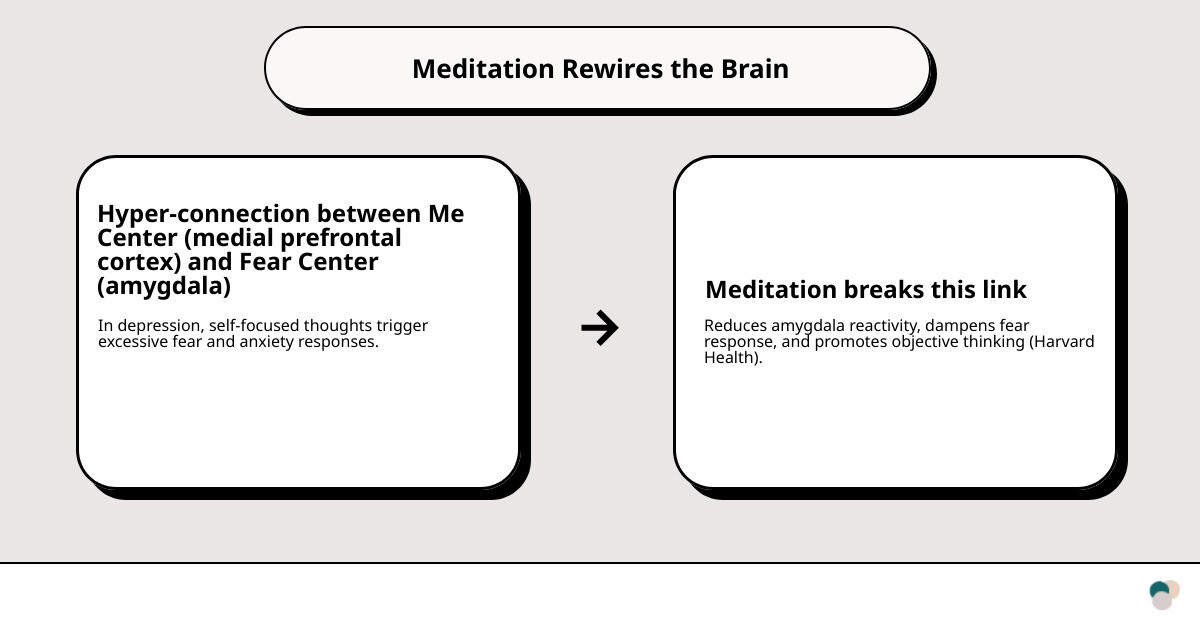
Brain RegionCommon FunctionImpact of MeditationAmygdala (Fear Center)Triggers "fight or flight" and stressDecreases in size and reactivityMedial Prefrontal Cortex (Me Center)Self-referential thought and worryBreaks the link to the fear response
Evidence-Based Stress Reduction
The shift toward meditation and wellness in clinical settings is backed by massive amounts of data. A landmark systematic review and meta-analysis identified 18,753 records related to meditation and psychological stress. After rigorous screening, 47 unique trials involving 3,515 participants were analyzed.
The results were clear: mindfulness meditation programs showed moderate evidence of improving anxiety, depression, and pain. Interestingly, the research found that meditation was often as effective as antidepressants or exercise in managing these symptoms, but without the side effects often associated with medication.
Mental and Physical Health Benefits of Regular Practice

The marriage of meditation and wellness produces a ripple effect that touches almost every aspect of your health. While many start meditating to feel "less stressed," they often discover unexpected improvements in their memory, attention span, and even their physical vitality.
- Reduced Anxiety: Regular practice helps manage social anxiety, phobias, and obsessive-compulsive behaviors.
- Memory Improvement: Better focus through meditation can increase mental clarity and help fight age-related memory loss.
- Emotional Resilience: Meditation provides the tools to acknowledge negative emotions without being swept away by them.
Managing Chronic Conditions
Because stress exacerbates physical illness, meditation is a powerful adjunctive treatment for chronic conditions. It has been shown to decrease symptoms of irritable bowel syndrome (IBS), fibromyalgia, and tension headaches.
For those dealing with trauma, meditation can be a vital component of PTSD management. By quieting the nervous system, individuals can begin to feel "safe" in their own bodies again, which is a prerequisite for deeper therapeutic work.
Physical Wellness and Longevity
The physical benefits of meditation and wellness extend to the cardiovascular and immune systems:
- Lower Blood Pressure: By reducing the body's response to adrenaline, meditation can help lower resting heart rate and blood pressure.
- Heart Health: Studies suggest meditation may lower the risk of heart disease by reducing inflammation.
- Better Sleep: Mindfulness techniques are highly effective for treating chronic primary insomnia, often performing as well as pharmaceutical sleep aids.
Practical Techniques for Daily Life
There is no "one size fits all" approach to meditation. The best technique is the one you will actually do. According to Healthline, there are several different types of meditation, and choosing the right one depends on your personal goals.
- Concentration Meditation: Focusing on a single point, such as your breath, a candle flame, or a repetitive mantra.
- Mindfulness Meditation: Observing thoughts and sensations as they arise without trying to change them.
- Moving Meditation: Practices like Tai Chi, Qigong, or yoga that combine physical movement with mental focus.
- Loving-Kindness (Metta): Focusing on developing feelings of goodwill and compassion toward yourself and others.
Meditation and Wellness for Beginners
If you are new to this, the most important thing to remember is that "perfection" is not the goal. Your mind will wander—that is what minds do. The "exercise" of meditation is the act of noticing the wander and gently bringing your focus back.
To get started, follow this simple step-by-step guide:
- Find a seat: Find a place to sit that feels calm and quiet to you.
- Set a time limit: If you’re just beginning, it can help to choose a short time, such as five or 10 minutes.
- Notice your body: You can sit in a chair with your feet on the floor, you can sit loosely cross-legged, you can kneel—all are fine. Just make sure you are stable and in a position you can stay in for a while.
- Feel your breath: Follow the sensation of your breath as it goes out and as it comes in.
- Notice when your mind has wandered: Inevitably, your attention will leave the breath and wander to other places. When you get around to noticing that your mind has wandered—in a few seconds, a minute, five minutes—simply return your attention to the breath.
- Be kind to your wandering mind: Don’t judge yourself or obsess over the content of the thoughts you find yourself lost in. Just come back.
Integrating Meditation and Wellness into Daily Life
You don't have to be sitting on a cushion to meditate. You can integrate meditation and wellness into your existing Southlake routine:
- Walking Meditation: While walking through your neighborhood, focus on the sensation of your feet hitting the ground and the sound of your surroundings.
- Body Scan: Before falling asleep, mentally "scan" your body from your toes to your head, noticing any tension and consciously letting it go.
- Mindful Eating: During a meal, turn off the TV and phone. Focus entirely on the taste, texture, and smell of your food. This can be a great step toward mindfulness-based eating.
Frequently Asked Questions
How long should I meditate to see results?
Research suggests that consistency is more important than duration. Practicing for just 5–15 minutes daily can yield noticeable changes in mood and stress levels within just a week or two. Think of it like brushing your teeth—a short, daily habit is better than a two-hour session once a month.
Do I need a quiet space to practice effectively?
While a quiet space is helpful for beginners to reduce distractions, it isn't strictly necessary. You can practice mindfulness while riding the bus, waiting in a doctor’s office, or even during a stressful business meeting. The goal is to find "inner peace" regardless of the outer environment.
What are common misconceptions about meditation?
There are several scientific look at meditation myths that often prevent people from starting. One myth is that you must "clear your mind" of all thoughts. In reality, meditation is about noticing thoughts, not stopping them. Another myth is that meditation is a "quick fix" for deep-seated trauma; while it is a powerful tool, it works best when integrated with professional holistic counseling.
Conclusion: Your Path to Balance in Southlake
At Southlake Integrative Counseling and Wellness, we believe that mental health is more than just the absence of illness—it is the presence of resilience, balance, and peace. Meditation and wellness practices are not just "extra" activities; they are fundamental pillars of a healthy life.
Whether you are struggling with meditations for the anxious or looking for a holistic approach to depression, we are here to help you integrate these evidence-based tools into a personalized care plan. By combining the science of the brain with the wisdom of the body, you can navigate the challenges of modern life with greater ease and emotional stability.
If you’re ready to take the next step in your wellness journey, we invite you to explore our services and see how our integrative approach can support your unique needs. Wellness is a practice, and every breath is a chance to start again.