Your Path to Inner Calm Begins Here
Meditation for wellbeing is a transformative practice that helps you reduce stress, improve emotional balance, improve focus, and cultivate deeper self-awareness. Through simple techniques like focused breathing and present-moment awareness, meditation trains your mind to respond to life's challenges with clarity and compassion rather than reactive emotions.
Key Benefits of Meditation for Wellbeing:
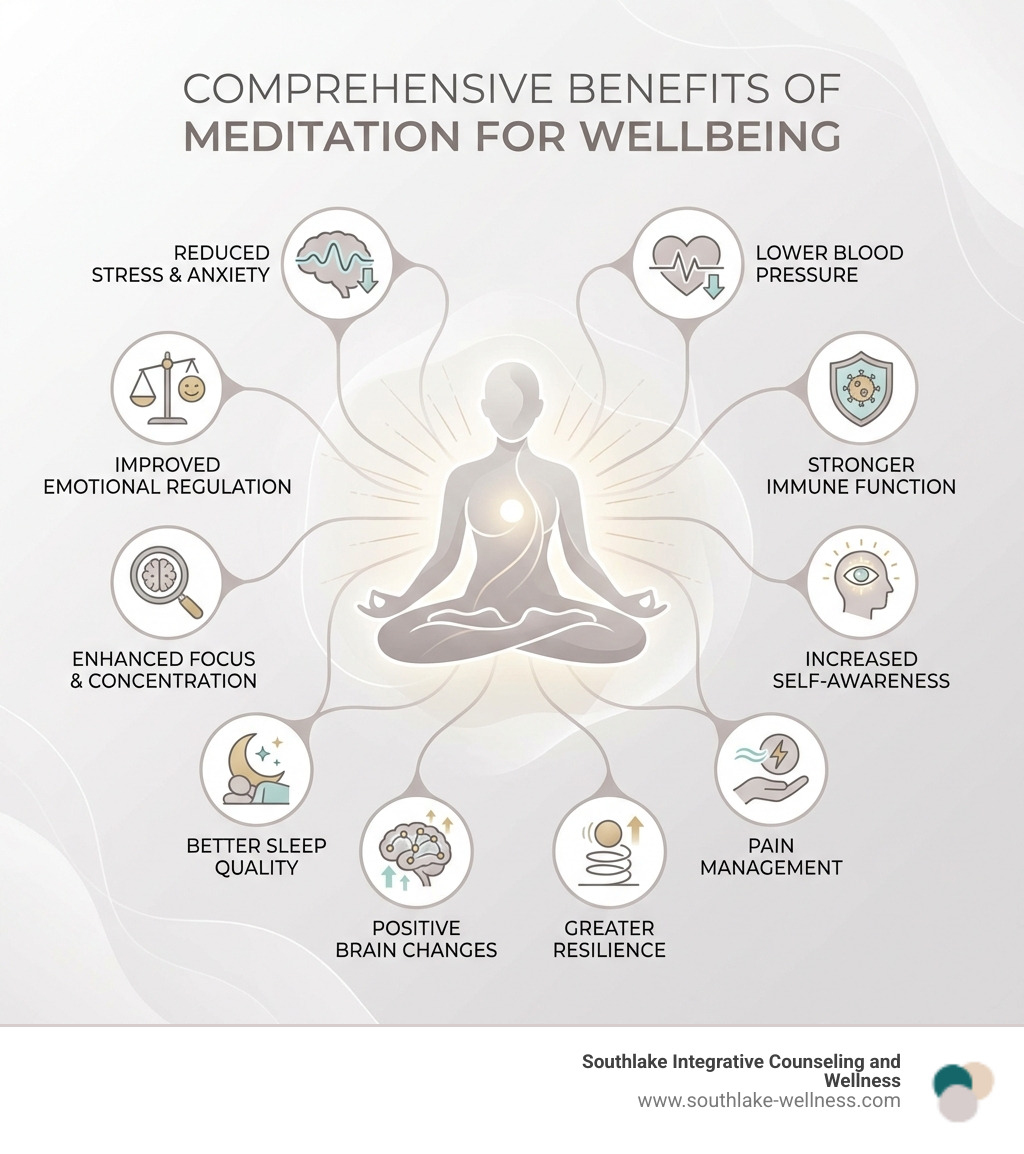
- Mental Health: Reduces anxiety and depression symptoms, builds resilience, fosters positive thinking
- Physical Health: Lowers blood pressure, improves sleep quality, strengthens immune function, helps manage chronic pain
- Emotional Health: Increases self-compassion, improves emotional regulation, promotes inner peace
- Cognitive Health: Sharpens focus and attention, slows cognitive aging, improves concentration
In today's world, many of us struggle with chronic stress, racing thoughts, and the weight of unresolved emotions. You might feel like your mind never stops, or that anxiety follows you from the moment you wake up until you finally fall asleep at night.
The good news? You don't need special equipment, hours of free time, or a perfectly quiet space to begin.
Meditation is simply a practice of training your attention and cultivating present-moment awareness. It's not about stopping your thoughts or achieving a completely blank mind—that's a common misconception. Instead, meditation teaches you to notice when your mind wanders and gently guide it back to your chosen focus, whether that's your breath, bodily sensations, or a specific phrase.
Mindfulness plays a central role in meditation. It's the quality of paying attention to the present moment without judgment. When you practice mindfulness, you observe your thoughts and feelings as they arise, without getting caught up in them or pushing them away.
Research shows that regular meditation practice can physically change your brain, reducing activity in areas associated with stress while strengthening regions involved in emotional regulation and self-awareness. Even 12 minutes of meditation, five days a week, can protect and strengthen your ability to pay attention.
As Holly Gedwed, an LPC-Associate with 14 years of clinical experience specializing in trauma, anxiety, and customized therapeutic approaches, I've witnessed how meditation for wellbeing transforms lives when integrated into a holistic treatment plan. My practice combines evidence-based modalities like Cognitive Behavioral Therapy (CBT) and Dialectical Behavioral Therapy (DBT) with mindfulness techniques to help clients break unhealthy patterns and build lasting resilience.
Whether you're seeking relief from anxiety, better sleep, improved relationships, or simply a sense of calm in your daily life, meditation offers a pathway forward—one breath at a time.
The Transformative Benefits of Meditation for Wellbeing
At Southlake Integrative Counseling and Wellness, we believe in a holistic approach to mental health, and meditation for wellbeing is a cornerstone of this philosophy. It's not just a trend; it's a powerful practice backed by thousands of years of tradition and a growing body of scientific research. When we commit to regular meditation, we open ourselves up to a cascade of benefits that permeate every aspect of our lives.
One of the most immediate and profound effects of meditation is stress reduction. In our busy lives in Southlake, stress often feels like an unavoidable companion. However, meditation helps us clear away the daily information overload that contributes to this stress, bringing a sense of inner peace and calm. It trains our minds to respond to life events in a measured way, rather than reacting with overwhelming emotions. This practice allows us to feel calmer and more relaxed, even when facing daily pressures.
Beyond just reducing stress, meditation fosters emotional balance. It helps us become more aware of our physical and emotional pain, allowing us to address it with greater clarity and compassion. This increased self-awareness is crucial for understanding our triggers and developing healthier responses. We learn to observe our emotions without judgment, cultivating a more positive and balanced mindset that improves our overall mood and outlook on life.
Furthermore, meditation significantly improves focus and attention. In a world of constant distractions, our ability to concentrate often feels fragmented. Meditation trains our minds to stay centered, enhancing our capacity to remain focused and productive. Just 12 minutes of meditation, five days a week, can protect and strengthen our ability to pay attention, which is a powerful tool for both personal and professional success. We find ourselves less prone to mind-wandering and more present in our interactions and tasks.
Cultivating Mental and Emotional Resilience
The mental and emotional benefits of meditation for wellbeing are truly remarkable, especially when it comes to building resilience. Many of our clients come to us seeking relief from anxiety and depression, and meditation offers a powerful complementary tool. It has been shown to significantly ease anxiety, stress, and low mood, and regular mindfulness meditation can even be as beneficial as antidepressant medication for anxiety in some individuals. Adults who practice compassion exercises often report more positive emotions, less shame, and reduced self-criticism, leading to a more stable emotional state. Studies have shown that individuals, including those with recurring anxiety and depression, experience increased well-being and decreased psychological distress after engaging in mindfulness and compassion programs.
Meditation helps us build mental resilience, empowering us to better cope with life's inevitable challenges and setbacks. It fosters a positive mindset, helping us develop a kinder attitude towards ourselves and others. This self-compassion is vital for navigating difficult emotions and experiences. Through practices like mindfulness-based stress reduction (MBSR), we learn to change how we react to stress and difficult emotions, rather than trying to eliminate them. This approach helps break cycles of negative thoughts, regulates emotional responses, and promotes a sense of acceptance and non-judgment. By developing strong coping skills and fostering self-awareness, we can truly build emotional resilience and accept a more balanced emotional life. For those seeking comprehensive strategies, our practice also offers guidance on holistic stress management techniques.
The Physical Health Perks of Meditation for Wellbeing
While often associated with mental peace, the physical benefits of meditation for wellbeing are equally impressive and scientifically validated. Regular meditation practice can have a profound impact on our physical health, serving as a powerful mind-body complementary medicine.
One of the most well-documented physical benefits is its effect on cardiovascular health. Meditation can help manage symptoms of conditions such as heart disease and high blood pressure. Research studies have shown that in some individuals, regular mindfulness meditation can significantly reduce blood pressure, contributing to overall heart health.
Sleep quality also sees a dramatic improvement with consistent meditation. In our busy lives, restful sleep can feel elusive, but meditation helps relax both the mind and body, making it easier to fall asleep and improving the depth and quality of our rest. It's a natural way to unwind and prepare for deeper, more restorative sleep, which is essential for overall well-being.
Furthermore, meditation can strengthen our immune function. Studies indicate that regular mindfulness meditation can decrease inflammatory markers in the blood and improve immune response, helping our bodies resist illness and recover more quickly. This means a more robust defense against common ailments and a healthier, more resilient body.
Lastly, meditation plays a significant role in pain management. It helps us become more aware of physical pain, allowing us to address it with greater clarity and compassion. Research shows that mindfulness meditation changes the way our brain processes pain, decreasing its perceived severity and increasing our acceptance of it across various pain-related illnesses. This doesn't mean the pain disappears, but our relationship with it transforms, making it more manageable. The profound connection between our mind and body is something we explore deeply, often through practices like mind-body connection massage therapy, which complements the internal work of meditation. For a deeper dive into the scientific evidence, you can explore research on mindfulness and immune function.
Your Beginner's Guide to Starting a Meditation Practice
Starting a meditation for wellbeing practice might seem daunting, but we assure you, simplicity is key. You don't need to be a guru or sit in a complicated pretzel pose. In fact, one of the most liberating aspects of meditation is that it requires no special equipment, expensive classes, or even a perfectly silent environment. The most important moment in your meditation journey is simply when you decide to sit down and begin.
Consistency, even in short bursts, far outweighs duration when you're starting out. Committing to a few minutes each day is more beneficial than an hour once a week. We encourage our clients in Southlake to integrate meditation into their daily routines, making it a regular part of their healthy lifestyle. The goal isn't immediate enlightenment, but rather building a habit that fosters long-term peace and self-awareness.
7 Essential Steps to Your First Session
Starting on your meditation journey is easier than you think. Here are seven essential steps to guide your first session:
- Set a Time: Choose a specific time each day, even if it's just for a few minutes. Consistency helps build the habit.
- Find a Quiet Space: Especially as a beginner, a quiet setting helps minimize distractions. This could be a corner of your home, a park, or even your car.
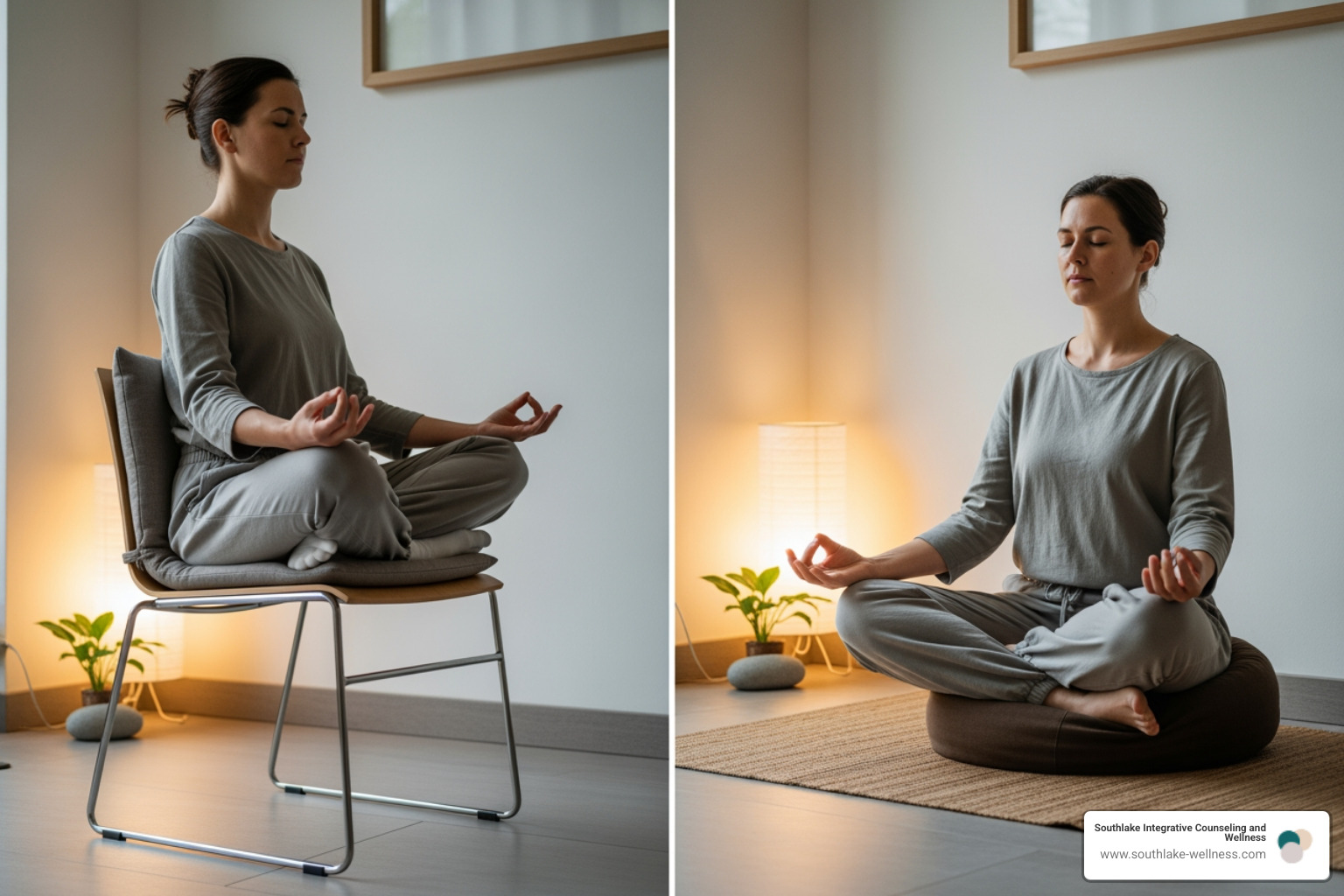
- Sit Comfortably: You don't need to sit on the floor. A chair is perfectly fine. The key is to find a stable and comfortable position with good posture, keeping your back erect but not stiff.
- Focus on Your Breath: Gently bring your attention to your breath. Notice the sensation of air entering and leaving your body. You can mentally say "breathe in" and "breathe out" if it helps.
- Notice Mind Wandering: Your mind will wander. This is completely normal and not a sign of failure. Thoughts about your to-do list, past conversations, or future worries are all part of the human experience.
- Gently Return Focus: When you notice your mind has wandered, simply acknowledge the thought without judgment. Then, gently but firmly, redirect your attention back to your breath. If your mind wanders 10 times, bring it back 10 times.
- Close with Kindness: As your meditation session comes to a close, don't jump up immediately. Take a few moments to sit with your eyes closed, noticing the sensations in your body and the feeling of calm. Slowly open your eyes and gently transition back to your day. This practice of how to practice mindfulness is about cultivating a kinder relationship with yourself and your inner experience.
Overcoming Common Challenges
It's natural to encounter challenges when you first start meditating. We often hear from clients who worry they're "doing it wrong." Let's explain some of these common problems:
- Wandering Mind is Normal: This is perhaps the most common misconception. The goal of meditation isn't to have a blank mind; it's to notice when your mind wanders and gently bring it back. Every time you return your focus, you're strengthening your "attention muscle." Don't judge yourself for having thoughts – that's just your brain doing its job!
- Dealing with Restlessness: If you feel antsy or fidgety, acknowledge it. Sometimes, a brief body scan (noticing sensations from head to toe) can help you settle. Gentle movement, like a mindful walk, can also be a wonderful alternative.
- Managing Sleepiness: It's common to feel sleepy, especially if you're meditating when tired. If you fall asleep, gently reawaken and return to the practice. You might try meditating in a more upright position or at a different time of day.
- Letting Go of Judgment: We are often our own harshest critics. During meditation, practice an "open attitude," allowing thoughts and feelings to pass without labeling them as good or bad. There's no right or wrong way to meditate; the important thing is showing up.
- Itchy Sensations: If an itch arises, try to "scratch" it with your mind first. Observe the sensation, its intensity, and its location, without immediately reacting. Often, the urge will pass. If it's too distracting, a gentle scratch is fine – the key is conscious awareness.
Finding the Right Style of Meditation for Wellbeing
Just as there are many paths to well-being, there are numerous styles of meditation. The best approach is to explore and find what resonates with you. Here are a few popular types that we often recommend for fostering meditation for wellbeing:
- Mindfulness Meditation: This is perhaps the most widely practiced and researched form. It involves focusing on the present moment, typically through breath awareness, and observing thoughts, feelings, and bodily sensations without judgment.
- Loving-Kindness (Metta) Meditation: This practice cultivates feelings of warmth, openness, and goodwill towards oneself, loved ones, neutral individuals, and even those we find difficult. It involves silently repeating phrases like "May I be safe, may I be happy, may I be healthy, may I be filled with love and kindness, may I find peace." You can learn more about Loving Kindness Meditation (metta meditation).
- Compassion Meditation: Similar to loving-kindness, compassion meditation focuses on recognizing suffering (our own and others') and cultivating a desire to alleviate it. It involves extending thoughts of comfort and care, often visualized as a golden light emanating from the heart.
- Walking Meditation: This is a "moving meditation" where you pay close attention to the physical sensations of walking – the lift of the foot, the shift of weight, the contact with the ground. It's an excellent way to integrate mindfulness into daily activity.
- Body Scan Meditation: Here, you systematically bring awareness to different parts of your body, noticing any sensations (tingling, warmth, tension, relaxation) without judgment. It's great for increasing body awareness and releasing physical tension.
- Yoga: While a physical practice, Yoga is also a powerful form of moving meditation. It combines postures, breathing techniques, and meditation to promote physical and mental harmony. Qigong and Tai Chi are other excellent examples of moving meditations.
We encourage you to try different types and see which ones feel most natural and beneficial for your unique journey.
Weaving Meditation into Your Daily Life
For meditation for wellbeing to truly transform our lives, it needs to move beyond just a formal sitting practice and integrate into our daily existence. Creating a habit is crucial, and it doesn't mean adding another burdensome task to your already busy schedule in Southlake. Instead, we can look for opportunities for "micro-meditations" and mindful moments throughout our day.

From Formal Practice to Everyday Mindfulness
The beauty of mindfulness is that it can be practiced anywhere, anytime. Our goal is to shift from autopilot to intentional action, bringing awareness to even the most mundane activities:
- Mindful Walking: Whether you're walking to your car, around the office, or through a park, pay attention to the sensation of each step, the movement of your body, and the sights and sounds around you.
- Mindful Eating: Slow down and savor your meals. Notice the colors, textures, aromas, and flavors of your food. Chew slowly and appreciate each bite.
- Mindful Listening: When someone is speaking, truly listen without interrupting or planning your response. Give them your full attention.
- Single-Tasking: In an age of multitasking, try focusing on one task at a time. When you're working, just work. When you're with family, just be with family.
- Using Daily Cues: Create "If this, then that" messages for yourself. For example, "If I open my office door, then I take three deep breaths." Or "If my phone rings, then I pause before answering." These small, intentional cues can help you build new patterns of mindfulness. You can even use simple reminders to stay present while commuting, waiting in line, or during short breaks.
Helpful Tools and Guided Resources
To help you get started or deepen your practice, a wealth of helpful tools and resources are available. Guided audio practices are particularly beneficial for beginners, as they provide gentle instructions and help keep your mind focused. While we focus on personalized guidance here at Southlake Integrative Counseling and Wellness, we provide our clients with custom guided meditations and practical exercises. We also encourage finding a community or group to meditate with, as meditating with others can be incredibly supportive, while solo practice builds discipline. We offer meditations for the anxious and other resources to support your journey.
The Science Behind Stillness: How Meditation Rewires Your Brain
The profound effects of meditation for wellbeing are not just anecdotal; they are increasingly understood through the lens of neuroscience. Meditation isn't merely a relaxation technique; it actively rewires our brains, a phenomenon known as neuroplasticity.
Regular meditation practice has been shown to induce significant brain changes. It can reduce activity in the amygdala, the brain's "fear center" responsible for the fight-or-flight response. This means we become less reactive to stressors and experience a calmer physiological state. Simultaneously, meditation strengthens connections and increases volume in regions of the brain involved in memory, higher-order thinking, and emotional regulation, such as the prefrontal cortex. This shift allows us to approach situations with greater clarity, make more intentional decisions, and regulate our emotions more effectively.
Mindfulness activates executive control, enabling intentional actions and willpower, helping us break free from autopilot behaviors. Every deliberate and new action, including meditation, stimulates neuroplasticity, activating gray matter with newly sprouted neurons. This constant reshaping means that with consistent practice, we're literally building a more resilient, calm, and focused brain. Compassion training, for instance, has been shown to alter altruism and neural responses to suffering, indicating a deeper capacity for empathy and connection.
Research-Backed Impacts on Health
The neurological shifts brought about by meditation translate into tangible health benefits:
- Reduced Inflammation: Chronic inflammation is linked to numerous health issues. Research has shown that regular mindfulness meditation can decrease inflammatory markers in the blood, contributing to overall health and disease prevention.
- Slower Cognitive Aging: As we age, cognitive decline is a natural concern. Meditation can physically change the brain, potentially slowing the cognitive effects of aging and helping to maintain sharp mental faculties.
- Altered Pain Response: Meditation changes the way our brain processes pain. Significant research indicates that even brief periods of mindfulness meditation can decrease pain severity and increase pain acceptance across a variety of pain-related illnesses. This means a shift in how we experience and relate to pain, making it less overwhelming.
These research-backed impacts underscore why we integrate practices like compassion training into our work, understanding how they affect neural responses and overall well-being. Our approach often incorporates insights from a mindfulness-based therapy guide 2026 to ensure our methods are grounded in the latest scientific understanding.
Frequently Asked Questions about Meditation
We often hear similar questions from our clients in Southlake as they begin or deepen their meditation for wellbeing journey. Here are some of the most common ones:
How long should I meditate each day?
The beauty of meditation is its flexibility. While some studies suggest 20 minutes is a good guide for a session length, and 12 minutes of meditation five days a week can protect and strengthen your ability to pay attention, the most important factor is consistency. We encourage our beginners to start small, with just 5-10 minutes a day. Even 1 minute of mindful breathing is a powerful start! As you build the habit, you can gradually increase the duration. The best time of day to meditate is whatever works for your circumstances, but experimenting will help you find your sweet spot.
Is it okay if my mind wanders constantly?
Absolutely! This is perhaps the most common concern, and we want to assure you: a wandering mind is completely normal. The goal of meditation is not to have a totally blank mind or to stop thoughts. Instead, the practice is in noticing when your mind has wandered and gently, without judgment, bringing your focus back to your chosen anchor (like your breath). If your mind wanders 10 times, you simply bring it back 10 times. Every time you do this, you're building mental strength and awareness. So, if you find yourself asking, "Is it possible I'm someone who just CANNOT meditate?", rest assured, your meditation has officially begun! Just notice that thought and return to your focus.
Do I need to sit on the floor?
Not at all! Your comfort is paramount. While many images depict people sitting cross-legged on the floor, you can meditate in any comfortable position that allows you to maintain good posture. This could be sitting in a chair with your feet flat on the ground, or even lying down (though be mindful of falling asleep!). The key is to find a stable position where your back is erect but not stiff, allowing you to be both alert and at ease. If you have an itch, you can scratch it, but first try observing the sensation. There are no hard-and-fast rules, only guidelines to help you create a sustainable and beneficial practice.
Conclusion: Accept a More Centered You
As we've explored, meditation for wellbeing is a powerful, evidence-based practice that offers a wealth of benefits for our mental, emotional, and physical health. From reducing stress and anxiety to improving sleep, sharpening focus, and even rewiring our brains for greater resilience, the path of meditation leads to a more centered and balanced self. It's a lifelong journey, not a destination, and every moment of mindful awareness contributes to your overall well-being.
At Southlake Integrative Counseling and Wellness, we are dedicated to guiding you on this transformative path. Our holistic approach combines proven therapeutic modalities with powerful practices like meditation to help you cultivate inner peace and thrive in your daily life. We understand the unique challenges faced by individuals and families in Southlake, and we are here to provide personalized support.
We encourage you to take that first step, or to deepen your existing practice. You don't need to be perfect, just consistent. Your journey to a calmer, more resilient, and more fulfilled you begins now. To learn more about how we can support your well-being, we invite you to explore our holistic wellness services.