
Why Emotional Balance Matters More Than Ever in Southlake
Therapy for emotional regulation Southlake helps individuals manage intense emotions, reduce anxiety and depression, and build lasting coping skills through evidence-based approaches like Emotional Regulation Therapy (ERT), Dialectical Behavior Therapy (DBT), and EMDR.
Quick Guide to Therapy for Emotional Regulation in Southlake:
What You NeedWhat's AvailableTreatment ApproachEmotional Regulation Therapy (ERT), DBT, EMDR, mindfulness-based therapyWho It HelpsAdults, teens, children with anxiety, depression, chronic stress, trauma, or emotional dysregulationKey TechniquesMindfulness, decentering, cognitive reappraisal, distress tolerance, values-based actionEvidenceStrong effect sizes with lasting reductions in anxiety, depression, and worrySession StructureTwo-phase approach: skills training followed by real-world applicationOur PracticeSpecialized care at Southlake Integrative Counseling and Wellness
Do you ever feel like you're on an emotional rollercoaster, where a single setback can send you into a spiral of worry or frustration? For many people in Southlake, this is a daily reality.
Past experiences and current stressors often shape how we react to the world around us. When everyday challenges feel like crises, or your mind gets stuck in worry loops, it's not a personal failing—it's a sign that your emotional regulation system needs support.
Emotional regulation therapy works because it targets the root causes, not just the symptoms. Research shows that approaches like ERT produce significant, lasting reductions in generalized anxiety disorder (GAD) severity, worry, and depressive symptoms. Even better, these benefits are maintained long after treatment ends.
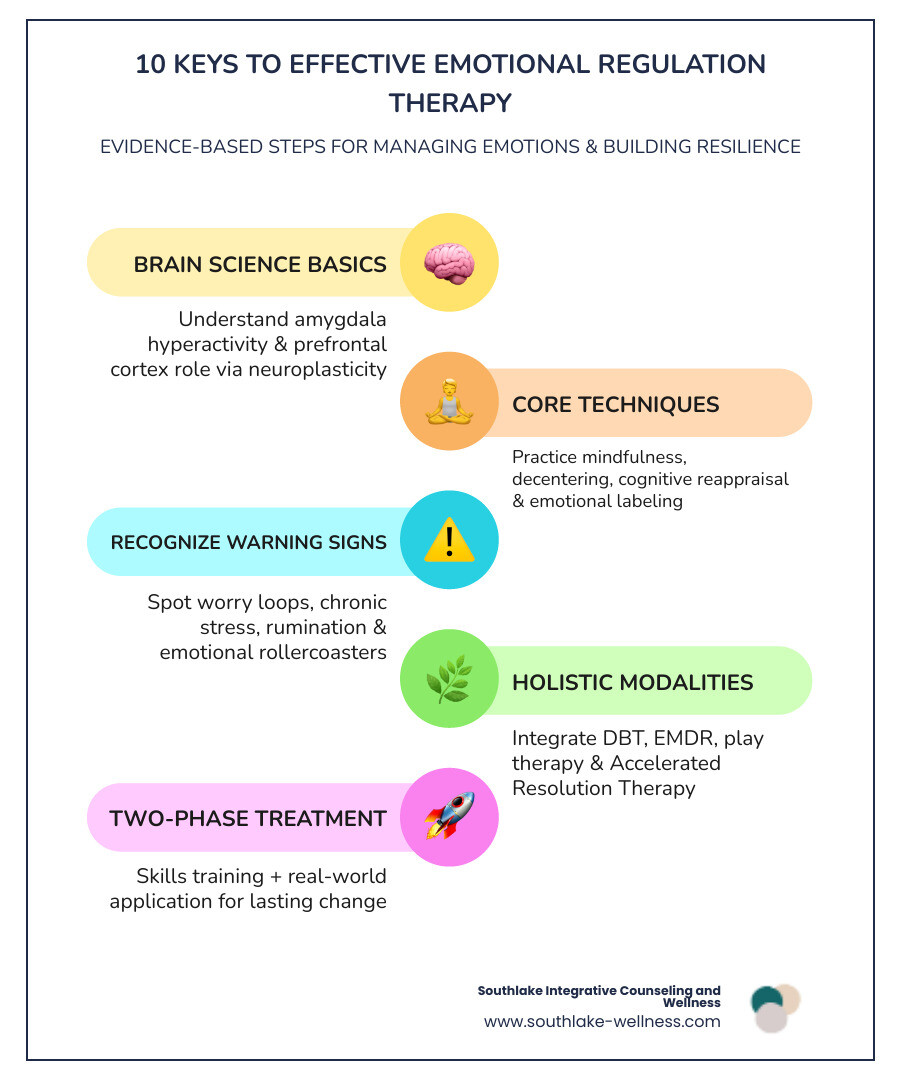
The science is clear: your brain has the capacity to change through neuroplasticity. When the amygdala becomes hyperactive and the prefrontal cortex less engaged during distress, targeted therapy can help rewire these neural pathways. This isn't about eliminating emotions—it's about building a healthier relationship with them.
At Southlake Integrative Counseling and Wellness, you have access to specialized therapists who understand that no two people are alike. Whether you're dealing with anxious depression, treatment-resistant conditions, chronic worry, or high self-criticism, therapy for emotional regulation Southlake offers a personalized path forward.
I'm Holly Gedwed, an LPC-Associate with 14 years of clinical experience specializing in customizing therapeutic approaches for individuals struggling with anxiety, depression, trauma, and emotional dysregulation. My practice focuses on evidence-based modalities like Cognitive Behavioral Therapy (CBT) and Dialectical Behavioral Therapy (DBT) to help clients break unhealthy patterns and build lasting skills for therapy for emotional regulation Southlake residents can trust.
1. Understanding the Science of the Brain and Emotional Dysregulation
When we talk about therapy for emotional regulation Southlake, we have to start with the "why" behind our feelings. Our brains are essentially wired for survival, but sometimes that wiring gets a little too enthusiastic.
In affect science, we look at two main players: the amygdala and the prefrontal cortex. Think of the amygdala as your brain’s smoke detector. Its job is to scream "FIRE!" at the slightest hint of trouble. For those of us struggling with emotional dysregulation, that smoke detector is hyper-responsive—it might go off because you burned a piece of toast or because a coworker used a slightly sharp tone in an email.
On the other side, we have the prefrontal cortex, the "CEO" of the brain. This area is responsible for logic, decision-making, and calming the amygdala down. In many anxiety disorders, the prefrontal cortex is less active, meaning the "CEO" has stepped out for lunch while the smoke detector is blaring.
The good news? Your brain is capable of neuroplasticity. This means we can actually rewire these neural pathways. Through a process called inhibitory learning, we help you build new, adaptive responses that eventually override the old, unhelpful ones. We aren't just talking about your feelings; we are literally changing the way your brain processes distress. For a deeper dive into this process, check out our Emotional Regulation Therapy Guide.
2. Core Techniques in Therapy for Emotional Regulation Southlake
We don't just want you to understand your brain; we want to give you the steering wheel. In our Southlake practice, we focus on a "toolkit" approach. You wouldn't try to fix a sink with just a hammer, and you shouldn't try to manage complex emotions with just one strategy.
Here are the heavy hitters we teach in therapy for emotional regulation Southlake:
- Mindfulness: This is the foundation. It’s about being present in the moment without judging yourself. If you’re feeling angry, mindfulness allows you to say, "Oh, look, I’m feeling anger right now," rather than, "I’m a terrible person for being angry."
- Decentering: This is a fancy way of saying "don't believe everything you think." Decentering helps you observe your thoughts from a distance, like watching clouds pass by. You realize that a thought is just a mental event, not necessarily a fact.
- Cognitive Reappraisal: This involves reframing how you interpret events. If someone doesn't text you back, the "dysregulated" thought might be "They hate me." Reappraisal allows you to think, "Maybe they’re just busy or their phone died."
- Emotional Labeling: Research shows that simply "naming it to tame it" can reduce amygdala activity. Identifying a specific emotion—like "disappointment" instead of just a general "bad feeling"—gives you power over it.
- Values-Based Action: We help you Build Emotional Resilience by identifying what truly matters to you. When you act according to your values rather than your temporary impulses, you build a life that feels authentic and grounded.
Adaptive vs. Maladaptive Coping
In therapy, we often look at how you're currently handling stress. Are your habits helping or hurting in the long run?
Maladaptive Coping (The "Quick Fix")Adaptive Coping (The "Long Game")Avoidance of difficult situationsMindful engagement/exposureConstant reassurance-seekingSelf-validation and decenteringRumination and "worry loops"Cognitive reappraisalSubstance use or emotional eatingValues-consistent actionHigh self-criticismSelf-compassion practices

3. Identifying the Signs You Need Professional Support
It’s normal to feel stressed, but how do you know when it’s time to seek therapy for emotional regulation Southlake? Many of our clients come to us when they feel like their "emotional volume" is stuck at maximum.
Common signs that indicate a need for professional support include:
- Worry Loops: You find yourself thinking about the same problem for hours, unable to find a solution or move on.
- Chronic Stress: You feel "on edge" or physically tense most of the time, even when there’s no immediate threat.
- Rumination: You replay past mistakes over and over, often accompanied by high self-criticism.
- Emotional Rollercoasters: Your mood swings are intense and feel disproportionate to the situation at hand.
- Impact on Life: Your emotions are interfering with your relationships, your job, or your ability to enjoy Southlake life.
These symptoms are often hallmarks of Depressive Disorders or anxiety. If you feel like you're fighting your emotions rather than experiencing them, our Emotional Wellness Counseling can help you stop the fight and start the healing.
4. Complementary Modalities for Holistic Healing
One of the reasons we love practicing in Southlake is the ability to integrate different therapies. We don't believe in a one-size-fits-all approach. Instead, we combine evidence-based methods to create a personalized plan for you.
Integrating DBT and EMDR for Lasting Change
Dialectical Behavior Therapy (DBT) is world-renowned for its effectiveness in emotional regulation. It focuses on four pillars:
- Mindfulness: Being present.
- Distress Tolerance: Getting through a crisis without making it worse.
- Emotion Regulation: Changing the emotions you want to change.
- Interpersonal Effectiveness: Communicating your needs while maintaining self-respect.
When we combine these skills with EMDR (Eye Movement Desensitization and Reprocessing), we can address the root of the problem. If your emotional dysregulation stems from past trauma, EMDR helps "reprocess" those memories so they no longer trigger an intense emotional charge in the present. This is a core part of our Individual Therapy in Southlake TX.
Play Therapy and Neurodivergence in Therapy for Emotional Regulation Southlake
Emotional regulation looks different for everyone, especially for children and neurodivergent individuals. For kids, play is their natural language. Play Therapy allows children to express thoughts and feelings they might not have the words for yet.
For those on the Autism spectrum or with ADHD, emotional regulation often involves sensory regulation and understanding social cues. We use Art Therapy Activities for Emotional Regulation to help clients of all ages explore their internal world in a non-verbal, creative way.
The Role of Accelerated Resolution Therapy for Emotional Regulation Southlake
Sometimes, you don't want to spend years in therapy; you need relief now. This is where Accelerated Resolution Therapy (ART) comes in. ART is a trauma-informed care model that uses eye movements and image replacement to change how the brain stores distressing memories.
It’s incredibly effective for rapid recovery. By replacing a distressing image with a more positive one, you keep the facts of the memory but lose the painful emotional "sting." You can learn more in our Accelerated Resolution Therapy Complete Guide or explore our specific Accelerated Resolution Therapy ART service page.
5. The Two-Phase Structure of Effective Treatment
We follow a structured, two-phase approach to ensure you don't just feel better in our office, but feel better in your real life.
Phase 1: Skills Training (The Toolkit)In the first phase, we focus on learning. We teach you the mindfulness, decentering, and reappraisal skills mentioned earlier. We help you identify your triggers and understand the "function" of your emotions. (For example, anger might be protecting a boundary, while anxiety is trying to keep you safe).
Phase 2: Real-World Application (The Practice)Once you have the skills, we move into behavioral proactivity. This involves:
- Exposure: Systematically confronting situations you’ve been avoiding.
- Goal-Directed Behavior: Taking steps toward the life you want, even when you feel "unmotivated."
- Progress Monitoring: We use our Individual Therapy Southlake Guide to track your improvements and adjust the plan as needed.
Frequently Asked Questions about Emotional Regulation
How long does emotional regulation therapy typically take?
The duration varies, but many clients see significant relief within a few sessions. A typical course of ERT or DBT-informed therapy might last from a few months to a year, depending on the complexity of the issues and how consistently you practice the skills outside of sessions.
What is the difference between ERT and traditional talk therapy?
Traditional talk therapy often focuses on "venting" or gaining insight into the past. While that's valuable, ERT is more "skills-based." We aren't just talking about why you feel bad; we are teaching you exactly what to do when those feelings arise. We view emotional regulation as a learnable skill, like riding a bike or playing an instrument.
Can children and teens benefit from these specific skills?
Absolutely! In fact, learning these skills early can prevent a lifetime of emotional struggle. We adapt the techniques for different developmental stages, using play therapy for younger children and more cognitive-based strategies for adolescents.
Conclusion
At Southlake Integrative Counseling and Wellness, we believe that emotional balance is the foundation of a fulfilling life. Our approach to therapy for emotional regulation Southlake is holistic, meaning we look at the mind-body connection and the unique context of your life.
Whether you are seeking Emotional Trauma Therapy to heal from the past or need practical tools to handle daily stress, we are here to walk that path with you. We offer personalized treatment plans designed to help you thrive, not just survive.
Ready to take the first step toward a more balanced life? We invite you to Request a Consultation today. Your journey toward emotional resilience starts here.