
What You Need to Know About Emotional Trauma Therapy
Emotional trauma therapy helps individuals heal from distressing experiences that overwhelm their ability to cope. Trauma isn't defined by the event itself, but by your subjective emotional experience of it.
It's important to remember: Your symptoms are normal reactions to abnormal events. While many people recover from trauma on their own, therapy offers proven paths to healing for those who need support.
Key Treatment Options:
- Cognitive Behavioral Therapy (CBT): Changes negative thought patterns.
- Eye Movement Desensitization and Reprocessing (EMDR): Reprocesses traumatic memories.
- Somatic Experiencing: Releases trauma stored in the body.
When to Seek Help:
- Symptoms last more than a month.
- Severe fear, anxiety, or depression.
- Difficulty functioning in daily life.
- Using substances to cope.
- Experiencing flashbacks or nightmares.
The good news is that research shows trauma-focused therapies are highly effective, even years after the event. It's never too late to get help.
Our practice specializes in trauma treatment. We customize emotional trauma therapy to help you break unhealthy patterns and build skills for lasting recovery. Let's explore how you can move forward.
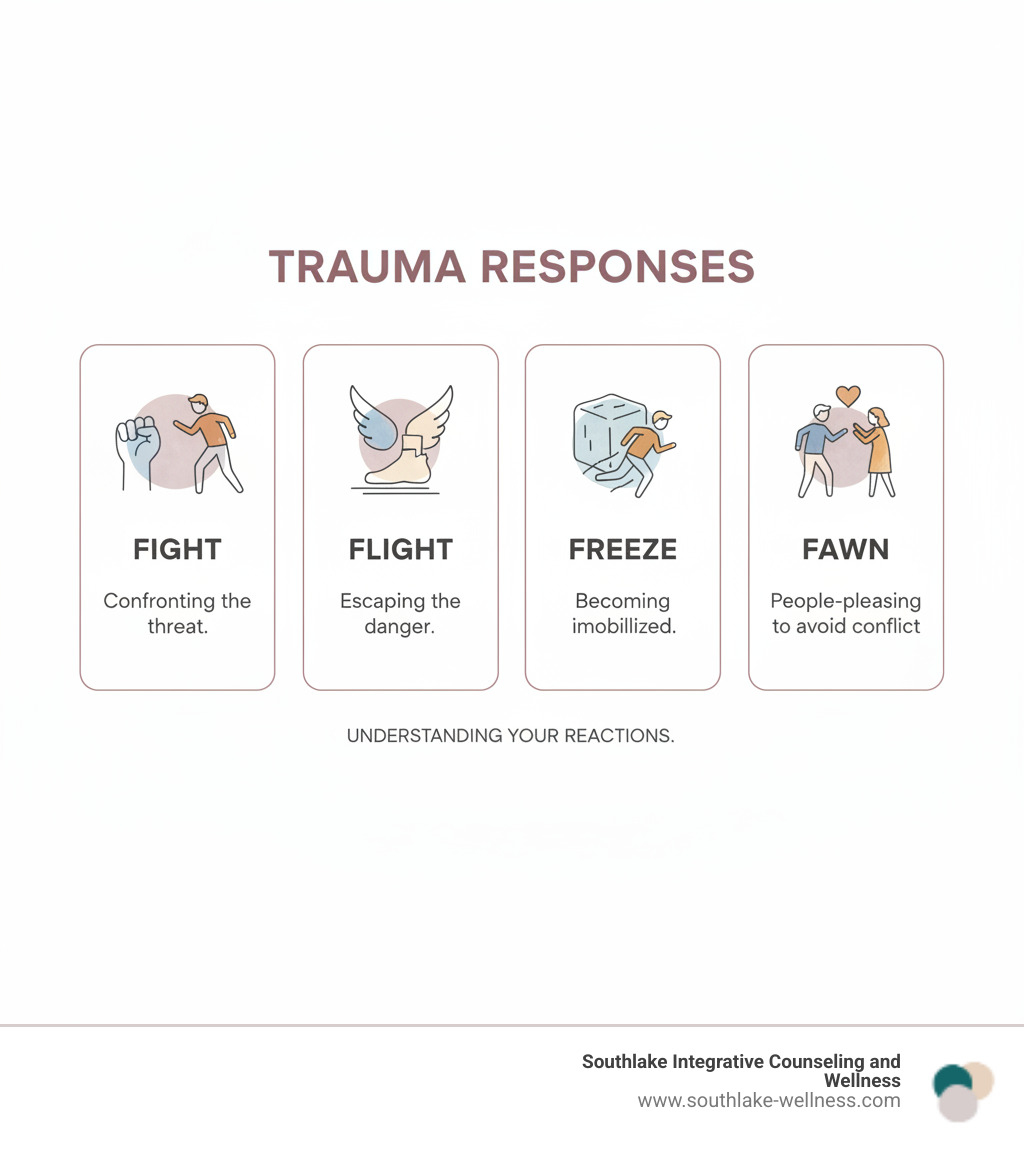
Understanding Emotional and Psychological Trauma
What is Emotional and Psychological Trauma?
Trauma isn't just about what happened to you; it's about how your mind and body responded to an experience that shattered your sense of safety. It can leave you with upsetting emotions, intrusive memories, constant anxiety, or a feeling of being numb and disconnected.
What makes an event traumatic is subjective. Your reaction is valid, regardless of how others might have handled a similar situation. The DSM-5-TR defines a traumatic event as exposure to actual or threatened death, serious injury, or sexual violence. In emotional trauma therapy, we focus on your emotional experience—the fear, helplessness, and overwhelm—to help you reclaim your sense of safety. Learn more about how we can help you heal emotional trauma.
Types of Trauma: Acute, Complex, and Secondary
Understanding the type of trauma you've experienced helps us tailor your therapy.
- Acute trauma results from a single incident, like a car accident or natural disaster.
- Complex trauma develops from repeated or prolonged traumatic events, such as ongoing abuse or neglect, often in childhood. When it occurs early in life, it's called developmental trauma and can deeply impact relationships and emotional regulation.
- Secondary or vicarious trauma affects those exposed to the trauma of others, such as first responders, therapists, and healthcare workers.
More on acute and chronic trauma is available for further reading.
Common Causes of Trauma
Many events can be traumatic. What matters is how they affected you. Common causes include:
- Accidents and injuries: Sudden, life-threatening events like car accidents or serious injuries.
- Abuse: Physical, sexual, or emotional abuse, including manipulation and chronic criticism.
- Neglect: The failure of caregivers to provide for a child's basic physical or emotional needs.
- Violence: Being a victim of or witnessing violence, including domestic violence or combat.
- Sudden loss: The unexpected death of a loved one, especially under tragic circumstances.
- Medical events: Life-threatening illnesses, invasive procedures, or traumatic childbirth.
- Childhood experiences: Any of the above occurring during formative years can have a lasting impact. The Childhood Trauma Questionnaire is a tool professionals use to assess these experiences.
Recognizing the Signs: Emotional, Physical, and Behavioral Symptoms
Trauma affects your mind, body, and behavior. These are normal reactions to abnormal events.

Emotional and Psychological Symptoms:
- Shock, denial, or confusion
- Anxiety, fear, and hypervigilance (being "on edge")
- Anger and irritability
- Guilt, shame, and self-blame
- Sadness, hopelessness, or feeling numb and detached
- Withdrawing from others
Physical Symptoms:
- Insomnia and nightmares
- Fatigue and exhaustion
- Being easily startled
- Racing heartbeat, aches, and muscle tension
- Digestive issues
Behavioral Symptoms:
- Avoiding people, places, or things that remind you of the trauma
- Using alcohol or drugs to cope
- Difficulty in relationships and with trusting others
- Disruption of daily routines
We can help you develop coping skills to manage these symptoms.
How Trauma Affects Children and Adolescents
Children and teens react to trauma differently than adults, as their brains are still developing.
- Regression: Younger children may revert to earlier behaviors like thumb-sucking or bedwetting.
- Behavioral changes: Increased irritability, aggression, or withdrawal. School performance may decline.
- Fear and anxiety: New fears (of the dark, being alone), nightmares, and hypervigilance.
- Attachment issues: Difficulty trusting others and forming healthy relationships.
- Physical complaints: Unexplained headaches or stomach aches.
Emotional trauma therapy for young people is adapted for their age, often using approaches like Trauma-Focused Cognitive Behavioral Therapy (TF-CBT) and involving the family. The NIMH offers a helpful guide on helping children and adolescents cope with disasters and other traumatic events.
Evidence-Based Emotional Trauma Therapy Approaches
What is Cognitive Behavioral Therapy (CBT) for emotional trauma therapy?
Cognitive Behavioral Therapy (CBT) is a practical approach that helps you change the unhelpful connections between your thoughts, feelings, and behaviors related to trauma. It operates on the principle that our thoughts about an event, not just the event itself, shape our emotional response.
CBT helps you identify and challenge "stuck points"—negative beliefs like "I'm not safe" or "It was my fault"—and replace them with more balanced perspectives. Key components include:
- Exposure Therapy: Gradually and safely confronting trauma-related memories (imaginal exposure) or situations you've been avoiding (in-vivo exposure) in a controlled therapeutic setting.
- Cognitive Processing Therapy (CPT): A specific type of CBT that focuses on how trauma has changed your beliefs about safety, trust, control, and self-esteem, often using writing exercises to process these changes.
A typical course of trauma-focused CBT involves 8 to 12 weekly sessions. We offer Cognitive Behavioral Therapy custom to your needs and pace.
How Eye Movement Desensitization and Reprocessing (EMDR) Works
Eye Movement Desensitization and Reprocessing (EMDR) is a powerful and well-researched approach for treating trauma. It's based on the Adaptive Information Processing (AIP) model, which suggests that traumatic memories can get "stuck" in the brain, causing them to be relived with their original intensity.

EMDR uses bilateral stimulation (typically guided eye movements, but also alternating sounds or taps) while you focus on a traumatic memory. This dual attention helps your brain reprocess the memory, reducing its emotional charge and allowing it to be stored as a past event rather than a current threat.
The therapy follows a structured eight-phase process that includes preparation, assessment, processing, and integration of new, positive beliefs. For a single-incident trauma, EMDR may take only three to six sessions, while more complex trauma may require eight to twelve sessions or more. Research supports the effectiveness of EMDR for trauma, often providing relief more quickly than traditional talk therapy.
Other Key Therapeutic Approaches
While CBT and EMDR are common, other effective therapies address trauma from different angles.
Therapy TypeKey FocusBest ForCognitive Behavioral Therapy (CBT)Changing negative thought patterns and behaviors; exposure to trauma-related memoriesSingle-incident trauma; people who prefer structured, goal-oriented therapyEye Movement Desensitization and Reprocessing (EMDR)Reprocessing traumatic memories through bilateral stimulationBoth single-incident and complex trauma; people who want efficient processing without extensive talk therapySomatic Experiencing (SE)Releasing trauma stored in the body through nervous system regulationPeople with strong physical symptoms; those who find it hard to talk about trauma
- Somatic Experiencing (SE) and Sensorimotor Psychotherapy are body-oriented approaches that focus on releasing trapped traumatic energy from the nervous system by paying attention to physical sensations.
- Psychodynamic Therapy explores how past experiences and unconscious patterns influence your current reactions to trauma.
- Narrative Exposure Therapy (NET) involves creating a chronological narrative of your life to integrate traumatic memories into your broader life story.
We also offer Accelerated Resolution Therapy (ART), which combines elements from various therapies for efficient processing. Explore our evidence-based therapy techniques to find the right fit for you.
The Role of Medication in Trauma Treatment
While not a cure, medication can be a helpful tool in trauma treatment, especially when severe symptoms interfere with daily life or your ability to engage in therapy. It can reduce overwhelming anxiety, depression, or hypervigilance, creating the stability needed for deeper therapeutic work.
The most commonly prescribed medications for PTSD are SSRI antidepressants like sertraline and paroxetine. Medication is most effective when used in combination with psychotherapy. It is typically continued for at least 12 months to support the work being done in emotional trauma therapy.
Key Principles of Healing from Trauma
What is Trauma-Informed Care?
Trauma-informed care is a framework that guides our entire approach. It shifts the focus from "What's wrong with you?" to "What happened to you?" We recognize that your symptoms are adaptive responses that once helped you survive.
This approach is built on core principles:
- Safety: Creating a physically and emotionally secure environment.
- Trustworthiness and Transparency: Communicating openly about the therapy process.
- Collaboration: Working as partners in your healing journey.
- Empowerment, Voice, and Choice: Ensuring you have control over your treatment.
- Cultural Sensitivity: Recognizing how cultural, historical, and gender factors impact trauma.
We aim to realize the impact of trauma, recognize the signs, respond with informed practices, and resist re-traumatization. This philosophy is central to our integrative mental health approach. You can learn more about understanding trauma-informed care.
What are the benefits of emotional trauma therapy?
Committing to emotional trauma therapy can lead to profound, life-changing benefits beyond just feeling better.
- Symptom Reduction: Decreased flashbacks, nightmares, anxiety, and depression.
- Improved Coping Skills: Healthier ways to manage stress and regulate emotions.
- Rebuilding Trust: Learning to trust yourself and form secure connections with others.
- Challenging Problematic Beliefs: Replacing self-blame and fear with empowering perspectives.
- Validation and Support: Reducing shame and isolation by having your experiences heard and validated.
- Increased Emotional Regulation: Gaining the ability to experience feelings without being overwhelmed.
Therapy helps you build emotional resilience to steer future challenges with strength.
Potential Challenges and Considerations in Trauma Therapy
The path to healing can be challenging, and it's helpful to be prepared.
- Emotional Discomfort: Processing trauma can temporarily increase distress as you confront painful memories and feelings. This is often a sign that the therapy is working.
- Commitment: Effective therapy requires consistent effort, including regular attendance and practicing skills between sessions.
- Finding the Right Therapist: The therapeutic relationship is key. You need a therapist you trust and feel respected by. It's okay to search until you find the right fit.
- Stabilization First: For complex trauma, it's often necessary to first build coping and emotional regulation skills before processing traumatic memories. Our emotional regulation therapy can help build this foundation.
When to Seek Professional Help for Trauma
If trauma is impacting your life, it's serious enough for support. It's especially crucial to seek help if you experience:
- Symptoms lasting more than a month.
- Significant difficulty functioning at work, school, or home.
- Suicidal thoughts or thoughts of harming yourself or others. (If you are in crisis, call or text 988 in the US).
- Inability to form or maintain close relationships.
- Using alcohol or drugs to cope with emotional pain.
- Persistent and terrifying memories, flashbacks, or nightmares.
- Feeling emotionally numb or detached from your life.
It's never too late to get help. We offer individual therapy in Southlake, TX whenever you're ready.
Holistic Recovery: Self-Help and Lifestyle Strategies

The Mind-Body Connection in Trauma Recovery
Your body remembers what your mind tries to forget. A holistic approach that honors the mind-body connection is essential for healing.
- Exercise and Rhythmic Movement: Activities like walking, running, or dancing help release trapped energy and regulate your nervous system. Focusing on the physical sensations as you move can help you reconnect with your body in a positive way.
- Yoga and Mindful Movement: Practices like yoga and tai chi help release muscle tension and teach you to feel safe in your body again. They promote being present without feeling overwhelmed. Our mind-body wellness and massage therapy services can improve this connection.
- Mindfulness and Grounding: These techniques act as an anchor during emotional storms. Mindfulness helps you observe your feelings without judgment, while grounding pulls you back to the present moment. Our mindfulness-based therapy can help you develop these skills.
Self-Help Strategies for Emotional Regulation
Daily practices can supplement professional emotional trauma therapy and serve as an emotional first-aid kit.
- Mindful Breathing: When you feel anxious, take 60 slow, deep breaths. Focus on making your exhale longer than your inhale to activate your body's relaxation response.
- Engage Your Senses: To ground yourself, name five things you can see, four you can feel, three you can hear, two you can smell, and one you can taste. This pulls your attention to the present.
- Create a Routine: Trauma disrupts predictability. A consistent daily routine for sleeping, eating, and other activities helps restore a sense of safety and stability.
- Journaling: Writing down your thoughts and feelings provides a private space to process them without judgment.
These holistic coping strategies empower you to participate in your own healing.
How to Support a Loved One Dealing with Trauma
Your support can make a significant difference for a loved one struggling with trauma.
- Be Patient and Understanding: Healing is not linear. Their reactions are symptoms of trauma, not a reflection on you.
- Listen Without Judgment: When they talk, just listen. Avoid giving unsolicited advice or trying to "fix" their pain. Validate their feelings by saying things like, "That sounds incredibly difficult."
- Offer Practical Support: Help with daily tasks like errands or meals can reduce their stress. Suggest low-pressure activities together, like going for a walk.
- Encourage Professional Help: Gently suggest they speak with a professional. You might say, "I've noticed you're struggling. Have you considered talking to someone who specializes in this?" Our Southlake Mental Health Resources Guide can be a helpful starting point.
Frequently Asked Questions about Emotional Trauma Therapy
How long does trauma therapy take?
The timeline for emotional trauma therapy is unique to each person and depends on factors like the nature of the trauma, your support system, and your personal resilience.
- For a single-incident trauma, focused therapies like EMDR may take as few as three to six sessions.
- For complex or childhood trauma, therapy may be longer, such as 8 to 15 sessions of CBT or 8 to 12+ sessions of EMDR.
It's never too late to seek help. Trauma can be treated successfully years after the event occurred.
Is it possible to fully heal from trauma?
Yes, but healing from trauma doesn't mean forgetting what happened. It means integrating the memory into your life story so it no longer controls you. The memory becomes a scar—a part of your history—rather than an open wound.
Many people also experience post-traumatic growth, emerging from therapy with greater resilience, deeper relationships, and a stronger sense of purpose. The goal is to reduce your distress and improve your ability to live a full, meaningful life.
What is the difference between trauma and PTSD?
While related, these terms are not the same.
- Trauma is the overwhelming experience that shatters your sense of safety and your emotional response to it.
- Post-Traumatic Stress Disorder (PTSD) is a specific clinical diagnosis that can develop after trauma. It involves a persistent set of symptoms (intrusive memories, avoidance, negative mood changes, hyperarousal) that last for more than a month and significantly disrupt your life.
Most people who experience trauma do not develop PTSD. Whether you have a diagnosis or are simply struggling with the aftermath of a traumatic event, you deserve support. Learn more about our team and approach on our About Us page.
Conclusion
Understanding emotional trauma therapy is the first step, but taking action is what changes lives. Please remember: trauma is treatable. Whether the experience was recent or decades ago, healing is possible with proven approaches like CBT, EMDR, and Somatic Experiencing.
You don't have to carry this burden alone. Your symptoms are normal reactions to abnormal events, and they can be treated with compassionate, skilled care.
At Southlake Integrative Counseling and Wellness, we create personalized treatment plans that honor the mind-body connection. We see you as an active partner in your healing journey, which is built on safety, trust, and collaboration.
Your story doesn't end with trauma. It can continue with resilience and growth. Take the next step by learning more about our specialized trauma treatment, including Accelerated Resolution Therapy (ART), and let us help you write a new chapter of hope and empowerment.